照明工程系统集成服务

Search documents
时空科技股价连续4天下跌累计跌幅9.68%,金鹰基金旗下1只基金持6.52万股,浮亏损失42.97万元
Xin Lang Cai Jing· 2026-02-11 07:15
Group 1 - The core point of the news is that Shikong Technology's stock has experienced a decline of 3.67% on February 11, with a total market value of 6.093 billion yuan and a cumulative drop of 9.68% over four consecutive days [1] - Shikong Technology, established on February 20, 2004, and listed on August 21, 2020, specializes in lighting engineering system integration services, with its main business revenue composition being 60.71% from night economy and 39.14% from smart city projects [1] Group 2 - From the perspective of fund holdings, Jin Ying Fund has a significant position in Shikong Technology through its Jin Ying Minfeng Return Mixed Fund (004265), which holds 65,200 shares, accounting for 1.78% of the fund's net value [2] - The Jin Ying Minfeng Return Mixed Fund has incurred a floating loss of approximately 15,260 yuan today and a total floating loss of 42,970 yuan during the four-day decline [2] - The fund was established on June 28, 2017, with a current scale of 189 million yuan, and has achieved a year-to-date return of 7.99% and a one-year return of 31.15% [2]

公司快评 | 连续五年亏损,经营数据下滑,时空科技需多举措寻求突破
Mei Ri Jing Ji Xin Wen· 2026-01-22 06:32
Group 1 - The core viewpoint of the articles highlights that Shikong Technology is expected to report a revenue of 325 million to 385 million yuan for the year 2025, but will continue to incur losses, with net profit projected between -290 million and -235 million yuan, marking five consecutive years of losses from 2021 to 2025 [1] - The company has faced challenges in recent years, attributing its poor performance to high fixed costs, changes in market demand, difficulties in accounts receivable collection, and organizational adjustments, which have led to increased expenses [1] - As of the reporting period, the company has signed 53 new projects with a total contract value of approximately 326 million yuan, reflecting a year-on-year decline of 14.91%, indicating significant pressure in market expansion and project acquisition [1] Group 2 - On January 16, the company was ordered by the Beijing Securities Regulatory Bureau to rectify multiple issues, including non-operating fund occupation by controlling shareholders, insufficient asset impairment provisions, improper accounting, and inadequate internal controls, which reveal significant vulnerabilities in internal governance and financial management [2] - The company needs to optimize its cost control, market expansion, project management, and internal governance to achieve a turnaround in performance amid intense market competition [2] - The future ability of the company to overcome its difficulties through effective reforms and management improvements remains to be seen [2]
时空科技涨2.13%,成交额3.74亿元,主力资金净流出2736.48万元
Xin Lang Zheng Quan· 2025-11-27 06:31
Group 1 - The core viewpoint of the news is that Shikong Technology's stock has shown significant volatility, with a year-to-date increase of 324.43% but a recent decline of 11.61% over the past five trading days [1] - As of November 27, Shikong Technology's stock price is 60.99 yuan per share, with a market capitalization of 6.043 billion yuan [1] - The company has seen a net outflow of 27.36 million yuan in principal funds, with large orders showing a buy of 72.20 million yuan and a sell of 91.88 million yuan [1] Group 2 - For the first nine months of 2025, Shikong Technology reported revenue of 215 million yuan, a year-on-year increase of 5.18%, while the net profit attributable to shareholders was -116 million yuan, reflecting a year-on-year growth of 14.63% [2] - The company has a total of 8,924 shareholders as of September 30, which is a decrease of 9.71% from the previous period, while the average circulating shares per person increased by 10.57% to 11,102 shares [2] - Since its A-share listing, Shikong Technology has distributed a total of 13.47 million yuan in dividends, with no dividends paid in the last three years [3]
时空科技涨2.15%,成交额2.83亿元,主力资金净流入230.19万元
Xin Lang Cai Jing· 2025-11-14 01:48
Core Insights - The stock price of Shikong Technology increased by 2.15% on November 14, reaching 73.15 CNY per share, with a total market capitalization of 7.248 billion CNY [1] - The company has seen a significant stock price increase of 409.05% year-to-date, although it has experienced a decline of 8.55% over the last five trading days [1] - Shikong Technology's main business revenue is derived from nighttime economy (60.71%) and smart city projects (39.14%) [1][2] Financial Performance - For the period from January to September 2025, Shikong Technology reported a revenue of 215 million CNY, reflecting a year-on-year growth of 5.18% [2] - The company recorded a net profit attributable to shareholders of -116 million CNY, which represents a year-on-year increase of 14.63% [2] - Cumulative cash dividends since the company's A-share listing amount to 13.4699 million CNY, with no dividends distributed in the past three years [3] Shareholder Information - As of September 30, the number of shareholders for Shikong Technology was 8,924, a decrease of 9.71% from the previous period [2] - The average number of circulating shares per shareholder increased by 10.57% to 11,102 shares [2] Market Activity - The company has appeared on the "Dragon and Tiger List" 10 times this year, with the most recent appearance on November 11, where it recorded a net purchase of 44.0209 million CNY [1] - The total buying and selling on that day amounted to 280 million CNY and 236 million CNY, respectively, accounting for 18.60% and 15.68% of total trading volume [1]
时空科技四年半亏损超7亿 从照明到半导体存储跨界收购业务协同性差、此前高溢价收购标的陷亏损
Xin Lang Zheng Quan· 2025-10-23 08:56
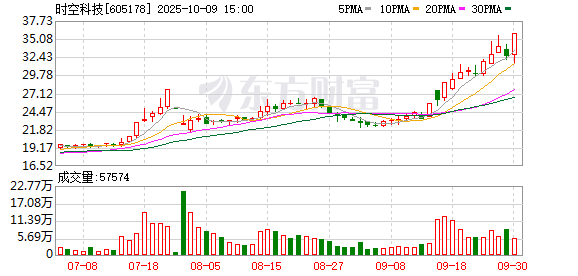
Core Viewpoint - The company, Time Space Technology, is planning to issue shares and pay cash to acquire assets, marking its entry into the semiconductor storage sector, despite its ongoing financial struggles and previous unsuccessful cross-industry ventures [1][18]. Group 1: Financial Performance - Time Space Technology has reported continuous losses over the past four years, with a cumulative loss exceeding 700 million yuan [5][4]. - The company's net profits from 2021 to the first half of 2025 were -18 million yuan, -209 million yuan, -207 million yuan, -262 million yuan, and -66 million yuan, respectively [6][4]. - Revenue figures for the same period were 896 million yuan, 746 million yuan, 330 million yuan, 203 million yuan, 341 million yuan, and 144 million yuan, showing significant year-on-year declines [6][4]. Group 2: Operational Challenges - The company's gross profit margin has been declining, dropping from 27.87% in the first half of 2023 to 18.26% in the first half of 2025, with a sharp decline to 8.52% in the second quarter [8]. - The net profit margin has remained negative since the first half of 2022, with figures of -16.94%, -69%, -46.23%, and -46.14% from the first half of 2022 to the first half of 2025 [8]. Group 3: Accounts Receivable Issues - The company's accounts receivable as a percentage of revenue was 279.99% in the first half of 2025, significantly higher than the industry average [10]. - A concerning 86.44% of accounts receivable were over one year old by the end of 2024, indicating poor collection efficiency [11]. Group 4: Acquisition Attempts and Market Reactions - Time Space Technology's acquisition of Jieanbo in 2023 did not yield the expected improvements and led to goodwill impairment due to the target company's poor performance [14][16]. - The stock price of Time Space Technology has shown unusual activity, with a 52.92% increase since September, often spiking before major announcements [19][2].

605178,重大资产重组
Shang Hai Zheng Quan Bao· 2025-10-09 15:50
Core Viewpoint - Time Space Technology plans to acquire a controlling stake in Jiahe Jingwei, a storage company, through a combination of share issuance and cash payment, marking a significant asset restructuring without changing the actual controller of the company [2][5]. Company Summary - Time Space Technology has identified Zhang Lili and Chen Hui, who are the actual controllers of Jiahe Jingwei, as the primary counterparties for the transaction [5]. - As of September 30, Time Space Technology's stock price was 35.83 yuan per share, with a total market capitalization of 3.55 billion yuan [5]. - The company has suspended trading of its shares since October 9, with an expected suspension period of no more than five trading days [5]. - Prior to this acquisition announcement, Time Space Technology's actual controller had been planning a change in company control, which was later terminated due to a failure to reach agreement on core terms [7]. Industry Summary - Jiahe Jingwei, established in 2012, has completed five rounds of financing and holds a 50.19% stake controlled by Zhang Lili and Chen Hui [7]. - The company specializes in the design, research, production, and sales of DRAM and NAND Flash memory, providing various storage solutions and is recognized as a national high-tech enterprise [7]. - Jiahe Jingwei has over 20,000 square meters of production facilities and significant testing and production capacity, including 5,000 memory module testing machines and a daily chip testing capacity of 500,000 [8]. - The storage industry is currently viewed positively, with global memory chip prices rising and predictions of a "super cycle" in the storage chip industry driven by AI demand [12]. - The global storage market is projected to reach a record high of $193.2 billion by the second half of 2025, fueled by strong demand for AI-related storage applications [12].