爱奇艺主题乐园

Search documents
冀力挽业绩于既倒 爱奇艺押注主题乐园
Xin Lang Cai Jing· 2026-02-24 11:05
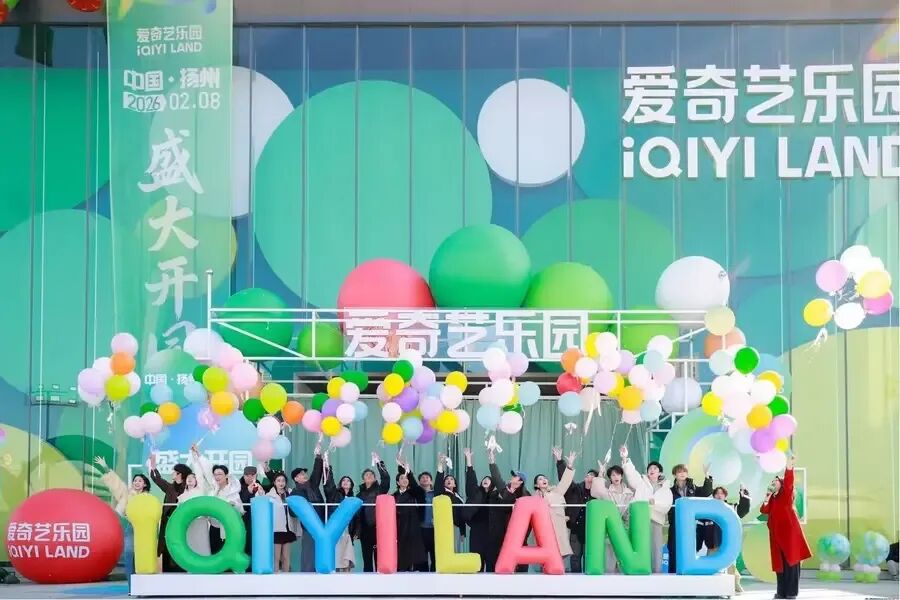
Core Viewpoint - iQIYI plans to open three immersive experience theme parks in Yangzhou, Beijing, and Kaifeng, aiming to monetize its IP assets amid declining revenues and the departure of its CFO [1][4][12] Group 1: Theme Park Development - The first park in Yangzhou sold out on its opening day, marking a significant step in iQIYI's nearly ten-year development of offline immersive content [1][4] - The Yangzhou park occupies 10,000 square meters, which is about one-fourth the size of traditional outdoor theme parks, and its construction cost is significantly lower than that of Shanghai Disneyland and Beijing Universal Studios, both of which exceed 30 billion yuan [1][4] - The new parks will feature immersive experiences that combine virtual reality, dynamic systems, and live actors, targeting the 16 to 35 age group, particularly women [3][10] Group 2: Financial Performance and Strategy - iQIYI's revenue has been declining for seven consecutive quarters, with a slight year-on-year increase of 1% to 7.7 billion yuan in Q4 2023, following an 8% drop to 6.68 billion yuan in Q3 2022 [4][11] - The company primarily generates revenue from membership services, which accounted for 63% of total revenue in Q3 2022, while online advertising and content distribution contributed 18.5% and nearly 10%, respectively [4][11] - The CEO emphasized the importance of experience over foot traffic, indicating a focus on quality [4][11] Group 3: Competitive Landscape - iQIYI's entry into the theme park sector is part of a broader trend, with competitors like Pop Mart and Miniso also exploring immersive theme parks to leverage their IP [6][14] - Pop Mart's Pop Land has become a popular attraction in Beijing, contributing significantly to its revenue growth, while Miniso Land has also seen strong initial performance [6][14] - The competition from short video platforms like Kuaishou and Douyin poses a significant challenge to iQIYI's traditional streaming model [6][13]


从云端到地面:爱奇艺造乐园的跨界野心与现实考题
Sou Hu Cai Jing· 2025-10-22 21:47
Core Insights - iQIYI's theme park marks its entry into the offline entertainment market, transitioning from an online content producer to a scene operator, driven by industry evolution and internal needs [1][3] - The theme park project is a strategic move to monetize its IPs and tap into the growing offline entertainment consumption market, which is projected to exceed 80 billion yuan by 2025 [6][9] Group 1: IP Value and Market Dynamics - The urgent need to exploit IP value is a primary driver for iQIYI's theme park initiative, as it seeks to transform its popular IPs into tangible consumer experiences, creating a value loop from content creation to offline experiences and merchandise sales [4][6] - The long video industry is now in a phase of stock competition, with stagnant member growth, prompting iQIYI to explore offline avenues for user engagement and revenue generation [6][9] Group 2: Development Strategy - iQIYI adopts a gradual approach to theme park development, starting with smaller immersive experiences before scaling up to larger parks, thereby minimizing risks associated with cross-industry ventures [6][9] - The first large-scale theme park is set to open in Yangzhou, featuring a blend of IP and digital technology across seven thematic areas, including immersive theaters and interactive experiences [9][12] Group 3: Competitive Landscape - iQIYI's development model differs from established players like Huasheng Fantawild and Chimelong, focusing on a city leisure model rather than destination-based parks, and leveraging digital technology for immersive experiences [12][14] - The reliance on film IPs presents both opportunities and challenges, as the lifecycle of a film's popularity is typically short, which may impact the park's long-term viability [12][13] Group 4: Operational Challenges - iQIYI faces significant challenges in offline operations, lacking the necessary expertise in venue management, equipment maintenance, and customer service, which are critical for theme park success [16][17] - The current theme park offerings are criticized for insufficient integration of IP elements into the visitor experience, highlighting the need for deeper engagement and innovation [16][18] Group 5: Strategic Recommendations - To enhance operational capabilities, iQIYI should consider partnerships with third-party experts and eventually build an in-house team to manage various aspects of theme park operations [17] - Focusing on long-lifecycle IPs and creating immersive experiences that resonate with visitors can help sustain interest and foot traffic [18] - Leveraging digital technologies to create unique experiences and integrating local cultural elements can differentiate iQIYI's offerings in a competitive market [19]