
牡丹产品

Search documents
经济大省挑大梁 | “齐鲁粮仓”的“稳”与“进”
Xin Hua Wang· 2025-12-21 01:42
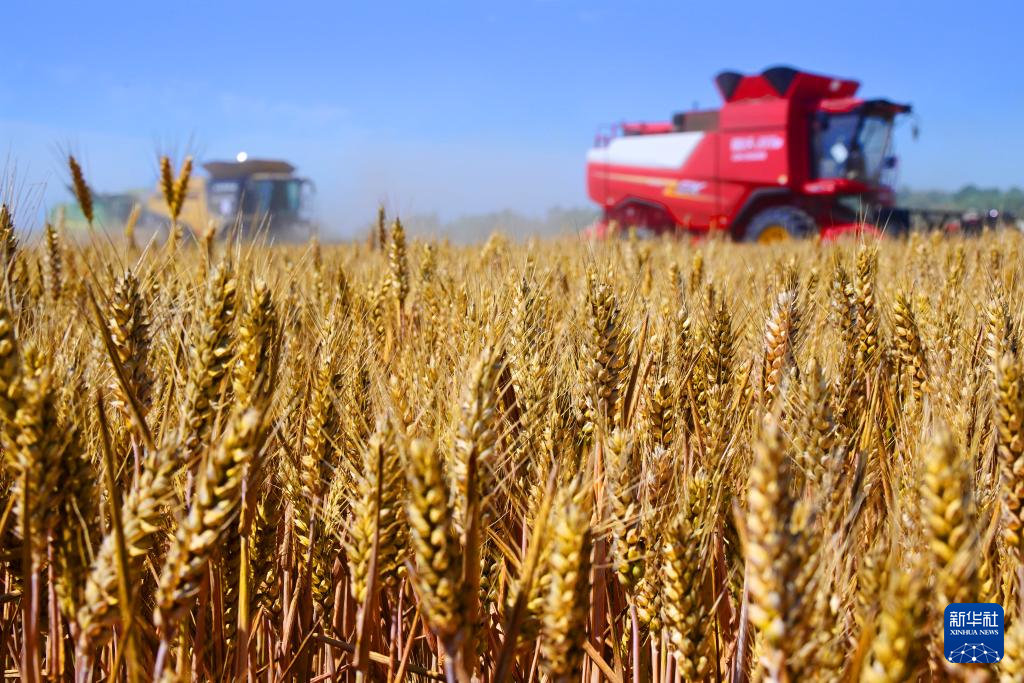
Core Viewpoint - Shandong Province is advancing agricultural modernization through industry integration, technological empowerment, and supportive policies, ensuring food security while building a diversified food supply system [1][2]. Group 1: Food Security and Agricultural Production - Shandong, as a major agricultural province, plays a crucial role in national food security, producing 8% of the country's grain, 10% of meat, eggs, and milk, 11% of vegetables, and 13% of aquatic products with only 6% of the arable land and 1% of freshwater resources [3][2]. - The province's grain output has remained stable at over 110 billion jin for five consecutive years, contributing significantly to national food supply stability [3]. - Shandong's agricultural production strategy includes enhancing grain yield through a "Five Good" approach (good land, good seeds, good opportunities, good methods, and good systems) and promoting various crops like wheat, corn, soybeans, and peanuts [3][4]. Group 2: Agricultural Infrastructure and Technology - Shandong has built 77.59 million acres of high-standard farmland, enhancing agricultural productivity [5]. - The province has established 139 marine ranches, with 71 at the national level, contributing to a projected 8.25 million tons of marine product output in 2024, with a value exceeding 100 billion yuan [7]. - Technological advancements in agriculture are evident with the introduction of autonomous tractors, seeders, and drones, leading to a significant increase in mechanization rates and agricultural technology contributions [8][11]. Group 3: Industry Development and Economic Impact - Shandong is focusing on extending the agricultural value chain, with over 151 national leading enterprises and more than 11,600 agricultural processing companies, leading the nation in scale and processing capacity [14]. - The province has developed 13 advantageous specialty industries and established a comprehensive industry cultivation system, enhancing rural e-commerce and new business models to benefit local farmers [15]. - In 2024, Shandong's agricultural exports are expected to reach 164.82 billion yuan, accounting for 22.5% of the national total, maintaining its position as the top exporter for 26 consecutive years [15].

从山间花海到文旅盛宴——河南繁花经济系列观察④
He Nan Ri Bao· 2025-05-05 23:23
Core Insights - The article highlights the development of the flower economy in Henan Province, driven by various flower festivals and tourism activities, which have become a significant economic engine for the region [1][4]. Group 1: Economic Impact - The "Flower Economy" has transformed local tourism, with the West Xia County's scenic area attracting a continuous flow of visitors during the spring season, significantly boosting local businesses [1]. - During the 42nd China Luoyang Peony Culture Festival, Luoyang received 10.3371 million tourists, generating a total tourism revenue of 8.293 billion yuan, marking year-on-year increases of 1.69% and 5.72%, respectively [4]. Group 2: Employment and Community Development - The cultivation of large-leaf lilies in Yiku Village has created job opportunities for 65 local laborers, enhancing the local economy and boosting the hospitality sector during the flower blooming season [2]. - The local government is increasingly focusing on matching rural development with ecological beautification, launching "Flower+" projects that turn flowers into a "green bank" for the community [1]. Group 3: Cultural Integration - The integration of cultural activities with flower viewing has enhanced visitor engagement, transforming the experience from merely sightseeing to cultural appreciation, thereby increasing consumer loyalty [4]. - Various themed activities and markets during the Peony Festival have contributed to a comprehensive tourism experience, promoting both cultural and economic benefits [4].