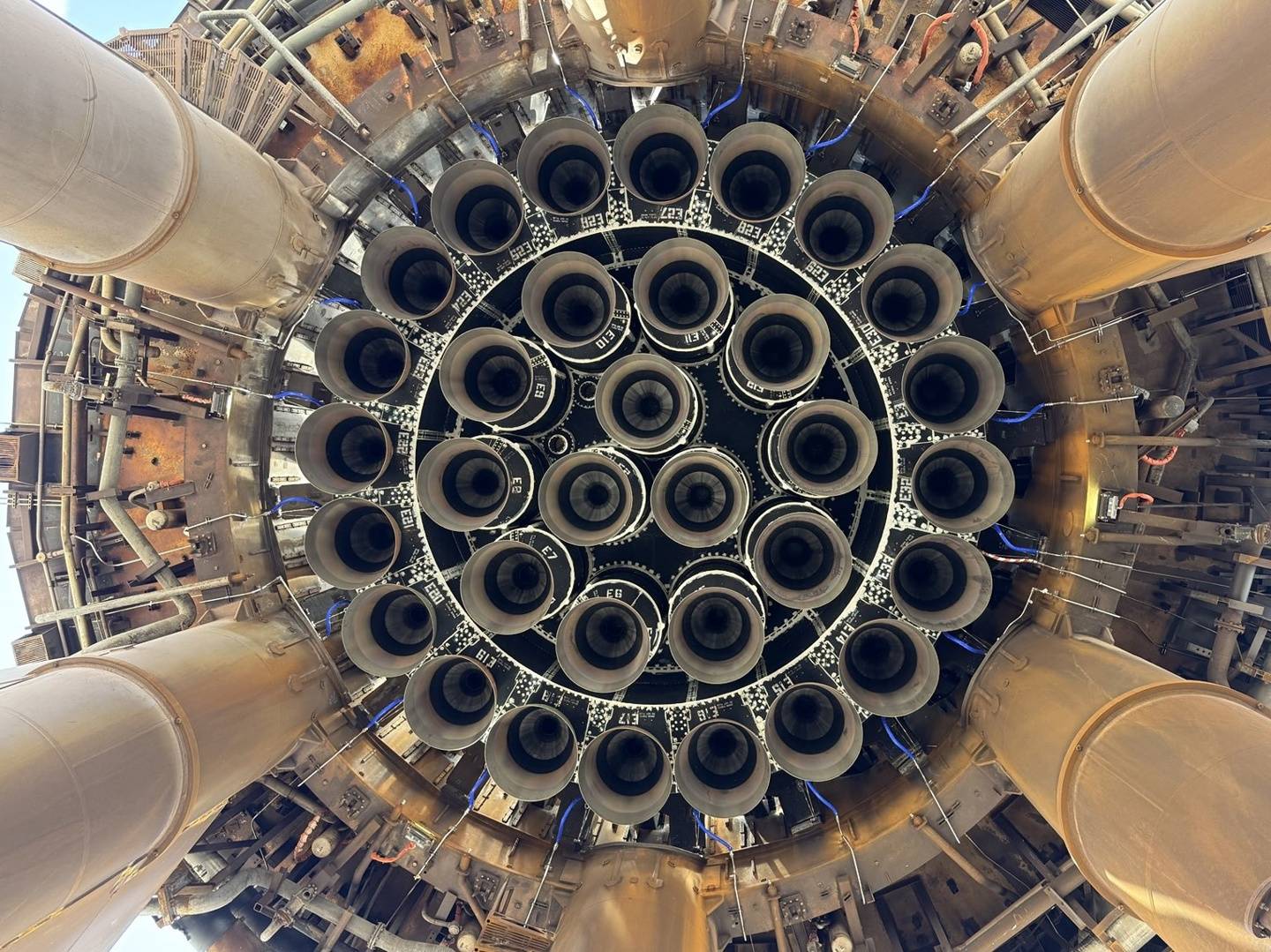
猛禽 3 号发动机

Search documents
商业航天-火箭环节专题汇报
2026-02-02 02:22
Summary of Key Points from the Conference Call Industry Overview - The report focuses on the commercial aerospace industry, particularly the rocket segment and the development of space computing capabilities [1][2]. Core Insights and Arguments - Space computing is identified as a core variable in commercial aerospace, with SpaceX planning to deploy one million satellites to create a space computing cluster aimed at minimizing AI training and inference costs within five years, leveraging solar energy and vacuum cooling advantages [1]. - The competition for orbital resources is intensifying globally, with SpaceX completing 13 launches in January 2026, totaling over 11,000 satellites launched, highlighting the urgent need for China to increase its rocket launch capacity [1][5]. - China has over 1,000 satellites in orbit but faces challenges in launch intensity, with projects like "Qianfan" falling short of annual targets, necessitating increased launch efforts to meet established goals [1][6]. - The rocket industry value chain includes component manufacturing, overall design and assembly, and launch services, with liquid engines being a core component. The future of reusable liquid rocket engines is promising, and 3D printing technology is gaining attention for its potential to reduce complexity and enhance efficiency [1][7]. 3D Printing Technology - 3D printing, or additive manufacturing, is highlighted for its advantages in lightweight and integrated manufacturing, significantly reducing production cycles and material waste. SpaceX is advancing its Raptor 3 engine development using metal 3D printing, aiming to increase the proportion of 3D printed components to 70% [1][8][10]. - The material utilization rate in traditional machining is typically 20% to 30%, while 3D printing can achieve over 95%, lowering costs for aerospace metals like titanium and high-temperature alloys [9][10]. Challenges and Opportunities in China - Despite advancements, China’s annual launch intensity remains insufficient to meet its satellite deployment goals. The government supports the development of reusable technologies, with new listing standards on the STAR Market facilitating access for companies with core technologies [6][12]. Global Rocket Industry Landscape - The rocket industry is segmented into upstream component manufacturing, midstream design and assembly, and downstream launch services. Liquid engine systems account for 50% of costs, with a clear future for reusable engines and 3D printing technologies [7]. Emerging Launch Technologies - Electromagnetic launch systems are emerging as a new method, offering higher launch frequencies and lower operational costs compared to traditional chemical launches. China has made significant strides in this area, with the establishment of a reusable launch facility [13]. Notable Companies in Commercial Aerospace - Several companies are highlighted as key players in the commercial aerospace sector, including: 1. Fevo Technology: Strong 3D printing capabilities in aerospace. 2. Bolite: Leading 3D printing enterprise providing core products for aerospace. 3. Surui New Materials: Focused on high-performance copper alloy materials for engines. 4. Western Materials: Supplies refractory metals and titanium alloys for aerospace components. 5. Chaojie Co.: Leading provider of structural components for commercial rockets. 6. Lianchuang Optoelectronics: Involved in the first superconducting magnetic levitation electromagnetic launch platform project. 7. Juliy Suojin: Participating in the national offshore recovery platform construction [14][16].
马斯克:25 至 30 年内或可在火星建立自给自足的人类定居点
Sou Hu Cai Jing· 2025-09-18 15:15
Core Insights - Elon Musk stated that a self-sustaining human settlement on Mars could be established within 25 to 30 years if launch capabilities significantly improve in the coming decades [1][6] Group 1: Mars Settlement Goals - Musk emphasized that true self-sufficiency on Mars requires all elements necessary for civilization, including food production and microchip manufacturing [5] - The Starship Version 3 is expected to support the first unmanned Mars test flight, with future iterations potentially reaching a height of 466 feet (approximately 142 meters) and capable of carrying larger payloads essential for establishing a settlement [5] - Musk believes that if progress is made smoothly, the aggressive timeline for building a Martian city could be compressed to as short as 30 years [5] Group 2: Launch Capacity and Transfer Windows - Musk estimated that achieving self-sufficiency on Mars would require approximately 10 to 15 Mars transfer windows, which occur every two years when planets align favorably for transfer [6] - He noted that if the tonnage sent to Mars during each transfer window can achieve exponential growth, it would take about 25 years to establish self-sufficiency [6] Group 3: Role of Starship - The Starship has completed 10 full-stack flight tests, with the most recent flight in August marking the first successful deployment of payloads in orbit [7] - The next flight will conclude the Starship Version 2 project, transitioning to Version 3, which will feature Raptor 3 engines and a redesigned structure with an orbital payload capacity exceeding 100 tons [7] - Despite the successful reuse of the Super Heavy booster, the reusability technology for the Starship itself is still under development, with the thermal protection system being the biggest technical challenge [7]