电磁弹射

Search documents
刘强东创立独立游艇品牌;大疆起诉美国联邦通信委员会;马斯克设想从月球电磁弹射AI卫星
Sou Hu Cai Jing· 2026-02-25 05:37
Group 1 - Liu Qiangdong has established an independent yacht brand named Sea Expandary, with an investment of 5 billion yuan, aiming to cover the entire yacht industry chain from R&D to sales and services. He hopes to produce yachts priced at 100,000 yuan to make them accessible to the general public [4] - Vivo has promoted Hu Bosheng to the position of company president, while CEO Shen Wei will no longer hold the title of president. Other executives have also had their reporting lines adjusted [5] - DJI has filed an appeal against the FCC's decision to list its products on a "regulated list," aiming to protect its rights and the interests of American consumers and agricultural users affected by the ban [6] Group 2 - Panasonic will transfer its television sales business in North America and Europe to China's Skyworth Group starting in April, aiming to cut costs and focus on high-end production in Japan [7] - Apple will begin producing some Mac Mini computers in the U.S., marking a shift in its supply chain strategy, with production set to start later this year at a Foxconn facility [8] - AMD has agreed to sell AI chips worth up to $60 billion to Meta, expanding their strategic partnership and coordinating development roadmaps for AI platforms [9] Group 3 - Elon Musk has proposed launching AI satellites from the Moon using an electromagnetic catapult, aiming to create a satellite network for AI data centers [10] - Oracle's joint venture "Stargate" with OpenAI and SoftBank has encountered difficulties, as OpenAI has not expanded data centers as planned, leading to higher-than-expected computing costs [11] - Anthropic has launched new AI tools for its Claude Cowork software, aimed at automating tasks in various sectors, developed in collaboration with partners [13] Group 4 - Warner Bros. has indicated that Paramount's new acquisition offer of $31 per share may be more favorable than its existing agreement with Netflix, potentially leading to a new bidding round [14] - British autonomous driving company Wayve raised $1.2 billion in a Series D funding round, achieving a valuation of $8.6 billion, with plans to launch self-driving taxi services in collaboration with Uber [15] - HP reported total net revenue of $14.438 billion for the first fiscal quarter, an increase from $13.504 billion in the same period last year [16] Group 5 - The box office for the 2026 Spring Festival reached 5.752 billion yuan, with "Fast Life 3" leading the box office [18] - President Trump announced an agreement with major tech companies to allow them to build power plants for AI data centers, aiming to prevent rising electricity prices for surrounding communities [19]


视频丨硬核揭秘!福建舰“一马当先”底气何在
Xin Lang Cai Jing· 2026-02-20 23:49
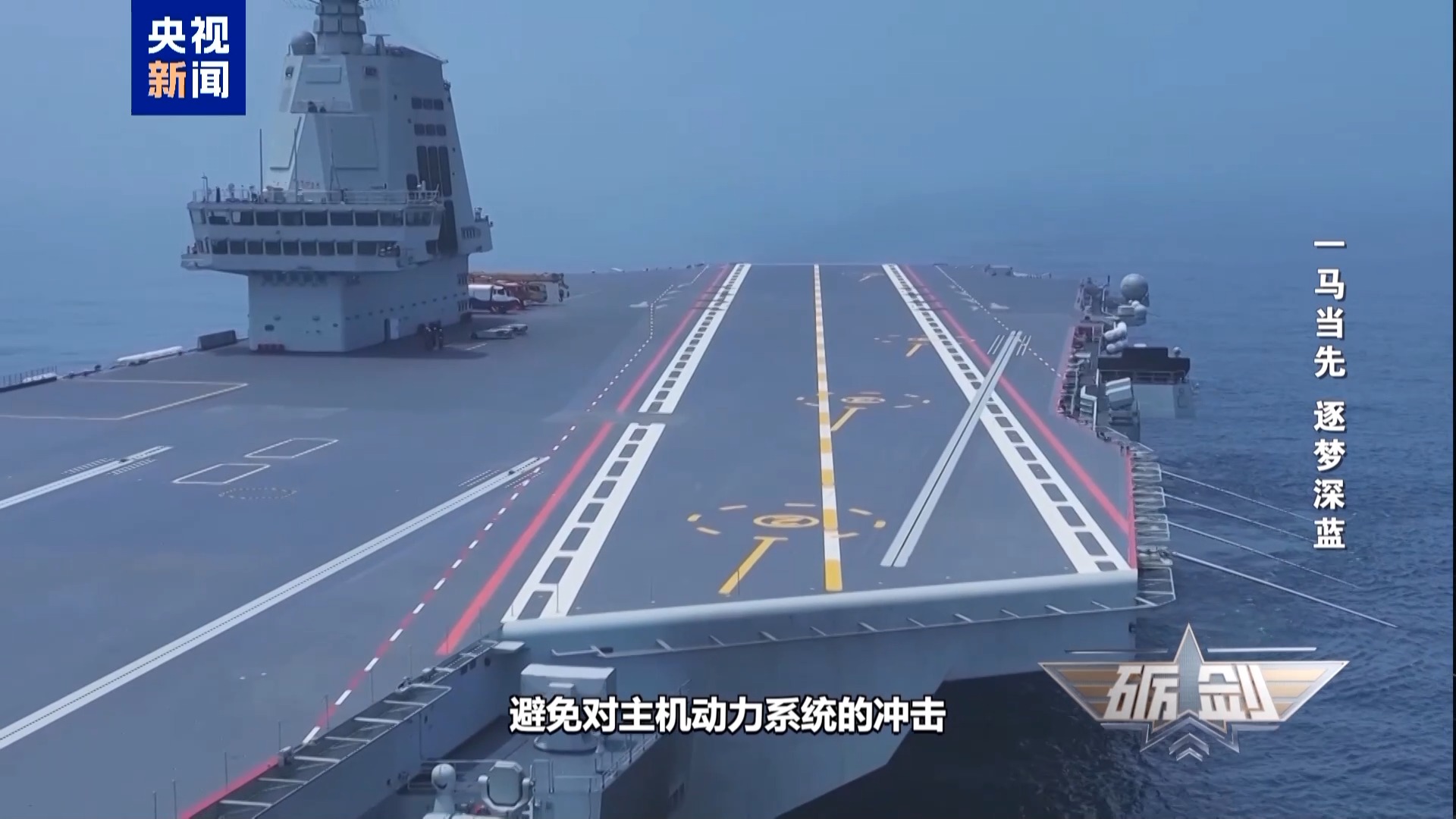
Core Viewpoint - The Fujian aircraft carrier represents a significant technological leap for China's naval capabilities, utilizing electromagnetic catapult systems, which is unprecedented among conventionally powered aircraft carriers globally [1][2]. Group 1: Technological Advancements - The Fujian carrier has bypassed steam catapult technology, directly implementing electromagnetic catapults, marking a historic advancement in China's aircraft carrier technology [1][2]. - The core of this leap is the innovative application of a medium-voltage direct current integrated power system and energy storage technology [3]. Group 2: Energy Efficiency - The medium-voltage direct current system on the Fujian carrier boasts high energy conversion efficiency, allowing it to directly drive the electromagnetic catapult track, simplifying the structure and significantly reducing failure rates [3]. - The use of supercapacitor energy storage technology addresses the challenge of instantaneous high energy demands required for electromagnetic catapults, enabling rapid charging and independent handling of pulse loads without impacting the main power system [4].
联创光电:向新而行厚积薄发,激光+超导双翼齐飞-20260212
Guoxin Securities· 2026-02-12 00:45
Investment Rating - The report initiates coverage with an "Outperform" rating for the company [3][5]. Core Views - The company has achieved a significant improvement in its financial performance, with a notable increase in net profit and revenue in the first three quarters of 2025, indicating a turning point in its business trajectory [1][21]. - The focus on "Laser + High-Temperature Superconductors" is optimizing the company's industrial structure, leading to enhanced profitability and growth potential in high-value sectors [2][14]. - The company is well-positioned to benefit from the growing demand in the laser and high-temperature superconducting markets, particularly in commercial aerospace and defense applications [23][40]. Financial Performance Summary - For the first three quarters of 2025, the company reported a revenue of 2.503 billion yuan, a year-on-year increase of 2.83%, and a net profit of 400 million yuan, up 19.40% year-on-year [1][8]. - The third quarter of 2025 saw a revenue of 856 million yuan, down 3.49% year-on-year but up 1.06% quarter-on-quarter, with a net profit of 137 million yuan, reflecting a 28.04% year-on-year increase [1][21]. - The gross margin for the first three quarters of 2025 was 19.73%, an increase of 3.84 percentage points year-on-year, while the net margin was 16.48%, also reflecting a significant improvement [8][25]. Earnings Forecast and Financial Metrics - The company is projected to achieve net profits of 477 million yuan, 584 million yuan, and 661 million yuan for 2025, 2026, and 2027 respectively, indicating growth rates of 97.9%, 22.3%, and 13.2% [4][3]. - Earnings per share (EPS) are expected to be 1.05 yuan, 1.28 yuan, and 1.45 yuan for the same years, with dynamic price-to-earnings (PE) ratios of 60, 49, and 44 [4][3]. - The report estimates the reasonable stock value to be between 72.4 and 75.1 yuan, suggesting a premium of 14.6% to 18.9% over the current stock price of 63.17 yuan [3][5]. Industry Positioning and Strategic Focus - The company is strategically positioned in the laser and high-temperature superconducting sectors, with a complete industrial chain from core components to system integration [40][47]. - The focus on high-temperature superconductors is expected to drive significant growth, particularly in applications related to controlled nuclear fusion and advanced manufacturing technologies [52][59]. - The company is also exploring opportunities in the commercial aerospace sector, leveraging its technological advancements in electromagnetic launch systems [66][74].

商业航天-火箭环节专题汇报
2026-02-02 02:22
Summary of Key Points from the Conference Call Industry Overview - The report focuses on the commercial aerospace industry, particularly the rocket segment and the development of space computing capabilities [1][2]. Core Insights and Arguments - Space computing is identified as a core variable in commercial aerospace, with SpaceX planning to deploy one million satellites to create a space computing cluster aimed at minimizing AI training and inference costs within five years, leveraging solar energy and vacuum cooling advantages [1]. - The competition for orbital resources is intensifying globally, with SpaceX completing 13 launches in January 2026, totaling over 11,000 satellites launched, highlighting the urgent need for China to increase its rocket launch capacity [1][5]. - China has over 1,000 satellites in orbit but faces challenges in launch intensity, with projects like "Qianfan" falling short of annual targets, necessitating increased launch efforts to meet established goals [1][6]. - The rocket industry value chain includes component manufacturing, overall design and assembly, and launch services, with liquid engines being a core component. The future of reusable liquid rocket engines is promising, and 3D printing technology is gaining attention for its potential to reduce complexity and enhance efficiency [1][7]. 3D Printing Technology - 3D printing, or additive manufacturing, is highlighted for its advantages in lightweight and integrated manufacturing, significantly reducing production cycles and material waste. SpaceX is advancing its Raptor 3 engine development using metal 3D printing, aiming to increase the proportion of 3D printed components to 70% [1][8][10]. - The material utilization rate in traditional machining is typically 20% to 30%, while 3D printing can achieve over 95%, lowering costs for aerospace metals like titanium and high-temperature alloys [9][10]. Challenges and Opportunities in China - Despite advancements, China’s annual launch intensity remains insufficient to meet its satellite deployment goals. The government supports the development of reusable technologies, with new listing standards on the STAR Market facilitating access for companies with core technologies [6][12]. Global Rocket Industry Landscape - The rocket industry is segmented into upstream component manufacturing, midstream design and assembly, and downstream launch services. Liquid engine systems account for 50% of costs, with a clear future for reusable engines and 3D printing technologies [7]. Emerging Launch Technologies - Electromagnetic launch systems are emerging as a new method, offering higher launch frequencies and lower operational costs compared to traditional chemical launches. China has made significant strides in this area, with the establishment of a reusable launch facility [13]. Notable Companies in Commercial Aerospace - Several companies are highlighted as key players in the commercial aerospace sector, including: 1. Fevo Technology: Strong 3D printing capabilities in aerospace. 2. Bolite: Leading 3D printing enterprise providing core products for aerospace. 3. Surui New Materials: Focused on high-performance copper alloy materials for engines. 4. Western Materials: Supplies refractory metals and titanium alloys for aerospace components. 5. Chaojie Co.: Leading provider of structural components for commercial rockets. 6. Lianchuang Optoelectronics: Involved in the first superconducting magnetic levitation electromagnetic launch platform project. 7. Juliy Suojin: Participating in the national offshore recovery platform construction [14][16].
国力电子:目前尚无相关产品应用在电磁弹射领域
Ge Long Hui· 2026-01-13 10:33
Group 1 - The company, Guoli Electronics (688103.SH), focuses on the research, development, production, and sales of electronic vacuum devices [1] - Currently, the company does not have any related products applied in the electromagnetic catapult field [1]

国力电子(688103.SH):目前尚无相关产品应用在电磁弹射领域
Ge Long Hui· 2026-01-13 10:21
Group 1 - The company, Guoli Electronics (688103.SH), focuses on the research, development, production, and sales of electronic vacuum devices [1] - Currently, the company does not have any related products applied in the electromagnetic catapult field [1]
成本降低90%!又一重大科技飞跃,电磁弹射引爆千亿新赛道,核心概念股有这些(名单)
Zheng Quan Shi Bao· 2026-01-02 11:29
Core Insights - Lianchuang Superconductor has successfully completed the delivery and customer acceptance of a major project related to "high-power low-temperature refrigeration systems and model superconducting magnets," marking a significant milestone in commercial aerospace electromagnetic launch technology [2] - The electromagnetic launch technology is expected to revolutionize the aerospace industry by significantly reducing launch costs and increasing launch frequency, with potential cost reductions from traditional rocket launch costs of $2,000-$5,000 per kilogram to as low as $500 per kilogram [3][4] - The global market for military electromagnetic launch systems is projected to grow at an annual rate of 15%, reaching over $20 billion by 2030, with China expected to capture more than 30% of this market [3][4] Industry Overview - The electromagnetic launch technology utilizes electromagnetic force to accelerate objects to high speeds, offering advantages such as higher initial velocity (over 3000 m/s), high precision control, and lower energy consumption, making it particularly suitable for commercial aerospace applications [3] - The global commercial aerospace launch market is anticipated to exceed several hundred billion yuan by 2030, with electromagnetic launch technology expected to play a dominant role [4] - The industry is witnessing a shift from "catching up" to "leading" in certain areas, with significant advancements in defense equipment modernization, high-speed transportation systems, and aerospace launch technologies [4] Company Developments - Lianchuang Optoelectronics has entered the commercial aerospace electromagnetic launch sector by establishing a joint venture with various partners, indicating a strategic move into this high-growth area [5] - Xiangdian Co., which specializes in electromagnetic launch technology, has achieved a 100% market share in special equipment applications, highlighting its strong position in the defense sector [5] - Wangzi New Materials' film capacitors are identified as core components in electromagnetic launch energy storage systems, indicating the company's involvement in cutting-edge energy technology [6]
成本降低90%!又一重大科技飞跃,电磁弹射引爆千亿新赛道,核心概念股有这些(名单)
Zheng Quan Shi Bao Wang· 2026-01-02 10:35
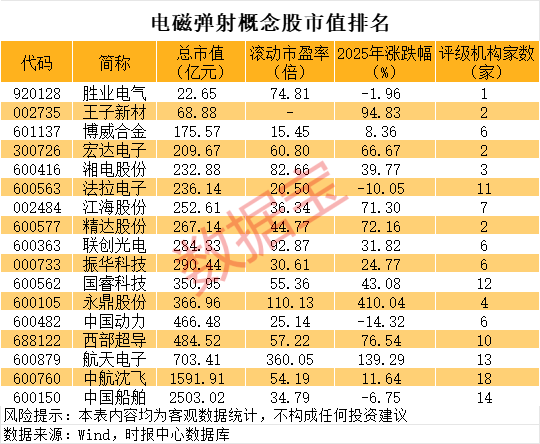
Core Viewpoint - The recent advancements in electromagnetic launch technology signify a major technological leap, with the potential to create a new market worth hundreds of billions, particularly in commercial aerospace and military applications [1][3]. Group 1: Company Developments - Jiangxi Lianchuang Superconductor has successfully completed the delivery of a "high-power low-temperature refrigeration system and model superconducting magnet service project," marking its first engineering order in commercial aerospace electromagnetic launch [2][3]. - Lianchuang Optoelectronics experienced a significant stock surge, reaching a limit up within a minute, reflecting investor confidence following the successful project delivery [2]. Group 2: Market Potential - The global electromagnetic launch technology market is expected to grow significantly, with military applications projected to reach over $20 billion by 2030, growing at an annual rate of 15%, with China expected to capture over 30% of this market [3][4]. - In commercial aerospace, traditional rocket launch costs range from $2,000 to $5,000 per kilogram, while electromagnetic launch technology could reduce this cost to as low as $500 per kilogram, representing a potential 90% cost reduction [3][4]. Group 3: Industry Insights - The electromagnetic launch technology is seen as a critical advancement following mechanical and chemical energy launches, with China making significant strides in this field through independent innovation [4][5]. - The commercial aerospace launch market is projected to exceed several hundred billion yuan by 2030, with electromagnetic launch technology likely to play a dominant role [4][5]. Group 4: Key Stocks and Investment Opportunities - The supply chain for electromagnetic launch technology includes high-temperature superconducting materials, special alloy materials, and electronic components, with key players identified in the industry [5][6]. - Notable companies in the electromagnetic launch sector include Xiangdian Co., which has a 100% market share in special equipment applications, and Wangzi New Materials, which provides essential components for electromagnetic launch systems [6][5]. - A total of 17 stocks related to electromagnetic launch technology have been identified, with significant institutional interest in companies like Aerospace Electronics and Guorui Technology [6].
电磁弹射引爆千亿新赛道,核心概念股有这些(名单)
Zheng Quan Shi Bao Wang· 2026-01-02 10:33
Group 1 - The core point of the news is that Lianchuang Optoelectronics (600363) experienced a significant stock price surge after the successful delivery and acceptance of a project related to high-power low-temperature refrigeration systems and superconducting magnets for commercial aerospace applications, marking a key milestone in the company's transition from technology development to market delivery [1] - Lianchuang Superconducting, a joint venture between Jiangxi Electronics Group and Lianchuang Optoelectronics, has completed its first engineering order in the field of commercial aerospace electromagnetic launch, indicating a full process from design to manufacturing and delivery [1] - The electromagnetic launch industry has a growing market, particularly in the military sector, with a projected annual growth rate of 15% over the next decade, potentially exceeding $20 billion by 2030, with China expected to capture over 30% of this market share [1] Group 2 - A total of 17 stocks related to the electromagnetic launch concept have been identified, with notable institutional interest in stocks like Aerospace Electronics and Guorui Technology, which have received ratings from over ten institutions [2] - Among the stocks, China Shipbuilding and AVIC Shenyang Aircraft Company have market capitalizations exceeding 100 billion yuan, while Shengye Electric has a market cap of less than 2.5 billion yuan [2] - Shengye Electric is involved in a key research project focused on high-energy density nanocomposite materials and pulse energy storage devices, which are applicable in various systems including electromagnetic launch [2]
视频丨瞬间弹射“零帧”急停 福建舰还有哪些惊喜?
Xin Lang Cai Jing· 2026-01-01 23:53
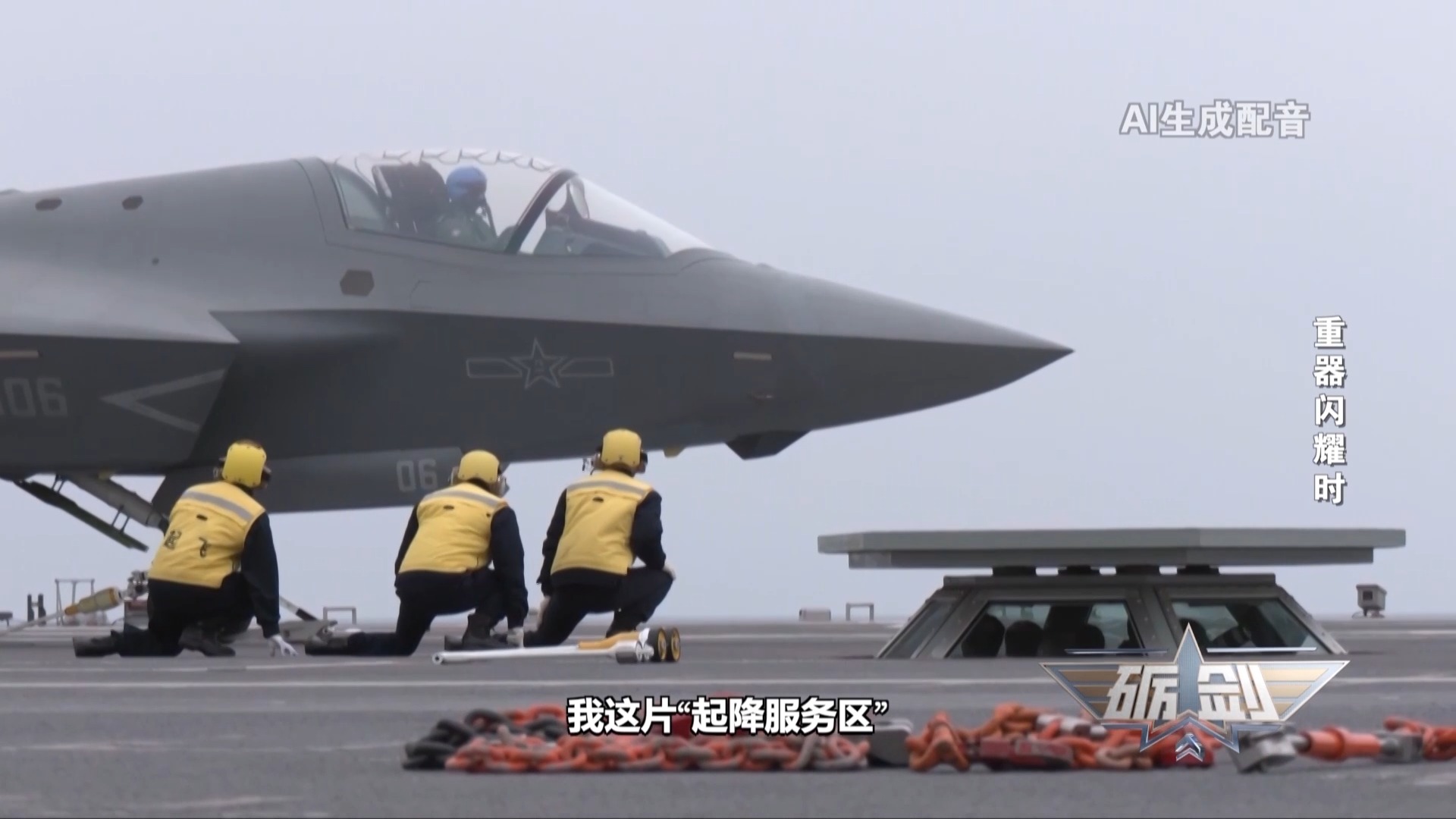
Core Viewpoint - The article highlights the advancements of China's Fujian aircraft carrier, particularly its electromagnetic catapult system, which significantly enhances the operational capabilities of naval aviation and marks a revolutionary leap in military technology [1][6]. Group 1: Technological Advancements - The Fujian aircraft carrier features an electromagnetic catapult system that allows for higher efficiency in aircraft deployment and significantly reduces the preparation time for combat operations [6][7]. - The electromagnetic catapult enables fighter jets to take off with full weapons and fuel loads, thereby increasing their operational range and attack capabilities [7]. - The carrier can launch a J-15T fighter jet in just 90 seconds, achieving a maximum of 270 to 300 sorties per day under full load [9]. Group 2: Operational Capabilities - The introduction of the electromagnetic catapult system creates a comprehensive offensive and defensive maritime combat system, enhancing the Chinese Navy's long-range operational capabilities [11]. - The Fujian carrier successfully completed its first sea training mission, validating its electromagnetic launch and recovery systems with multiple types of carrier-based aircraft [13]. - The term "full deployment" refers to the carrier's ability to operate at maximum capacity with a fully integrated and systematic air wing, allowing for coordinated strikes against maritime and land targets [15]. Group 3: Future Prospects - The Fujian aircraft carrier is expected to continue its advancements and achieve new milestones in naval operations by 2026 [17].