
玉衡芯片

Search documents
荷兰封锁持续升级,清华玉衡芯片亮相,全球供应链面临大变局
Sou Hu Cai Jing· 2025-10-20 21:20
Group 1 - The Netherlands has frozen the control of Nexperia, a semiconductor giant, aiming to reclaim it, despite 70% of its production capacity being in China [1] - The action taken by the Netherlands has not effectively disrupted the production lines, leading to a backlog of chip products [1] - The complexity of the manufacturing system means that control cannot be easily asserted through ownership changes alone [1] Group 2 - The "Yuheng" chip can capture ultra-high-definition spectral images in the 400 to 1000 nanometer range, showcasing China's alternative path in semiconductor technology [3] - China's ambition in the semiconductor industry is supported by a three-pronged approach involving resources, standards, and computing power [3][5] - The tightening of rare earth export controls indicates an ongoing supply chain battle [3] Group 3 - European efforts to establish their own wafer fabs face significant challenges, including funding, manpower, and electricity costs [7] - Major companies like ASML and Bosch, despite advocating for independence, are still seeking collaboration with China [7] Group 4 - The technology war is not limited to laboratory confrontations but encompasses a broader competition involving mines, ports, factories, and codes [8] - The effectiveness of a system's resilience is becoming crucial in this context [8] Group 5 - The future of the technology war will depend on which side can adapt more flexibly to changes [10] - A combination of hardware and software is essential for success, indicating that the conflict is ongoing [10] Group 6 - The Netherlands' belief that gaining control of Nexperia would secure victory was challenged by Tsinghua's unveiling of the Yuheng chip, demonstrating a strategic counterattack [11] - The emergence of the Yuheng chip is just the beginning, with China continuing to strengthen its position amid escalating Western opposition [12]


清华大学研制全球首款!“玉衡”芯片有望用于世界顶级天文观测望远镜
Di Yi Cai Jing· 2025-10-16 12:54
Core Insights - The "Yuheng" chip, developed by Tsinghua University's Fang Lu team, represents a significant breakthrough in high-precision imaging measurement, marking a milestone in China's smart photon technology [1][3] - The chip will be tested on the Gran Telescopio Canarias (GTC), which has a 10.4-meter aperture, and is expected to provide new insights into fundamental physics research, including dark matter and black holes [1][3] Group 1: Technological Advancements - "Yuheng" overcomes challenges related to resolution, efficiency, and integration in spectral imaging systems, making it applicable in various fields such as machine intelligence, airborne remote sensing, and astronomical observation [3] - The chip's miniaturized design allows it to be mounted on satellites for creating cosmic spectral maps, enhancing astronomical observation efficiency significantly [3] Group 2: Instrumentation and Applications - The GTC, located in Spain, is one of the largest single-aperture optical-infrared telescopes globally, composed of 36 hexagonal mirror segments, enabling the observation of extremely faint celestial bodies [3] - The telescope is equipped with advanced scientific instruments for observations across different wavelengths (optical, near-infrared) and modes (imaging, spectroscopy), including OSIRIS, CanariCam, and EMIR [3] Group 3: Recognition and Future Prospects - Fang Lu has received multiple prestigious awards, including the 2024 "Science Exploration Award" and the 2024 He Liang He Li Foundation Science and Technology Innovation Award, highlighting her contributions to the intersection of artificial intelligence and computational optics [4] - Tsinghua University has incubated several chip companies, such as Photon Chip Power, which focuses on new optical intelligent computing acceleration chips aimed at addressing current challenges in computing power, energy consumption, and latency [4]
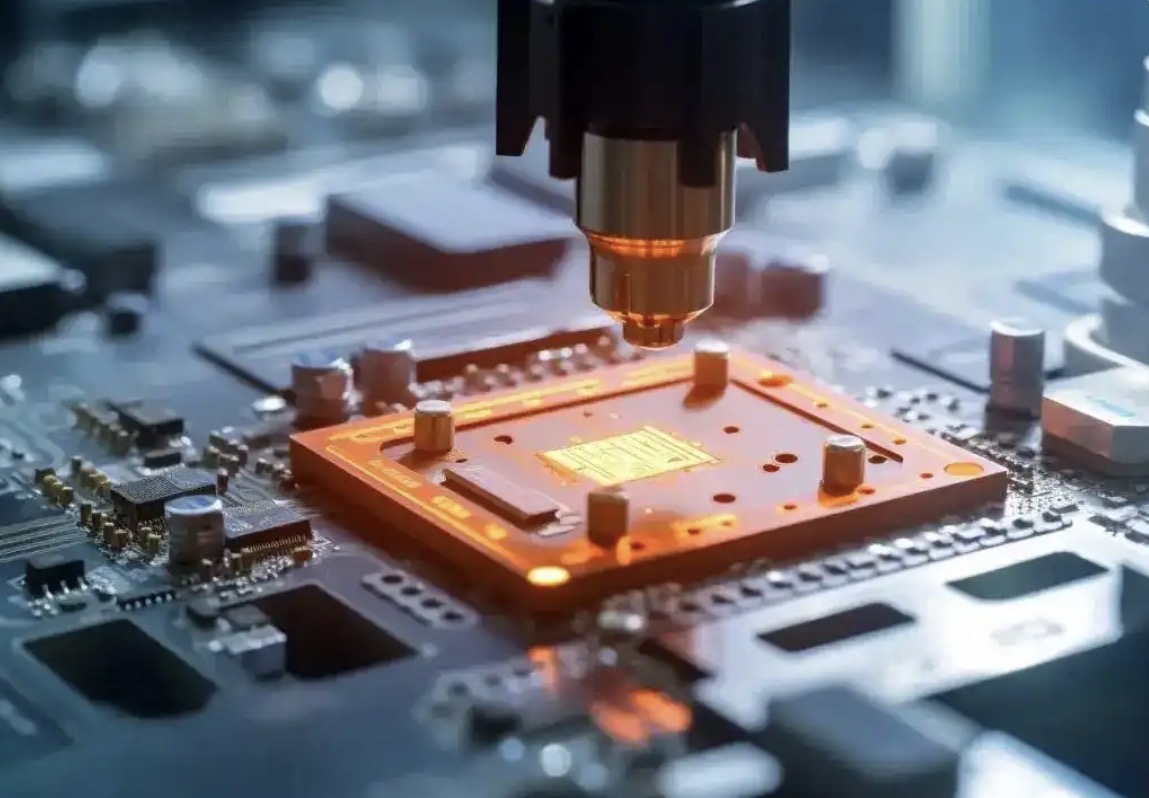
我国芯片研制获重大突破!
国芯网· 2025-10-16 11:57
Core Viewpoint - The article highlights a significant breakthrough in the field of smart photonics by a research team led by Professor Fang Lu from Tsinghua University, who developed the world's first sub-angstrom snapshot spectral imaging chip, marking a new milestone in high-precision imaging measurement in China [1][3]. Group 1: Technological Breakthrough - The newly developed chip measures approximately 2 cm × 2 cm × 0.5 cm and can achieve sub-angstrom spectral resolution and tens of millions of pixels spatial resolution across a wide spectral range of 400-1000 nanometers [3]. - This chip allows for simultaneous acquisition of full spectral and spatial information in a single snapshot, enhancing the snapshot spectral imaging capability by two orders of magnitude, thus overcoming the long-standing bottleneck between spectral resolution and imaging throughput [3]. Group 2: Innovation and Applications - The research team innovatively proposed a reconfigurable computational optical imaging architecture based on smart photonics principles, transforming traditional physical spectral splitting limitations into photon modulation and computational reconstruction processes [3]. - The "Yuheng" chip developed by the team addresses challenges related to resolution, efficiency, and integration in spectral imaging systems, with potential applications in machine intelligence, airborne remote sensing, and astronomical observation [3]. - For instance, in astronomical observations, the "Yuheng" chip can capture the complete spectrum of nearly 10,000 stars per second, potentially reducing the survey period for the spectra of the hundreds of billions of stars in the Milky Way from thousands of years to under ten years [3].

全球首款,亚埃米级快照光谱成像芯片问世
财联社· 2025-10-16 00:34
Core Viewpoint - Tsinghua University's research team has developed the world's first sub-angstrom snapshot spectral imaging chip, "Yuheng," marking a significant advancement in intelligent photonics technology for high-precision imaging and measurement [1][4]. Group 1: Technological Breakthrough - The "Yuheng" chip measures approximately 2 cm x 2 cm x 0.5 cm and can achieve sub-angstrom spectral resolution and tens of millions of pixels spatial resolution across a wide spectral range of 400-1000 nanometers [3]. - The chip enables simultaneous acquisition of full spectral and spatial information in a single snapshot, enhancing spectral imaging resolution by two orders of magnitude [3]. Group 2: Applications and Impact - The "Yuheng" chip addresses challenges in spectral imaging systems regarding resolution, efficiency, and integration, making it applicable in various fields such as machine intelligence, airborne remote sensing, and astronomical observation [4]. - For astronomical observations, the chip can capture the complete spectrum of nearly 10,000 stars per second, potentially reducing the survey period for the Milky Way's 100 billion stars from thousands of years to under ten years [4].

全球首款亚埃米级快照光谱成像芯片“玉衡”问世
Ke Ji Ri Bao· 2025-10-15 23:22
Core Insights - Tsinghua University's Professor Fang Lu's team has developed the world's first sub-angstrom snapshot spectral imaging chip named "Yuheng," marking a significant advancement in intelligent photonics technology for high-precision imaging and measurement [1][2]. Group 1: Technological Breakthrough - The "Yuheng" chip addresses long-standing challenges in spectral imaging systems, specifically resolution, efficiency, and integration [2]. - The chip measures approximately 2 cm x 2 cm x 0.5 cm and operates within a wide spectral range of 400 to 1000 nanometers, achieving sub-angstrom spectral resolution and tens of millions of pixels in spatial resolution [1]. Group 2: Applications and Impact - The chip can be widely applied in fields such as machine intelligence, airborne remote sensing, and astronomical observation [2]. - For astronomical observations, the "Yuheng" chip can capture the complete spectrum of nearly 10,000 stars per second, potentially reducing the survey period for the Milky Way's 100 billion stars from thousands of years to under ten years [2].