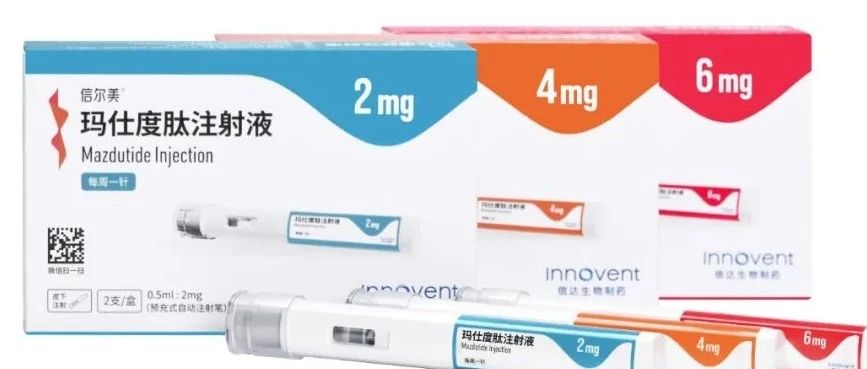
玛仕度肽注射液(信尔美®)

Search documents
国产双靶点创新药带来多重代谢获益,连锁药店科学助力减重“最后一公里”
Zhong Guo Xin Wen Wang· 2025-11-05 03:32
Core Viewpoint - The article highlights the transformation of chain pharmacies in China from traditional drug dispensers to "weight management specialists," actively participating in the national "Weight Management Year" initiative to improve public health and manage chronic diseases [1][4]. Industry Overview - The "Weight Management Year" initiative is in its second year, emphasizing the importance of weight management as a public health issue rather than just a personal choice [3][4]. - The National Health Commission has included "healthy weight management" in the "Healthy China 2030" plan, aiming to curb the trend of overweight and obesity by 2030 [3][4]. Health Statistics - Over 30% of adults in China are classified as having abdominal obesity, with the rate rising to 87.8% among those with a BMI of 24 or higher [4]. - Abdominal obesity is linked to various metabolic diseases, including diabetes and fatty liver, highlighting the urgent need for effective weight management strategies [4]. Role of Pharmacies - Pharmacies are evolving to provide comprehensive health services, including free body composition tests, blood pressure monitoring, and personalized dietary and exercise recommendations [3][5]. - Chain pharmacies are establishing "weight loss rooms" to offer weight assessments and health education, creating a closed-loop service model that combines medication and ongoing management [8]. Innovative Weight Loss Medications - The introduction of innovative weight loss drugs, such as the domestically developed injection, Ma Shidu Te, is enhancing the accessibility of effective treatments for abdominal obesity [5][7]. - Ma Shidu Te has shown superior efficacy in clinical trials compared to other medications, providing a new option for managing obesity and metabolic disorders in patients with type 2 diabetes [7]. Conclusion - The integration of pharmacies into the weight management framework represents a significant shift in public health strategy, aiming to improve health outcomes through professional medication consultation and continuous management services [1][8].


信达生物冲击百亿营收
Xin Lang Cai Jing· 2025-08-08 11:18
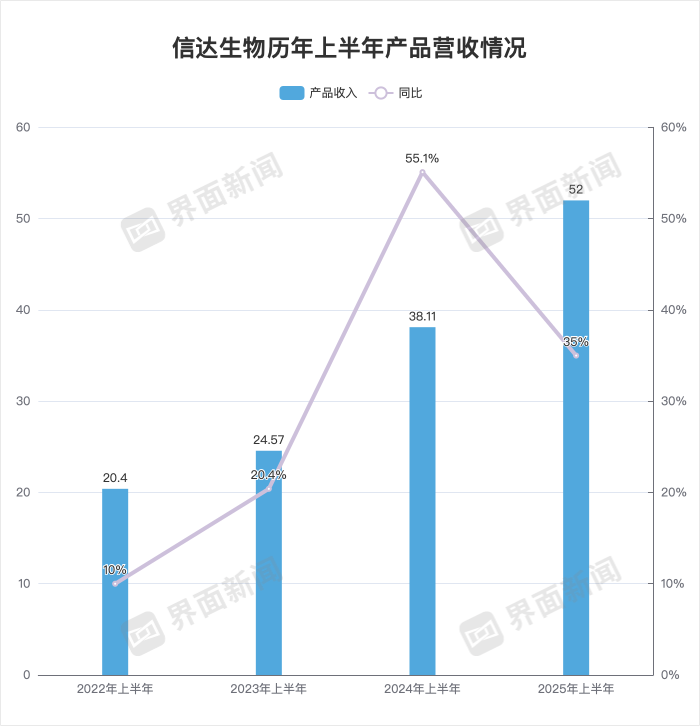
Core Viewpoint - The company reported a total product revenue exceeding 5.2 billion yuan in the first half of 2025, representing a year-on-year growth of 35% [1][3]. Revenue Growth - In Q2 2025, the total product revenue surpassed 2.7 billion yuan, showing a year-on-year increase of 30% and a quarter-on-quarter growth of 12.5% [1][3]. - The growth was primarily driven by the oncology segment and the comprehensive product line, with stable growth from main products and an increasing revenue share from new products [3][5]. Profitability Status - The company did not disclose whether it achieved profitability, nor did it provide information on Non-IFRS profit or Non-IFRS EBITDA [3][5]. - In 2024, the Non-IFRS profit and Non-IFRS EBITDA were reported at 332 million yuan and 412 million yuan, respectively, both turning positive for the first time, although the net profit remained negative [5][8]. Product Pipeline - The product pipeline is divided into oncology and comprehensive categories, with oncology being the main revenue source as of 2024 [8][10]. - The company launched five new approved drugs in 2024, including three targeted therapies for lung cancer and the world's first non-covalent BTK inhibitor for blood cancers [9][10]. Future Growth Potential - The company plans to raise 4.3 billion HKD for research and development, focusing on key pipelines like IBI-363 and IBI-343, which have received breakthrough therapy designations [10][15]. - The comprehensive pipeline, particularly the recently approved weight management drug, is crucial for the company's performance in the next two to three years [10][15]. Market Competition - The domestic GLP-1 drug market is becoming increasingly competitive, with 21 GLP-1 drugs already available for various indications as of July 2025 [11][14]. - The CFO indicated that the company will leverage both traditional and online retail channels for the commercialization of its products [14][15]. Long-term Goals - The company aims to achieve a product revenue target of 20 billion yuan by 2027 and plans to have five pipelines enter global multi-center phase III clinical trials by 2030 [15].
官方|一文读懂玛仕度肽的使用说明及注意事项(记得转发收藏)
GLP1减重宝典· 2025-07-04 10:19
Core Viewpoint - The article discusses the approval and details of Mazdutide Injection (信尔美®), a drug developed by Innovent Biologics, for long-term weight management in adults with obesity or overweight conditions, specifically targeting those with a BMI of ≥28 kg/m² or ≥24 kg/m² with related comorbidities [2][6]. Drug Information - **Drug Name**: Mazdutide Injection (信尔美®) [4][22] - **Active Ingredient**: Mazdutide [20] - **Formulation**: Clear or nearly clear, colorless or nearly colorless liquid [5][21]. Indications - The drug is indicated for long-term weight control in adults with obesity (BMI ≥28 kg/m²) or overweight (BMI ≥24 kg/m²) with at least one weight-related comorbidity such as high blood sugar, hypertension, dyslipidemia, fatty liver, or obstructive sleep apnea [6][21]. Dosage and Administration - **Initial Dose**: Recommended starting dose is 2 mg, subcutaneously once a week [8]. - **Dose Adjustment**: After 4 weeks, the dose can be increased to 4 mg, and if further weight improvement is needed, it can be increased to 6 mg after at least 4 weeks on the current dose [9][10]. - **Maintenance Dose**: The recommended maintenance dose is either 6 mg or 4 mg, administered weekly [11][12]. Special Populations - **Liver Function**: No dose adjustment is needed for mild liver impairment; caution is advised for moderate to severe liver impairment due to lack of clinical data [13][28]. - **Kidney Function**: No dose adjustment is needed for mild to severe kidney impairment, but caution is advised due to limited experience [14][28]. Contraindications - The drug is contraindicated in individuals with known hypersensitivity to the active ingredient or excipients, a history of medullary thyroid carcinoma (MTC), or multiple endocrine neoplasia syndrome type 2 (MEN2) [15][43]. Common Adverse Reactions - Common adverse reactions include nausea, diarrhea, vomiting, abdominal pain, and injection site reactions [17][32]. The incidence of gastrointestinal adverse reactions was significantly higher in the Mazdutide group compared to the placebo group [34]. Clinical Trial Results - In a Phase III clinical trial (GLORY-1), 610 patients were evaluated, showing significant weight loss compared to placebo at both 32 weeks and 48 weeks [70][71]. The percentage change in weight relative to baseline was -10.1% for the 4 mg group and -12.5% for the 6 mg group at 32 weeks [72]. Cardiovascular Benefits - Mazdutide significantly improved cardiovascular metabolic parameters, including waist circumference, blood pressure, triglycerides, and cholesterol levels, compared to placebo [71]. Conclusion - The approval of Mazdutide Injection represents a significant advancement in the treatment options available for obesity and overweight management, particularly for patients with related comorbidities [2][6].