
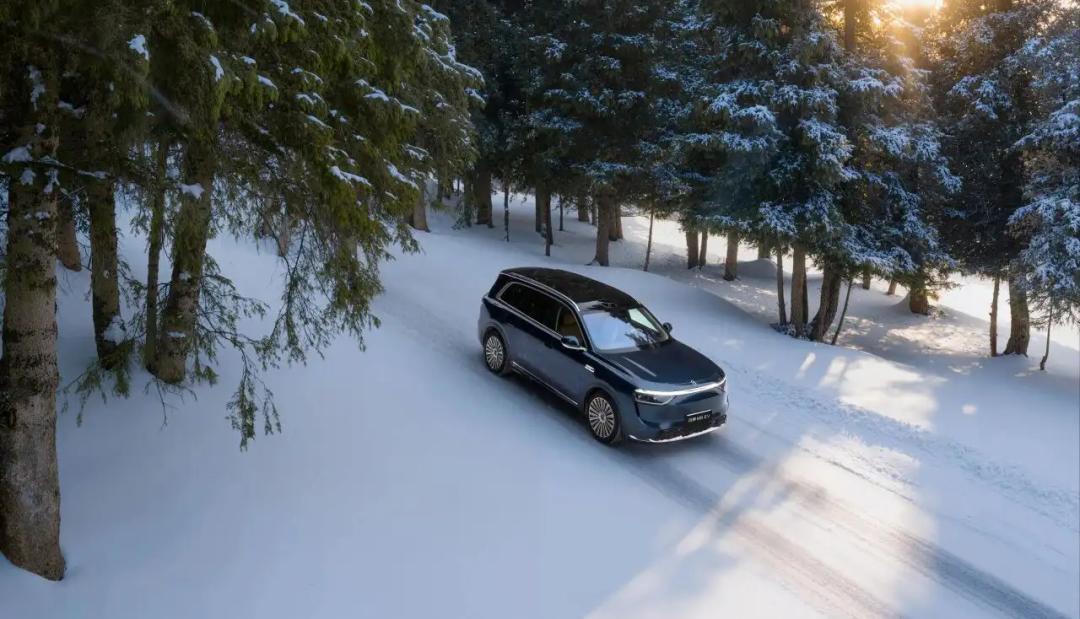
蔚来ET5T

Search documents
广汽想借华为“摸鱼”,不过还是有四个难题
虎嗅APP· 2026-03-17 14:03
Core Viewpoint - The article discusses the strategic collaboration between GAC and Huawei in the niche market of shooting brake vehicles, highlighting the challenges and potential opportunities in this segment as GAC aims to leverage Huawei's technology to enhance its brand and product offerings [6][9][37]. Market Overview - The shooting brake market in China is currently small, with an expected market share of less than 3% by 2026 [2]. Despite its niche appeal, GAC has decided to enter this market with the launch of the Envision GT7, which is set to debut on March 17 and is equipped with advanced technologies from Huawei [4][10]. Strategic Intent - GAC's decision to collaborate with Huawei is seen as a strategic move to address its financial challenges, with projected net losses of 8-9 billion yuan in 2025 [6][17]. GAC Chairman Feng Xingya emphasized the importance of the Envision project for the company's long-term development, prioritizing it as a key initiative [6][9]. Competitive Landscape - The market for shooting brake vehicles is becoming increasingly competitive, with several new models expected to launch in the 20-35 million yuan price range [7]. Existing models like NIO ET5T and Zeekr 007GT have shown stable market performance, but the overall segment remains under pressure due to low resale values and supply chain issues [8][31]. Challenges Faced - GAC faces several challenges in the shooting brake market, including pricing strategies, user experience, brand perception, and internal reform processes [32][35]. The pricing of the Envision GT7 is critical, as exceeding 350,000 yuan may lead to competitive pressure, while pricing it too low could result in reduced features [32]. Collaboration Dynamics - The partnership between GAC and Huawei is characterized by a deep integration of teams, with over 200 Huawei engineers working alongside GAC's staff to ensure collaborative decision-making and product development [22][23]. This embedded approach aims to combine GAC's manufacturing expertise with Huawei's technological capabilities [20][21]. Future Outlook - The success of the Envision GT7 will depend on its ability to meet market expectations for quality and performance, especially as the automotive industry shifts focus towards reliability and traditional manufacturing standards [38]. The upcoming launch will be a critical test for both GAC and Huawei in establishing their presence in the shooting brake segment [38].


全网最全,这些春节撒钱的车企,你发现了几个?
3 6 Ke· 2026-02-26 02:51
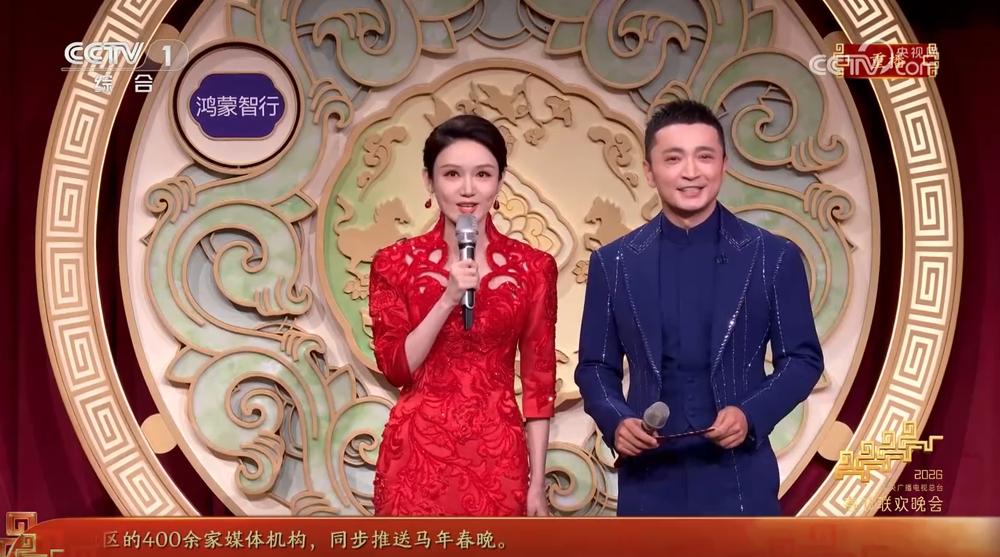
Core Insights - The automotive industry in China has launched an extensive marketing campaign during the 2026 Spring Festival, utilizing various platforms such as the Spring Festival Gala, movie placements, and self-produced short films to enhance brand visibility and engage consumers [1][40]. Group 1: Spring Festival Gala Marketing - Homong Zhixing's brand, Zun Jie S800, has been named the "Flagship Partner of the Smart Travel Era" for the Spring Festival Gala, marking its second consecutive year of collaboration [3][6]. - Multiple brands under Homong Zhixing, including Aito, have also participated in the Gala, showcasing their vehicles and promoting a festive message [10]. - Great Wall Motors' Wey brand was featured as the designated vehicle for new media during the Gala, increasing its visibility [12]. Group 2: Movie Marketing - The 2026 Spring Festival movie market has become a significant platform for automotive marketing, with nearly ten car companies participating in film placements, particularly in the movie "Fast and Furious 3" [18][20]. - Various models, including Lynk & Co Z20 and BYD's full range, were integrated into the film's narrative, enhancing their appeal through contextual relevance [23][26]. - Tank brand from Great Wall Motors took a unique approach by participating as a behind-the-scenes vehicle in the filming of "Fast and Furious 3" [20]. Group 3: Self-produced Short Films - Several car companies opted to create their own promotional videos, leveraging the Year of the Horse theme and the ongoing Winter Olympics to connect with audiences [29][33]. - BMW released a themed short film titled "Happy Year of the Horse," creatively linking its brand with New Year wishes [29]. - Volvo produced a creative video related to the Winter Olympics, emphasizing safety features in their vehicles [33]. Group 4: Marketing Strategy Insights - The three marketing strategies—Spring Festival Gala, movie placements, and self-produced short films—each offer unique advantages, such as broad reach, contextual integration, and creative flexibility [35][38]. - The Spring Festival Gala achieved a total media reach of 23.063 billion times, a 37.3% increase year-on-year, with a peak viewership of over 400 million [35]. - The focus has shifted from mere exposure to integrating brand value and product functionality with the emotional core of the Spring Festival, aiming for a combination of brand awareness, reputation, and conversion [40].





李斌:蔚来今年计划新建1000座换电站,加电风景线增至100条
Sou Hu Cai Jing· 2026-02-09 02:22
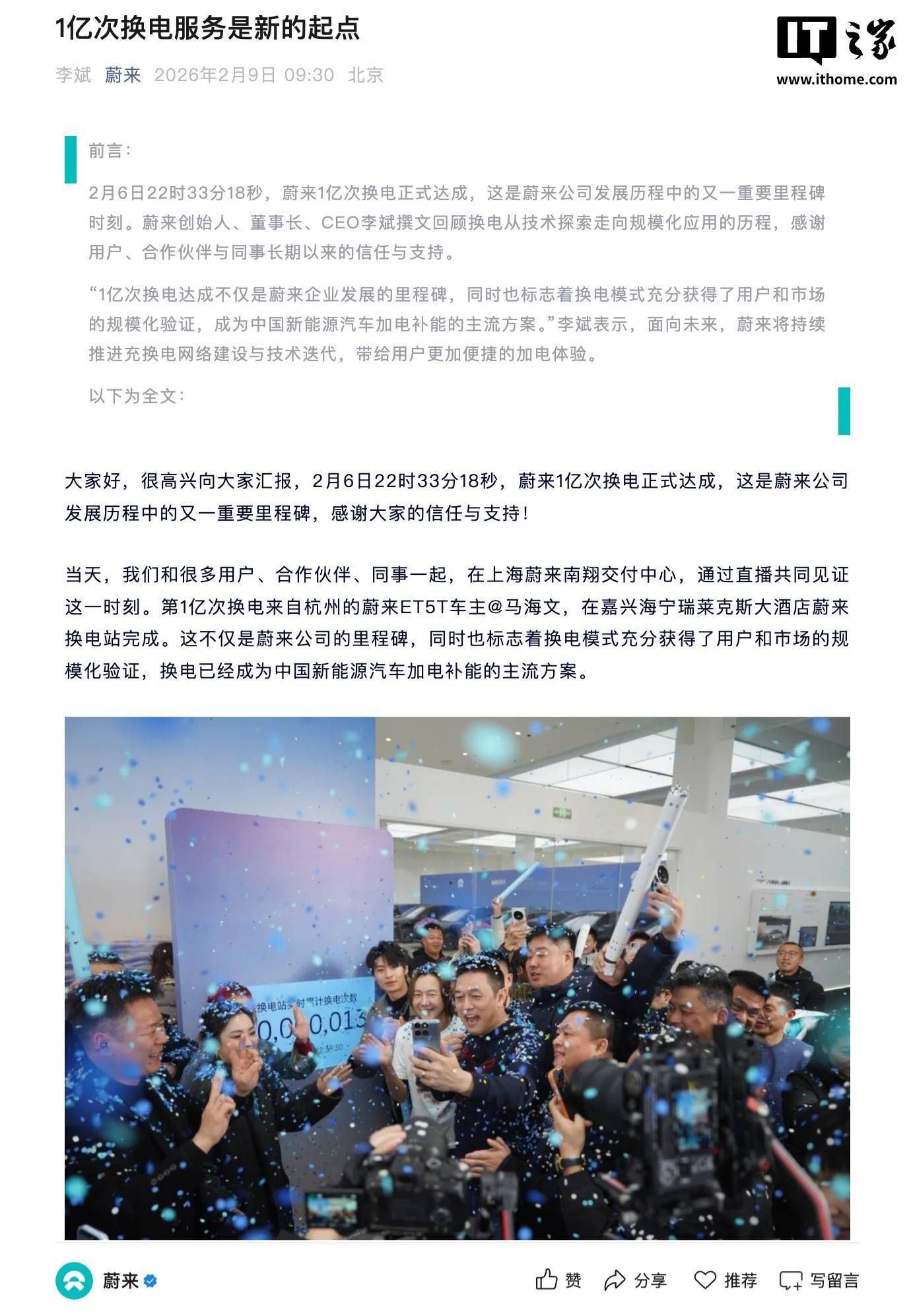
Core Insights - NIO plans to build 1,000 battery swap stations by 2026 and expand its charging routes to 100, including the Silk Road route this year [1][6] - The company achieved a significant milestone of 100 million battery swaps, which took 2,819 days since the first swap, indicating the successful transition from concept to large-scale operation [6] - Daily battery swap service volume has surpassed 100,000, demonstrating the growing acceptance of battery swapping as a mainstream solution for electric vehicle charging in China [6] Group 1 - NIO's founder and CEO Li Bin announced the expansion plans for battery swap stations and routes [1] - The company has invested over 18 billion yuan in charging and swapping infrastructure over the past 11 years, with over 2,100 patents filed [6] - The first battery swap station was established in May 2018, and the company has achieved an average of over 12 million swaps per year since then [6] Group 2 - The first user to complete the 100 millionth battery swap was a customer from Hangzhou, who received a reward of 100,000 points in the app [6] - The battery swapping model has gained high recognition from users, partners, and the industry, contributing to its growth as a preferred charging solution [6]
国联民生证券:1月车市新势力同比表现好于行业 智能化能力成竞争关键
智通财经网· 2026-02-05 06:20
Core Viewpoint - The automotive industry is experiencing a pivotal moment in smart technology, with autonomous driving capabilities becoming a key competitive factor for car manufacturers. The report anticipates a threefold turning point in technology, user acceptance, and business models for smart driving, favoring quality domestic car companies with advanced smart layouts and positive product and brand cycles [1]. Group 1: Market Performance - In January, the overall performance of the car market was subdued, with a total retail market size of approximately 1.8 million vehicles, a month-on-month decrease of 20.4% but a slight year-on-year increase. The retail sales of new energy vehicles are expected to reach 800,000 units, with a penetration rate of 44.4% [1]. - Five sample new force car companies (excluding Xiaomi and Aion) delivered a total of 130,772 vehicles in January, representing a year-on-year increase of 17.5% but a month-on-month decrease of 28.0%, outperforming the industry average [1]. Group 2: Company-Specific Performance - **Leap Motor**: In January, delivered 32,059 vehicles, a year-on-year increase of 27.4%. The strong performance is attributed to the competitive pricing of models C10 and B01. The company plans to launch its first flagship SUV D19 in April 2026 [2]. - **Xpeng**: Delivered 20,011 vehicles in January, a year-on-year decrease of 34.1% and a month-on-month decrease of 38.0%. The company plans to launch multiple new models in 2026, including the P7+ starting at 186,800 yuan [3]. - **NIO**: Delivered 27,182 vehicles in January, a year-on-year increase of 96.1%. The company is set to deliver its 60,000th ES8 on February 1, 2026, and has launched a new version of its NWM model [4]. - **Li Auto**: Delivered 27,668 vehicles in January. The company has expanded its retail and service network significantly, with 547 retail centers and 3,966 charging stations across the country [4]. - **Zeekr**: Delivered 23,852 vehicles in January, a year-on-year increase of 99.7%. The company plans to launch its second model, Zeekr 8X, in the first half of this year [4]. - **Xiaomi**: Delivered over 39,000 vehicles in January, with plans to launch the new generation SU7 in April 2026 [5][6]. Group 3: Technological Advancements - The era of intelligent driving is accelerating, with companies like Xpeng and those associated with Huawei continuously iterating and promoting smart driving technologies. The advancements are expected to lower the hardware barriers for smart driving, making it accessible in the mainstream market under 200,000 yuan, thus providing a competitive edge against joint venture brands [7].

开年就迎“大逆转”:小米反超零跑,蔚来快追平理想,新造车1月环比暴跌
3 6 Ke· 2026-02-02 13:02
Core Insights - The automotive industry faced a significant downturn at the beginning of 2026, with many companies reporting disappointing sales figures compared to December 2025, despite some year-on-year growth due to low bases from the previous year [1][4][6] - The market is experiencing a reshuffling, with new entrants like AITO and Xiaomi gaining traction while established players like Li Auto and Xpeng are struggling [3][12][20] Group 1: Market Performance - January 2026 saw a 28% year-on-year decline in retail sales of passenger vehicles, with a 37% drop compared to December 2025 [6] - The new energy vehicle (NEV) market specifically experienced a 16% year-on-year decline and a 52% month-on-month decline [6] - AITO led the new energy vehicle segment with a delivery of 40,016 units, marking a significant year-on-year increase of 83% [13] Group 2: Company-Specific Performance - Xiaomi and AITO both reported over 39,000 units delivered in January, while Li Auto and Xpeng fell below the 30,000 mark [3][15] - Li Auto's deliveries were 27,668 units, showing a 37% month-on-month decline and an 8% year-on-year decline due to battery supply issues [20][22] - NIO delivered 27,182 units, a 96.1% year-on-year increase but a 43% month-on-month decline, with the new ES8 model being a key contributor [22][23] Group 3: Competitive Strategies - Companies are responding to market pressures by adjusting pricing strategies, with BMW reducing prices on 31 models and some brands offering zero-interest loans [6][7] - AITO and Xiaomi are launching new financial purchase plans to stimulate sales, including low-interest financing options [11][23] - The competitive landscape is intensifying, with companies like Geely and BYD also adjusting their strategies to maintain market share [26][28] Group 4: Traditional Automakers - Geely emerged as the top-selling automaker in January 2026 with 270,000 units sold, surpassing BYD's 210,000 units [26][28] - BYD's sales dropped by 30.11% year-on-year, with a significant 50.04% decline from December 2025 [28][30] - Chery and Great Wall Motors also reported declines, with Chery's sales at 200,269 units and Great Wall's at 90,312 units, reflecting broader market challenges [33][35]


车企一月成绩单出炉;小米否认与福特探索成立电车合资企业丨汽车交通日报
创业邦· 2026-02-01 10:09
Group 1 - The core viewpoint of the article highlights the performance of various automotive companies in January, with significant delivery numbers and growth rates reported for several brands [2][3]. Group 2 - Xiaomi's automotive deliveries exceeded 39,000 units in January 2026 [3]. - Li Auto delivered 27,668 vehicles in January 2026 [3]. - Leap Motor achieved total deliveries of 32,059 units in January, marking a 27% year-on-year increase [3]. - Aito's deliveries reached 40,016 units in January, reflecting an 83% year-on-year growth [3]. - Lantu delivered 10,515 units in January 2026, showing a 31% increase [3]. - GAC Toyota's sales in January amounted to 63,648 units [3]. - GAC Trumpchi's terminal sales in January were 26,937 units, with a year-on-year growth of 2.06% [3]. - Great Wall Motors reported total sales of 90,312 units in January 2026, a year-on-year increase of 11.59% [3]. - Geely's brand, Extreme Stone, achieved cumulative deliveries of 1,028 units in January, nearly doubling year-on-year [3].

蔚小理等9家车企推“7年低息”
新华网财经· 2026-02-01 08:07
Group 1 - NIO launched a limited-time financial car purchase plan on February 1, allowing customers who order the ET5, ET5T, ES6, and EC6 models to enjoy a 7-year, 84-installment plan with a down payment as low as 20% and an annual interest rate starting at 0.49% [3] - Currently, a total of 9 car manufacturers, including Tesla, Xiaopeng, Li Auto, Xiaomi, and Geely, have introduced low-interest financial car purchase plans, with some offering plans with a 0 down payment option [3]
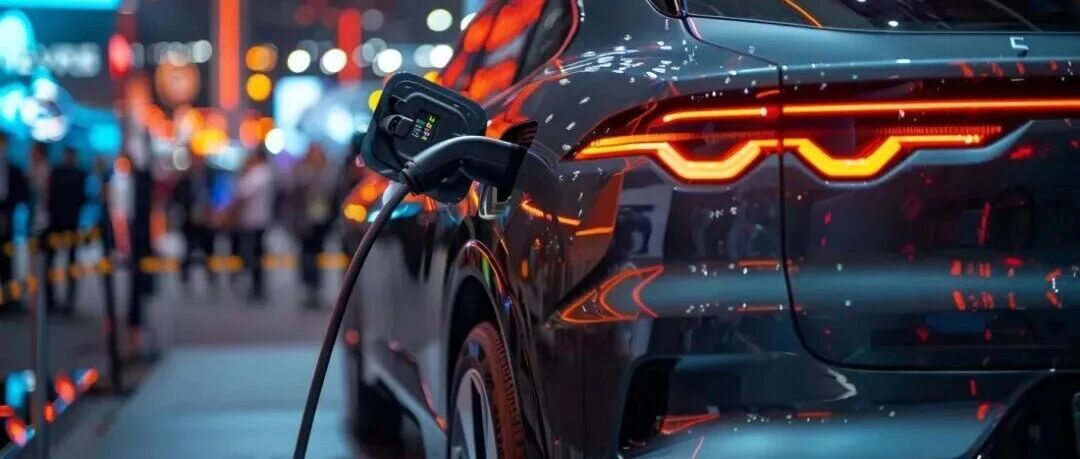
蔚来推2月限时购车方案,首付20%年化费率0.49%
Cai Jing Wang· 2026-02-01 07:41
Core Viewpoint - NIO has launched a limited-time financial car purchase plan with low down payment and interest rates, aiming to attract more customers in a competitive market [1] Group 1: NIO's Financial Offer - NIO's new financial plan allows customers to make a down payment as low as 20% and offers an annual interest rate starting at 0.49% [1] - The plan is available for the purchase of NIO models including ET5, ET5T, ES6, and EC6, with a financing term of 7 years and 84 installments [1] Group 2: Industry Context - A total of 9 automotive companies, including Tesla, Xpeng, Li Auto, Xiaomi, and Geely, have introduced similar low-interest financing options, with some offering plans with 0% down payment [1]
蔚小理等9家车企推“7年低息”
第一财经· 2026-02-01 05:21
Group 1 - NIO launched a limited-time financial car purchase plan for February, allowing customers who order the ET5, ET5T, ES6, and EC6 models to enjoy a 7-year, 84-installment plan with a down payment as low as 20% and an annual interest rate starting at 0.49% [3] - Currently, a total of 9 car manufacturers, including Tesla, Xiaopeng, Li Auto, Xiaomi, and Geely, have introduced low-interest financial car purchase plans, with some offering plans with a 0 down payment option [3]
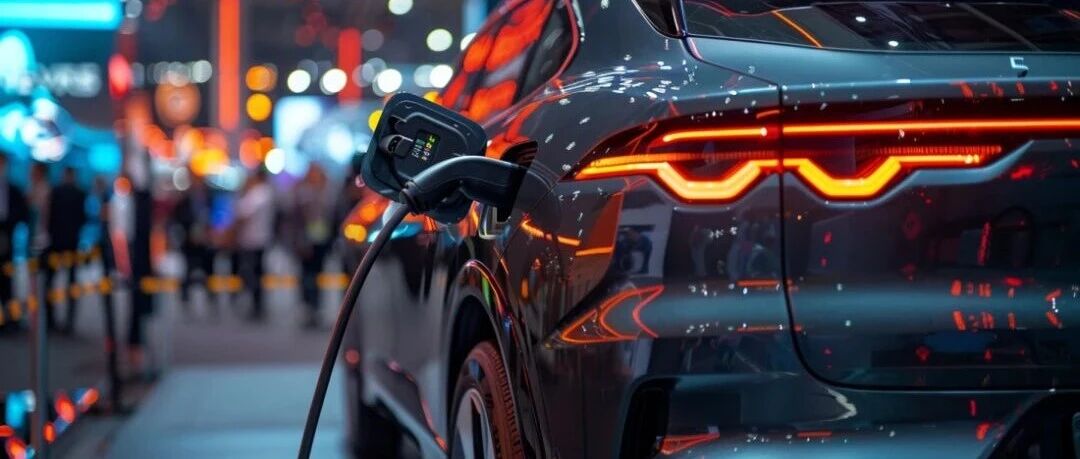
蔚小理等9家车企推“7年低息”
Di Yi Cai Jing· 2026-02-01 04:53
Group 1 - NIO launched a limited-time financial car purchase plan in February, offering a 7-year, 84-installment financing option with a down payment as low as 20% and an annual interest rate starting at 0.49% [1] - Currently, a total of 9 automotive companies, including Tesla, Xiaopeng, Li Auto, Xiaomi, and Geely, have introduced low-interest financing plans, with some options featuring a 0 down payment [1]