生物基平台化合物

Search documents
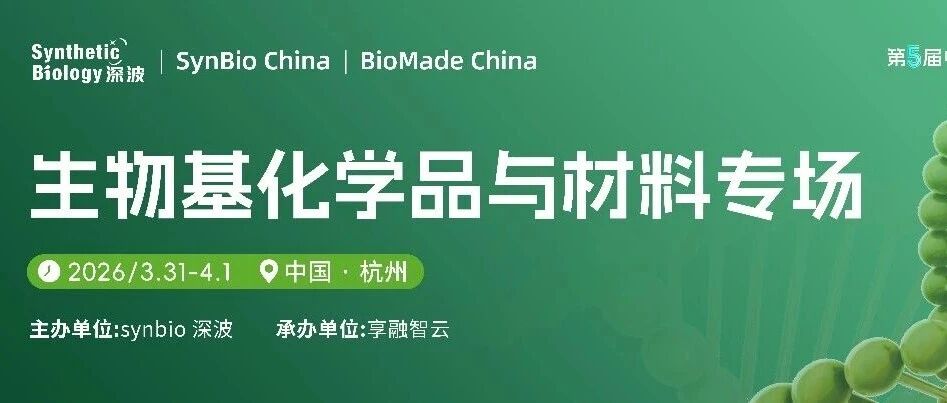
免费报名!杭州生物制造大会【生物基化学品与材料专场】,诚邀各位参会交流!
synbio新材料· 2026-02-28 02:26
Core Viewpoint - The article emphasizes the importance of bio-based chemicals and materials as a key pillar of the bio-manufacturing industry, highlighting their potential to replace traditional petroleum-based products in various sectors such as packaging, textiles, and automotive, driven by their renewable raw materials and low-carbon environmental benefits [2]. Industry Development - The Chinese government prioritizes the development of bio-based new materials, categorizing them as strategic materials, and has implemented multiple supportive industrial policies [2]. - Despite the focus on growth, the industry faces challenges including cost competitiveness, stability of raw material supply chains, optimization of product performance, and market acceptance [2]. Event Details - The "5th China Synthetic Biology and Bio-Manufacturing Conference" will be held in Hangzhou from March 31 to April 1, 2026, aiming to gather insights from various sectors to address industry challenges and promote high-quality development of bio-based chemicals and materials [2][4]. Conference Topics - Proposed topics for the conference include green bio-manufacturing of bio-based bulk chemicals, molecular and material innovations based on synthetic biology, large-scale production and high-value utilization of bio-based platform compounds, development and application of furan bio-based new materials, and industrial practices for high-value utilization of non-food straw biomass [9]. Participation and Collaboration - The conference will offer exhibition opportunities for companies involved in synthetic biology and modern biotechnology applications, including options for forum sponsorship, keynote speeches, project roadshows, and various promotional activities [11]. - Registration for the conference is free but limited, requiring pre-registration and approval for successful participation [16].

【行业深度】一文洞察2026年中国秸秆行业发展前景及投资趋势研究报告
Sou Hu Cai Jing· 2026-01-07 02:34
Core Viewpoint - The straw industry in China is deeply integrated with agriculture, energy, chemicals, and building materials, forming various industrial chains that enhance rural employment and farmers' income while creating indirect economic value through the substitution of petrochemical and wood resources [2][10]. Market Policy - The Chinese government has implemented a series of policies to promote comprehensive utilization of straw, including subsidies, market construction, and incentive measures, providing a favorable policy environment for the development of the straw recycling and processing industry [2][10][12]. - Key policies include the "Air Quality Continuous Improvement Action Plan," which emphasizes the comprehensive utilization of straw and the prohibition of burning, aiming to stabilize the comprehensive utilization rate of straw above 86% [12][10]. Utilization Volume and Rate - The comprehensive utilization of straw in China is projected to increase from 555 million tons in 2024 to 647 million tons, with feed usage accounting for approximately 18.4%, raw material and substrate fields about 1.8%, edible fungus substrate around 2.3%, and fuel fields about 8.2% [2][10]. - The comprehensive utilization rate of straw is expected to rise from 77.7% in 2024 to 88.3%, with the market size growing from 147.63 billion yuan to 205.10 billion yuan [2][10]. Industry Chain - The straw industry chain in China consists of three levels: upstream resource supply and equipment manufacturing, midstream processing and technology conversion, and downstream diversified applications, moving towards scale, high value, and intelligence [13][14]. - The upstream includes straw resource sources, collection, storage, and machinery, while the midstream focuses on processing and technology conversion, leading to applications in agriculture, energy, building materials, and environmental protection [13][14]. Related Companies - Listed companies involved in the straw industry include Sierte (002538), Yili Group (600887), Huarui Agriculture (833462.NQ), Xuerong Biological (300511), Shouxiangu (603896), Disen Co. (300335), Changqing Group (002616), Sun Paper (002078), and Shengquan Group (605589) [2].