生物基橡胶轮胎

Search documents
生物基橡胶轮胎:全球市场规模、增长趋势分析报告
Sou Hu Cai Jing· 2026-01-08 10:21
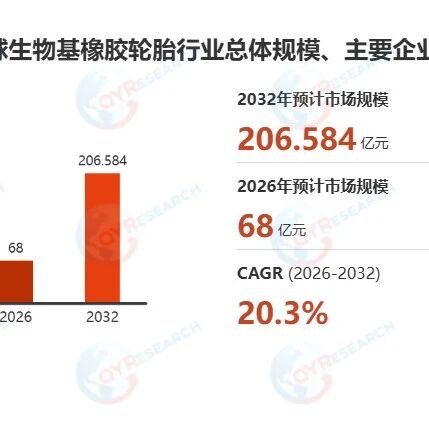
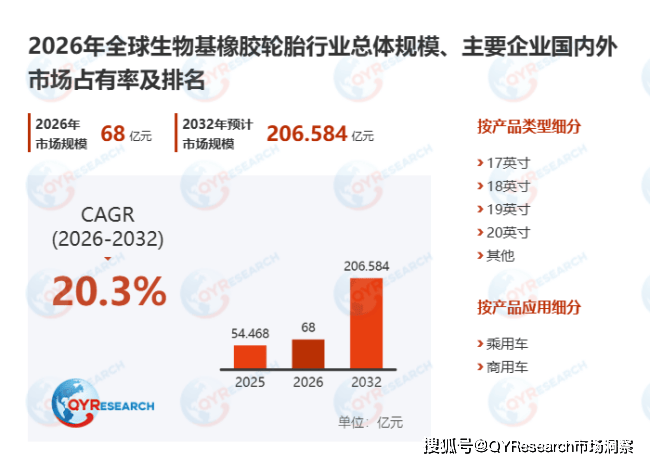
生物基橡胶轮胎是一种将源自生物来源的可再生和可持续材料纳入其组成的轮胎。 传统的橡胶轮胎主要 由石油中的合成橡胶制成,石油是一种不可再生资源。 生物基橡胶轮胎旨在通过利用天然材料来减少轮 胎制造对环境的影响。 根据QYResearch最新调研报告显示,预计2031年全球生物基橡胶轮胎市场规模将达到24.33亿美元,未 来几年年复合增长率CAGR为20.35%。 生物基橡胶轮胎,全球市场总体规模 全球生物基橡胶轮胎市场前6强生产商排名及市场占有率(基于2025年调研数据;目前最新数据以本公 司最新调研数据为准) 来源:QYResearch 南宁研究中心。行业处于不断变动之中,最新数据请联系QYResearch咨询。 全球范围内,生物基橡胶轮胎主要生产商包括固特异,韩泰轮胎,优科豪马轮胎等,其中前五大厂商占 有大约82%的市场份额。 目前,全球核心厂商主要分布在欧美和日韩。 来源:QYResearch 南宁研究中心 就产品类型而言,目前乘用车是最主要的需求来源,占据大约91%的份额。 全球生物基橡胶轮胎规模,主要生产地区份额(按产值) 来源:QYResearch南宁研究中心 生物基橡胶轮胎,全球市场规模,按产品类 ...

行业洞察:全球生物基橡胶轮胎市场生产商排名及市场占有率
QYResearch· 2026-01-08 08:58
Core Viewpoint - The bio-based rubber tire industry is transitioning towards sustainable materials to reduce environmental impact, with significant growth expected in the coming years, driven by technological advancements and regulatory support [1][14][17]. Market Overview - The global bio-based rubber tire market is projected to reach $2.433 billion by 2031, with a compound annual growth rate (CAGR) of 20.35% over the next few years [2]. - Major manufacturers in the bio-based rubber tire market include Goodyear, Hankook Tire, and Yokohama, with the top five companies holding approximately 82% market share [4]. Product Segmentation - Currently, 19-inch tires represent the largest product segment, accounting for about 22.79% of the market share [8]. - Passenger vehicles are the primary demand source, making up approximately 91% of the market [9]. Industry Development Status - The bio-based rubber tire industry is at a critical stage of moving from technological breakthroughs to commercial applications, with major tire companies actively pursuing green transformations to meet carbon neutrality goals [14]. - International giants like Michelin and Goodyear have set clear roadmaps to achieve 100% sustainability in tire materials by 2030 to 2050 [14]. - In China, unique technological routes are being developed, utilizing non-food biomass like corn cobs and straw to produce bio-based rubber, which is cost-effective and biodegradable [14]. Innovations and Challenges - Innovations extend beyond rubber to the entire material system, including the use of bio-based polyamide and modified silica to reduce carbon footprints [15]. - Despite advancements, challenges remain in raw material supply, cost competitiveness, and performance metrics compared to traditional petroleum-based products [16]. Policy Analysis - The development of the bio-based rubber tire industry is significantly influenced by domestic and international policies aimed at promoting green and low-carbon transitions [17]. - China's policies encourage the use of non-food biomass and aim to establish a comprehensive recycling system for used tires [17][19]. - International regulations, particularly from the EU, impose strict requirements on bio-based products, creating both challenges and opportunities for market entry [17]. Future Outlook - The industry is expected to focus on non-food raw material alternatives, low-carbon process innovations, and the establishment of circular economy models [19]. - The goal is to create a new industrial ecosystem that reduces reliance on fossil fuels throughout the tire lifecycle [19].