轮胎制造

Search documents
天然橡胶:供需驱动趋弱,成本支撑下逢低做多
Guo Mao Qi Huo· 2026-03-30 05:24
1. Report Industry Investment Rating - Not mentioned in the provided content 2. Core Viewpoints of the Report - The supply - demand drive for natural rubber is weakening, but the strengthening of synthetic rubber limits the downside space and momentum of natural rubber. The price range of Shanghai rubber at the beginning of the year is raised to the range of 15,000 - 19,000 yuan/ton. It is recommended to go long at the lower edge of the range on a single - side basis and pay attention to arbitrage opportunities such as going long on NR and short on RU, as well as going long on NR and short on mixed rubber [8][80] 3. Summary by Relevant Catalogs 3.1 Market Review - In Q1 2026, Shanghai rubber showed a trend of "rising first, then falling, and oscillating downward", with the price center gradually moving down. The core contradiction shifted from tight supply to an expectation of loose supply. The main contract price fluctuated between 15,885 yuan/ton and 17,600 yuan/ton. In the early stage (January - February), it rebounded due to seasonal supply tightness, and in March, it declined as the supply was expected to increase [14][15] - The spread structure of Shanghai rubber RU2609 - RU2605 changed from near - month premium to near - month discount. The RU - NR spread first widened and then narrowed. Synthetic rubber BR changed from a large discount to a large premium over natural rubber [19] 3.2 Macroeconomic Fundamentals - The US - Iran war may drag down global economic growth. The conflict has led to a significant increase in oil and gas prices, with the INE crude oil price rising by over 58% from March 2nd to March 23rd, and the Brent crude oil spot price reaching a record high at the end of March. It is expected that the global oil supply will decrease by 8 million barrels per day in March. The growth of major global economies is expected to slow down in 2026 [27][29] - Inflation pressure is transmitted through three channels, compressing the space for monetary policy easing. Central banks around the world face difficult choices, and there is a risk of recession or stagflation in the world economy [30][32][33] 3.3 Industry Chain Upstream and Downstream 3.3.1 Upstream Supply and Raw Materials - ANRPC predicts that in 2026, global natural rubber production will increase by 2.2% to 15.324 million tons, and consumption will increase by 1.4% to 15.602 million tons. In Q2, domestic and overseas production areas will enter the tapping season. If there is no abnormal climate, the overall supply in the market is expected to increase, and the downward pressure on costs due to increased supply may become more obvious after Q2 [34][40] 3.3.2 Imports and Inventory - In 2026, the domestic import volume decreased slightly year - on - year. In February, the import volume of natural and synthetic rubber (including latex) was 601,000 tons, a month - on - month decrease of 25.16%. As of March 22, 2026, the total inventory of natural rubber in Qingdao was at a medium - to - high level, and it may enter a destocking process after Q2 [43][45] 3.3.3 Downstream Demand - In the first two months of 2026, the tire industry showed a "weak domestic demand, strong export, and structural differentiation" pattern. Tire exports increased by 12.1% year - on - year. The automobile market was "cold domestically, hot overseas, with overall pressure and structural differentiation". Exports were the core support, with a year - on - year increase of 48.4%. The heavy - truck market was "stable domestically, strong in exports, and with structural upgrading", with exports increasing by 30.98% year - on - year [51][53][56] 3.4 Cost - Profit and Spread Analysis 3.4.1 Cost - Profit Analysis - In Q1, the raw material prices of natural rubber in Thailand showed an upward trend, with the price of glue reaching a quarterly high of 76 Thai baht/kg in March. The processing profit of natural rubber in Thailand was under pressure, with STR20 standard rubber in continuous loss and RSS3 smoked sheet rubber remaining profitable [63][64][66] 3.4.2 Spot - Futures Spread Analysis - In Q1, the non - standard spot - futures spread of Shanghai rubber first widened and then narrowed. Due to the low number of Shanghai rubber warehouse receipts and the uncertainty of state reserve purchases, it is recommended to conduct phased trading in non - standard operations [70] 3.4.3 Disk Spread Analysis - The RU - NR spread first widened and then narrowed in Q1, and it is still at a relatively high level compared to the same period in history. It is recommended to continue to pay attention to the opportunity to narrow the RU - NR spread. The strengthening of synthetic rubber limits the downside space and momentum of natural rubber [74]
越南油荒,储备撑不到2个月!原材料大涨价,当地中国商人:谁有货谁是甲方
21世纪经济报道· 2026-03-22 15:41
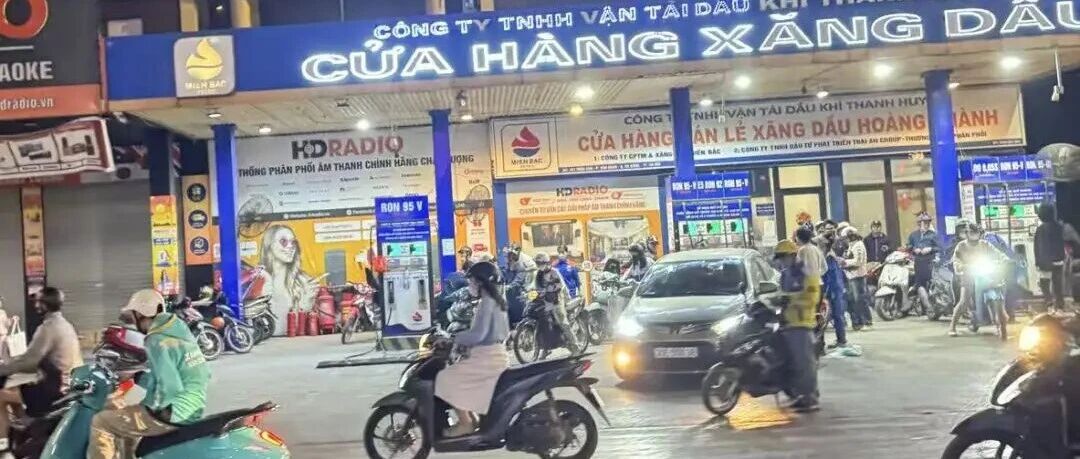
Core Viewpoint - The article discusses the significant rise in oil prices in Vietnam due to geopolitical tensions, particularly the situation in the Middle East, which has led to increased costs for various industries, particularly manufacturing and transportation [1][11]. Group 1: Oil Price Surge - Vietnam's oil prices have surged past 30,000 VND per liter, marking an increase of over 30% in just a few weeks, with the last time prices were this high being during the Russia-Ukraine conflict [1][11]. - The government has attempted to stabilize prices through measures such as reducing import taxes and utilizing a fuel price stabilization fund, but these efforts have had limited success [10][11]. Group 2: Impact on Industries - The tire manufacturing industry has seen raw material costs increase by 40% to 50%, leading to squeezed profit margins as companies struggle to pass on costs to customers [2][13]. - The construction materials sector has experienced price increases of 30% to 40% due to heightened demand from a surge in infrastructure projects, coupled with rising transportation costs [14][15]. Group 3: Supply Chain and Import Dependency - Vietnam's oil consumption is heavily reliant on imports, with nearly half of its needs met from foreign sources, primarily from the Middle East, making it vulnerable to supply disruptions [10][11]. - The country has initiated efforts to diversify its oil supply sources, seeking assistance from Japan and South Korea to mitigate the impact of the crisis [10][11]. Group 4: Foreign Investment Sentiment - The rising oil prices and raw material costs have led to a cooling sentiment among foreign investors, particularly Chinese companies, who are now more cautious about entering the Vietnamese market [17][19]. - Despite the challenges, companies in sectors like electric vehicles are seeing increased demand as consumers shift away from fuel-powered vehicles due to rising fuel costs [15][18].

赛轮液体黄金轮胎配套比亚迪新车型
Zhong Guo Hua Gong Bao· 2026-03-20 03:15
Group 1 - The liquid gold tire developed by Sailun Group has successfully matched with BYD's latest model, the Sea Lion 06 fast-charging vehicle, which features extended range and rapid charging capabilities [1] - The liquid gold tire utilizes a low rolling resistance profile design to reduce tire deformation and hysteresis loss, effectively lowering rolling resistance, enhancing range, and shortening braking distance [1] - The tire's tread design incorporates a three-dimensional cutting angle to increase the rigidity of the tread blocks during driving and cornering, providing quicker handling response and optimizing tread pitch distribution and ground pressure for superior noise performance and comfort [1] Group 2 - Sailun Group is focusing on differentiated and customized R&D for various BYD models, establishing a tire supply system that covers domestic and global markets [2] - The future of the new energy vehicle tire industry is expected to develop in six major directions: low rolling resistance, high wear resistance, high safety, noise comfort, green low-carbon, and intelligence [2] - Sailun Group aims to continue deepening technological innovation, accelerating product gradient construction, and enhancing local cooperation to promote Chinese tires in the global market [2]


橡胶:震荡偏强20260311
Guo Tai Jun An Qi Huo· 2026-03-11 02:00
1. Report Industry Investment Rating - The trend strength of rubber is 1, indicating a moderately bullish outlook. The classification of strength levels is as follows: weak, relatively weak, neutral, relatively strong, and strong, with -2 representing the most bearish and 2 representing the most bullish [1]. 2. Core View of the Report - The rubber market is expected to be volatile with an upward bias. In March, the tire industry orders are generally sufficient but show a structural differentiation. The demand for all - steel tires is recovering, while the supply of semi - steel tires for domestic sales is tight, restricting exports. Geopolitical factors have led to rising prices of raw materials such as synthetic rubber and carbon black, increasing cost pressure on tire enterprises. At the same time, the tense situation in the Middle East has increased export resistance, and tire enterprises are facing greater production and sales pressure [1][2][3]. 3. Summary by Relevant Catalogs 3.1 Fundamental Tracking 3.1.1 Futures Market - The daily closing price of the rubber main contract was 17,115 yuan/ton, up 220 yuan from the previous day; the night - closing price was 17,020 yuan/ton, up 190 yuan. The trading volume was 404,983 lots, a decrease of 202,745 lots from the previous day. The open interest of the 05 contract was 147,583 lots, an increase of 3,128 lots. The warehouse receipt quantity remained unchanged at 120,540 tons. The net short position of the top 20 members decreased by 5,838 lots to 22,040 lots [1]. 3.1.2 Spread Data - The basis of spot - futures main contract increased by 30 to - 115; the basis of mixed - futures main contract decreased by 100 to - 1,245. The month - spread of RU05 - RU09 remained unchanged at 120 [1]. 3.1.3 Spot Market - The outer - market quotes of RSS3 remained at 2,500 US dollars/ton. The prices of STR20, SMR20, and SIR20 increased by 10 US dollars/ton to 2,070, 2,060, and 1,980 US dollars/ton respectively. The prices of Qilu butadiene - styrene rubber and Qilu cis - butadiene rubber decreased by 2,200 yuan/ton and 1,200 yuan/ton to 14,800 yuan/ton and 14,600 yuan/ton respectively. The prices of Thai standard and Thai mixed rubber in the Qingdao market increased by 5 US dollars/ton, and the price of African 10 increased by 5 US dollars/ton [1]. 3.2 Industry News - In March, the tire industry orders are generally sufficient but show a structural differentiation. For semi - steel tire sample enterprises, 60% of the enterprises' export orders increased to varying degrees compared with last month, and 40% remained basically stable. For all - steel tire sample enterprises, 56% of the export orders increased compared with last month, 33% remained the same, and 11% decreased. After the Spring Festival, the overall order demand increased significantly, but due to geopolitical factors, some enterprises' orders in the Middle East decreased [2][3].
上海将发布智能终端软硬适配、民用飞机先进制造、具身智能零部件等中试平台
Xin Lang Cai Jing· 2026-02-28 03:44
Core Viewpoint - The 2026 Shanghai Global Investment Promotion Conference and "Invest Shanghai" Activity Week will commence on March 14, showcasing various enabling platforms and major projects aimed at enhancing investment opportunities in Shanghai [1] Group 1: Enabling Platforms - A series of enabling platforms will be launched, including intelligent computing resources, corpus supply, and services supporting enterprises to "go global" [1] - Mid-stage platforms will be introduced for smart terminal hardware and software adaptation, advanced manufacturing of civil aircraft, and embodied intelligent components [1] Group 2: Major Projects - Significant projects will be initiated, such as the Dongsheng Hexin three-dimensional chip integration manufacturing, the general aviation engine R&D and production base, and the Michelin Open Innovation Center [1] Group 3: Landmark Scenarios - Notable scenarios will include the humanoid robot training center, high-level autonomous driving leading area, and the new aircraft test flight base [1]
从正月用工热看就业新动向——技能人才很紧俏 电商主播缺口大
Liao Ning Ri Bao· 2026-02-28 00:15
Group 1 - The job market in the manufacturing sector is experiencing a dual demand for both technical workers and skilled talents, driven by traditional production lines and high-end manufacturing needs [3][4] - Companies are actively recruiting technical personnel to meet production demands, with specific examples such as the Liaoning Wuyi Eight Internal Combustion Engine Parts Co., which plans to hire over 200 new employees by 2026, with 70 of them being technical staff [3][4] - The recruitment strategies include direct engagement with potential candidates through job fairs and online platforms, highlighting the urgency for skilled workers in the manufacturing industry [4][5] Group 2 - The aging population is creating a significant demand for caregivers in the elder care sector, with institutions reporting a notable shortage of qualified personnel [5][6] - Training programs are being established to prepare new caregivers, with institutions offering free training and certification to attract job seekers [6][7] - The elder care industry is seeing a diverse range of job openings, including positions for long-term care specialists and elderly assessment professionals, reflecting the growing need for specialized care [5][6] Group 3 - New job roles such as e-commerce live streamers and digital content creators are gaining popularity among young job seekers, driven by the rise of online sales and digital marketing [7][8] - Companies are adapting to market trends by incorporating new positions like "live stream host" into their recruitment plans, indicating a shift towards digital engagement in traditional industries [7][8] - The training market is responding to this demand, with educational institutions offering courses to equip individuals with the necessary skills for emerging roles in e-commerce and digital media [7][8]

中策、赛轮、森麒麟、万力、福麦斯、路博、双驼、万峻、库比森、正道…26家中国工厂,获得“准入证”
Xin Lang Cai Jing· 2026-02-27 10:38
Core Insights - In 2025, the U.S. Department of Transportation (DOT) issued 39 new tire factory identification codes, with Chinese companies securing 26 of these, representing nearly 70% of the total [1][13] - This development marks a significant expansion of China's tire production capacity and reflects a new trend of globalized layout in the tire industry, combining domestic and international strategies [3][15] Group 1: Domestic Expansion - Leading Chinese tire manufacturers are actively expanding their production capabilities. Zhongce Rubber Group received two new codes for its factories in Jintan and Tianjin, focusing on electric vehicle tires and a $400 million transformation after acquiring the Tianli Tire brand [3][15] - Sailun Group has also made significant moves, registering a new company in Shenyang, which involves a $240 million investment to expand a former Bridgestone factory, aiming for an annual production capacity exceeding 3 million tires [5][17] - Other domestic companies like Senqilin, Shuangtuo, Wanjun, and Kubisen have also received new codes, indicating an overall leap in production scale and technical qualifications within China's tire manufacturing sector [19] Group 2: International Expansion - Chinese tire companies are accelerating their overseas expansion, with all five new codes in Cambodia awarded to Chinese firms, demonstrating a clustering effect of Chinese capital in the region [19] - Yongsheng Rubber's factory in Morocco, which received code 09J, is planned to have an annual capacity of 18 million tires, primarily targeting European and African markets, marking a strategic shift from Southeast Asia to North Africa [19] - The global landscape of tire manufacturing is undergoing a "reshuffling," with a focus on active manufacturing bases, as evidenced by the concentration of new codes among dynamic producers [10][22] Group 3: Global Manufacturing Trends - Despite over 2,000 DOT codes issued globally, fewer than 1,000 factories are actively producing, highlighting a trend of "eliminating the obsolete" in tire manufacturing [10][22] - The data indicates a shift in the global supply chain, with new codes also being issued in Mexico and India, reflecting a broader adjustment in manufacturing capabilities [10][22]

Titan International(TWI) - 2025 Q4 - Earnings Call Transcript
2026-02-26 15:02
Financial Data and Key Metrics Changes - The company reported a 7% year-over-year increase in sales for Q4 2025, with adjusted EBITDA growing 17% to $11 million [19][20] - Gross margins expanded modestly to 10.9% [19] - The company ended the year with net debt of $383 million and a leverage ratio of 3.8 times [26] Business Line Data and Key Metrics Changes - The EMC segment was the best performer, with revenues up 21% to $141 million, driven by strong demand in construction and mining [20][21] - The Ag segment saw a 2.6% increase in revenues, aided by foreign exchange tailwinds [21] - The consumer segment's revenues decreased by 1.5%, although the specialty business remained stable [23] Market Data and Key Metrics Changes - The European construction market showed strong growth, contributing positively to the EMC segment [20] - In the U.S., demand variability was noted in the Ag segment, particularly affecting larger equipment [21] - Brazil's Ag business experienced a moderation in activity due to high input costs and political uncertainty [22] Company Strategy and Development Direction - The company aims to continue innovating and expanding its product line to maximize opportunities in the market [15] - There is a focus on maintaining a diverse geographical footprint and strategic partnerships to navigate tariff uncertainties [18] - The company is optimistic about moving past the cyclical trough in its markets, with guidance indicating revenue growth for 2026 [28] Management's Comments on Operating Environment and Future Outlook - Management expressed guarded optimism for 2026, anticipating stabilization in equipment inventories and improved demand from farmers [10][28] - The company noted that government support for farmers is expected to continue, which could positively impact demand [11] - Management acknowledged the challenges posed by tariffs but remains confident in the long-term benefits of well-implemented tariffs [27] Other Important Information - The company recorded valuation allowances against certain deferred tax assets totaling $40 million due to recent cumulative losses [26] - Capital expenditures for 2025 were just below $55 million, down from $66 million in 2024 [25] Q&A Session Summary Question: Guidance for 2026 by segment - Management expects EMC to continue outperforming, Ag to be flattish, and consumer to show improvements but at a lesser rate [32] Question: Ag segment performance in 2026 - Management anticipates a better second half for the Ag segment, with growth expected later in the year [34] Question: Situation in South America and joint venture - The joint venture in Brazil is expected to strengthen market position, although political turmoil is a concern [38] Question: Consumer gross margin outlook - Management expects some improvement in consumer gross margins, driven by new business initiatives [45] Question: Specific end markets for EMC segment - Europe is expected to perform well in the EMC segment, driven by infrastructure spending [48] Question: R&D priorities for 2026 - The company is focusing on product innovations to capture additional aftermarket share [49] Question: Impact of tariffs on input costs - Tariff implementation has created discrepancies in raw material costs, complicating pricing strategies [110]

上市后首份成绩单亮相 泰凯英去年营收净利双增长
Zheng Quan Ri Bao Wang· 2026-02-26 13:57
Core Viewpoint - TaiKaiYing has reported steady growth in its first annual performance since going public, with significant increases in revenue and profit, driven by its focus on specialized tires for the mining and construction sectors [1][2]. Financial Performance - In 2025, TaiKaiYing achieved a revenue of 2.581 billion yuan, a year-on-year increase of 12.44% [1]. - The total profit reached 219 million yuan, reflecting a growth of 9.70% [1]. - The net profit attributable to shareholders was 174 million yuan, up by 10.90% [1]. - The basic earnings per share were 0.94 yuan, an increase of 6.45% [2]. - The weighted average return on net assets (excluding non-recurring gains) was 21.00%, indicating stable profitability despite a slight decline from the previous year [2]. Asset Structure - As of the end of the reporting period, total assets amounted to 2.251 billion yuan, a growth of 36.69% from the beginning of the year [2]. - Shareholder equity increased by 66.56% to 1.155 billion yuan [2]. - The net asset per share was 5.22 yuan, reflecting a year-on-year growth of 33.16% [2]. Business Development - The company has increased its R&D investment, which is crucial for supporting performance growth, particularly in the specialized tire market for mining and construction [3]. - The sales revenue from core technology products has risen, enhancing product competitiveness [3]. - External demand has improved due to global trends in renewable energy and green infrastructure investment, leading to increased mining investment and demand [3]. Financial Structure and Market Position - The successful fundraising and listing have strengthened the company's capital base, providing solid financial support for future capacity expansion and R&D upgrades [4]. - The significant increase in equity and improved asset-liability structure enhance the company's risk resistance [4]. - The company is well-positioned to maintain strategic stability amid cyclical fluctuations in the specialized tire industry [4].
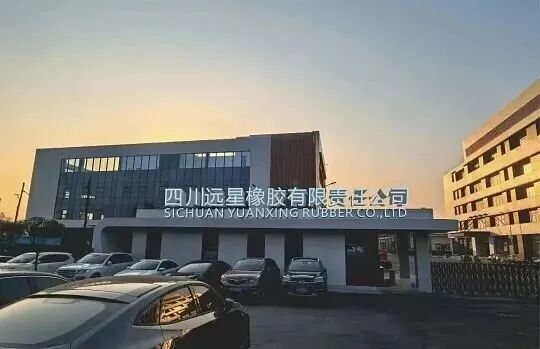
中策、赛轮之后,又一轮胎企业拟印尼建厂
Xin Lang Cai Jing· 2026-02-26 10:22
Core Viewpoint - The Chinese tire industry is witnessing a wave of expansion overseas, with Sichuan Yuanxing Rubber Co., Ltd. planning to establish a factory in Indonesia, marking a strategic shift from "product export" to "capacity going abroad" [1][13]. Group 1: Company Overview - Yuanxing Rubber, founded in 1996, has become a leading player in the two-wheeler tire sector in China, achieving an estimated output value of approximately 2.7 billion yuan in the first nine months of 2025, a 10% year-on-year increase, and is projected to reach 3.6 billion yuan for the entire year [3][14]. - The company is rapidly expanding its production capacity, with plans to reach an annual tire production capacity of 148 million by the end of 2026, supported by projects for high-performance tires and radial tires [3][14]. Group 2: Market Expansion - Yuanxing Rubber aims to tap into Indonesia, the world's third-largest two-wheeler market, which has over 137 million motorcycles, accounting for 83.6% of total vehicles, and is expected to sell 6.3 million motorcycles in 2024 [5][16]. - Establishing a factory in Indonesia will allow Yuanxing Rubber to reduce logistics costs and integrate into the ASEAN manufacturing network, which is crucial for its goal of becoming a world-class tire manufacturer [7][19]. Group 3: Competitive Landscape - Successful precedents from other companies like Zhongce Rubber and Sailun Group provide a reference for Yuanxing Rubber's overseas strategy, with Zhongce achieving profitability shortly after starting operations in Indonesia [7][19][21]. - Sailun Group has also made significant investments in Indonesia, enhancing its production capacity to meet regional demands and navigate international trade challenges [21]. Group 4: Challenges and Opportunities - The Indonesian market presents challenges, including concerns from the Indonesian Tire Manufacturers Association about overcapacity and new regulations requiring compliance with quality management systems, which increase entry costs for new manufacturers [11][23]. - Industry analysts note a shift in perception of Southeast Asia from a "cost sink" to a "regional hub," suggesting that Yuanxing Rubber's deep expertise in two-wheeler tires could position it favorably in the competitive landscape if it can meet local market demands and regulatory challenges [25].