
甲骨卜辞

Search documents
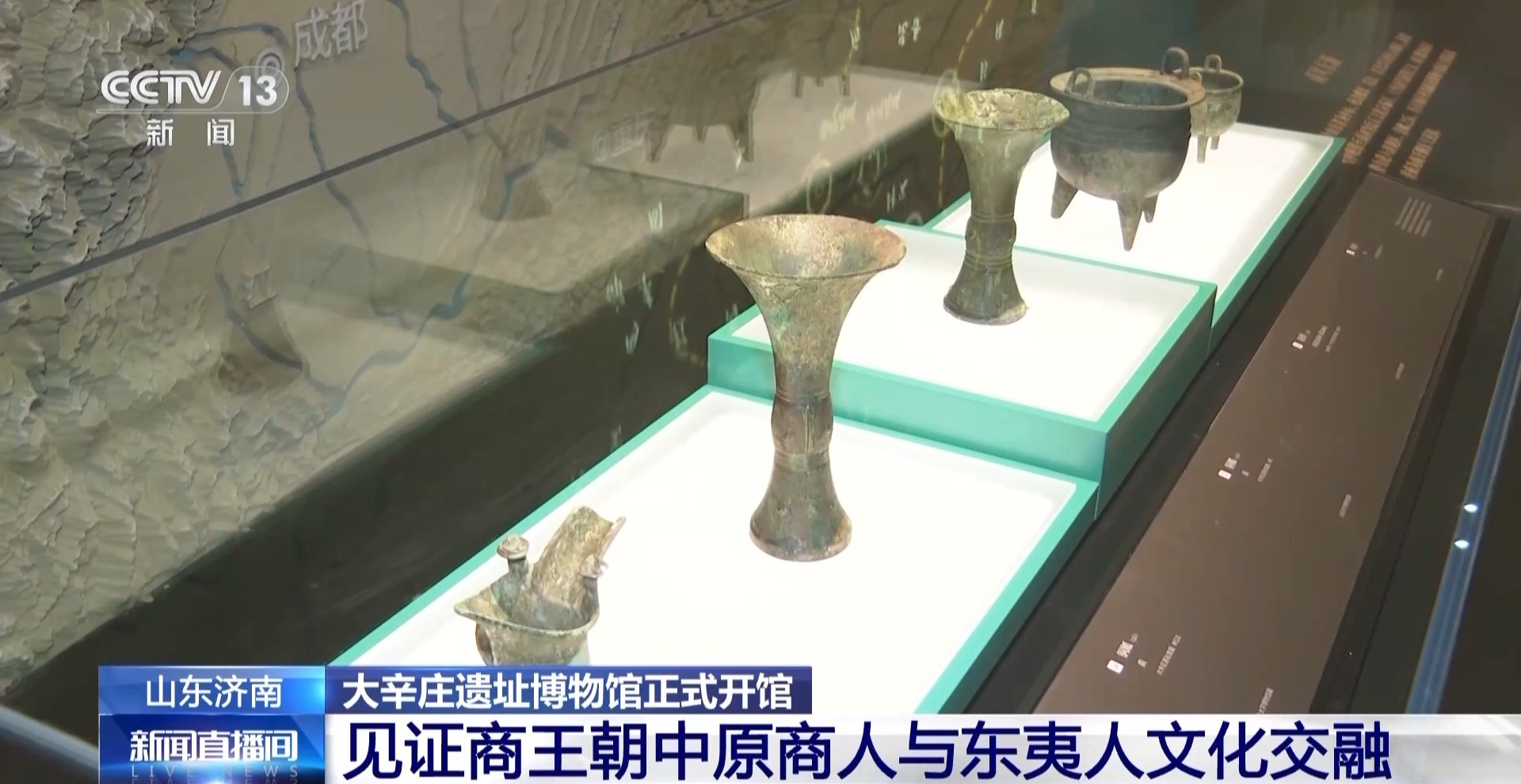
三千年前的文明联动!大辛庄遗址博物馆揭秘商朝“朋友圈”
Yang Shi Xin Wen· 2025-12-07 06:47
Core Insights - The Daxinzhuang Site Museum officially opened for trial operation on December 6, showcasing the cultural fusion between merchants from the Central Plains and the Dongyi people from Shandong over three thousand years ago [1] - The museum's theme "Fusion of Yi and Shang, Diversity in Unity" features over 800 artifacts that highlight the archaeological significance and cultural heritage of the Shang Dynasty [1] Archaeological Findings - A notable collection of Shang Dynasty bronze ritual vessels, including ding, ge, and jue, symbolizes the identity of the Shang kings and nobility, with a uniquely designed bronze jue featuring the character "Xin" engraved on it [3] - A large bronze axe, measuring 29.5 cm in height and 30.6 cm in blade width, is recognized as one of the largest known bronze axes from the early Shang period [5] - The exhibition includes oracle bone inscriptions, marking the first discovery of such artifacts in Eastern China outside the Anyang Yin Ruins, which holds significant academic value [7] Cultural Significance - The inscriptions on a turtle shell fragment, containing 34 characters related to sacrificial rites for four maternal ancestors, indicate that local Shang nobility possessed writing skills, a rare find outside the capital [9] - Rituals and related ceremonies are essential components of Shang culture, exemplified by a small jade figure representing an ancestral deity, adorned with a luxurious feather crown [11][13] - A bronze owl-shaped vessel discovered in a high-status late Shang tomb contained distilled liquor from over 3,000 years ago, enriching the history of distilled beverages in China [15] Visitor Engagement - The management center of the Daxinzhuang site plans to utilize digital and intelligent technologies to create immersive experiences for visitors, particularly students, to enhance their understanding of artifacts and history [17]

校馆弦歌·文博日历丨山东大学收藏的这两只小鸟 已经飞了2800多年
Yang Shi Xin Wen Ke Hu Duan· 2025-09-29 12:32
Group 1 - The article discusses the significance and features of a bronze bird pillar from the Spring and Autumn period, measuring 48 cm in height and featuring two birds perched on a square base [7][11][20] - The bronze bird pillar is believed to have served as a decorative object or a practical tool, possibly used in rituals by nobility [11][12] - The craftsmanship of the bronze bird pillar involved a unique assembly method, where the base, column, and birds were separately cast and then combined, showcasing the artistic creativity of the artisans of that era [19][20] Group 2 - The Shandong University Museum, established in 1995, houses over 40,600 artifacts and is recognized as a national first-class museum specializing in historical archaeology [24][29] - The museum has gained popularity as a cultural destination, attracting visitors with its unique exhibits, including the bronze bird pillar and other significant artifacts [29][49] - The museum's collection reflects a long-standing commitment to archaeological research and preservation, with ongoing efforts to uncover and display historical treasures [26][49]
让文物“说话”,让历史“发声”——高校着力打造育人新课堂
Xin Hua She· 2025-09-25 10:49
Group 1 - Shandong University Museum houses over 40,000 artifacts, primarily excavated by students and faculty from the university's archaeology department, emphasizing hands-on learning and historical interpretation [1][2] - The museum is recognized as a national first-class museum, showcasing significant archaeological findings from prehistoric, Shang, and Zhou dynasties, including 356 national precious cultural relics [1][2] - The discovery of oracle bones at the Jinan Daxinzhuang Shang site is highlighted as a landmark finding in oracle studies, marking the first instance of such artifacts found outside the Yinxu site since their discovery in 1899 [1] Group 2 - The museum has dozens of student guides who share personal experiences from their archaeological work, fostering a sense of cultural confidence among them [2] - The university has continuously enhanced the educational role of the museum, transforming it into a comprehensive space for teaching, preservation, research, and cultural innovation [2] - The museum's artifacts have been recognized in national archaeological discoveries, showcasing the quality and significance of its collections [2]