电化学储能技术

Search documents
东方电气:东方电气拥有电化学等多种新型储能技术
Zheng Quan Ri Bao Wang· 2025-12-29 12:43
Core Viewpoint - Dongfang Electric (600875) is actively developing various new energy storage technologies and aims to strengthen its capabilities in the energy storage industry [1] Group 1: Company Developments - Dongfang Electric has a diverse range of energy storage technologies, including electrochemical, molten salt thermal storage, compressed air, carbon dioxide, hydrogen storage, and vanadium flow batteries [1] - The company possesses the ability for system integration and complete supply of core equipment for energy storage solutions [1] - Dongfang Electric plans to continue nurturing its energy storage industry [1]
用户侧储能装机环比下降,投资回报不确定性增加
中关村储能产业技术联盟· 2025-10-23 07:23
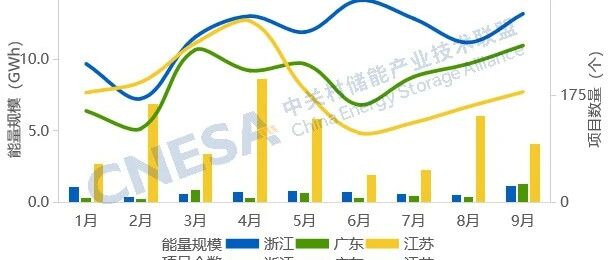
Core Insights - The user-side energy storage market shows a year-on-year increase in newly installed capacity, with a notable growth in the number and scale of registered projects compared to the same period last year [2][9][10] - High energy-consuming industries such as metallurgy, chemicals, and textiles account for over 70% of the installed capacity, indicating a strong demand for carbon reduction and supply assurance [5][10] - The peak-valley price difference in certain regions of Guangdong remains above 1 yuan/kWh, providing significant arbitrage opportunities for energy storage [12][16] User-side Energy Storage Data - In September, the newly installed user-side energy storage capacity reached 243.56 MW and 488.22 MWh, representing a year-on-year increase of 38% and 18%, respectively, but a month-on-month decrease of 41% and 46% [4][17] - The commercial application dominates the user-side energy storage market, accounting for over 95% of the installations, with high energy-consuming enterprises driving the demand [5][8] Regional Distribution - The newly installed projects are primarily concentrated in Jiangsu, Zhejiang, and Guangdong, with Jiangsu having the largest installed capacity, accounting for nearly half of the national total [8][10] - Zhejiang leads in the number of newly registered projects, while Guangdong shows significant growth in both project scale and number [9][10] Price and Investment Returns - The peak-valley price difference in 15 provinces exceeds 0.7 yuan/kWh, with seven provinces surpassing 1 yuan, particularly in Guangdong, which has a high potential for price arbitrage [12][16] - Frequent adjustments to time-of-use electricity pricing policies introduce uncertainty regarding investment returns for user-side energy storage projects [3][16] Overall Market Trends - The total newly installed capacity for new energy storage projects in September reached 3.08 GW and 9.08 GWh, with year-on-year increases of 166% and 200%, respectively [17] - The third quarter saw a total of 9.16 GW and 25.52 GWh of newly installed capacity, indicating a robust growth trajectory for the year [17]

智研咨询—2025年中国火电配储行业市场全景调查及投资策略研究报告
Sou Hu Cai Jing· 2025-09-16 07:57
Core Insights - The report highlights the increasing demand for flexible resources in the power system due to the growing scale of new energy installations, with coal-fired power plants enhancing their regulation capabilities through energy storage systems [1][3] - The report indicates that coal-fired power plants with energy storage only account for 1.9% of the new energy storage installed capacity in 2024, with a cumulative installed capacity of 1.4 million kilowatts [1][3] - The report emphasizes the high utilization rate of coal-fired power plants with energy storage, with an average annual equivalent charge and discharge frequency of 897 times in 2024, which is a decrease of approximately 118 times from 2023 [1][3] Industry Overview - Background: Coal-fired power has been dominant in China's power sector, with an installed capacity of 1.487 billion kilowatts, accounting for 40.5% as of July 2025. The sector faces pressure for low-carbon transformation while ensuring energy security [3] - Market Status: New energy storage is rapidly developing, with an installed capacity exceeding 70 million kilowatts in 2024, reaching a total of 73.76 million kilowatts by the end of the year [3] - Installed Capacity: The report notes that the installed capacity of coal-fired power plants with energy storage is limited, with only 1.9% of the new energy storage capacity attributed to this segment [1][3] Project Developments - As of the end of 2024, there are 34 coal-fired power plants with energy storage that have been operational for over a year, with capacities ranging from 5 MW to 100 MW. Several projects are set to be implemented in 2025, including various frequency regulation storage projects [4][1] Policy Support - The report outlines that the government has been actively promoting the development of new energy storage as a crucial technology for achieving carbon neutrality goals. Policies have been established to encourage the integration of energy storage with coal-fired power plants [7][8]
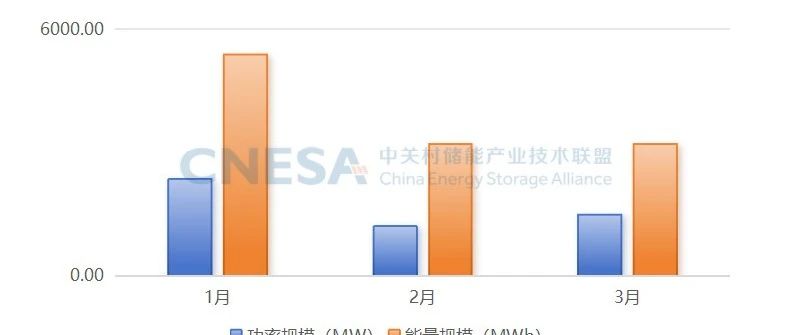
首次下降!一季度新型储能项目新增装机5.03GW/11.79GWh
中关村储能产业技术联盟· 2025-04-23 09:56
Core Viewpoint - The article discusses the performance and trends of new energy storage projects in China during the first quarter of 2025, highlighting a slight decline in installed capacity compared to the previous year, while emphasizing the growth in independent storage projects and advancements in storage technology [1][3][4]. Summary by Sections New Installed Capacity - In Q1 2025, China added 5.03 GW/11.79 GWh of new energy storage capacity, representing a year-on-year decrease of 1.5% and 5.5% respectively [1]. - The grid-side contributed 4.46 GW/10.57 GWh, with a minor decline of 0.2% and 4.4% year-on-year, while the user-side added 575 MW/1124 MWh, showing a more significant drop of 10.9% and 11.6% [1]. Regional Distribution - New energy storage projects were launched across 24 provinces, with Hebei leading in scale. Notably, several independent storage projects exceeding 100 MW were commissioned in Hebei, contributing to a total installed capacity of over 1 million kW [3][4]. Application Distribution - Independent storage projects accounted for over 50% of the new installed capacity, with grid-side power capacity making up 52%, an increase of 17 percentage points year-on-year. The grid-side added 2.63 GW/6.48 GWh, reflecting a year-on-year growth of 46% and 68% respectively [4]. - The power generation side saw a decrease in installed capacity of 31% year-on-year, while the user-side also experienced an 11% decline, primarily in commercial and industrial storage applications [4]. Technology Trends - The majority of new projects utilized electrochemical storage technology, with lithium battery projects comprising 98% of the total. Phosphate lithium battery technology remains dominant [7]. - Several mixed storage projects were launched, combining various technologies such as lithium-ion and sodium-ion batteries, as well as supercapacitors [7][12]. Notable Projects - Key projects include the largest grid-side independent storage project in China located in Hebei, with a capacity of 300 MW/1200 MWh, and the first mixed network-type storage project, which integrates multiple storage technologies [11][12].