
碳达峰碳中和

Search documents
新闻联播丨“十五五”新图景:增绿降碳 加减之间再造万亿级新机遇
国家能源局· 2026-03-30 13:09
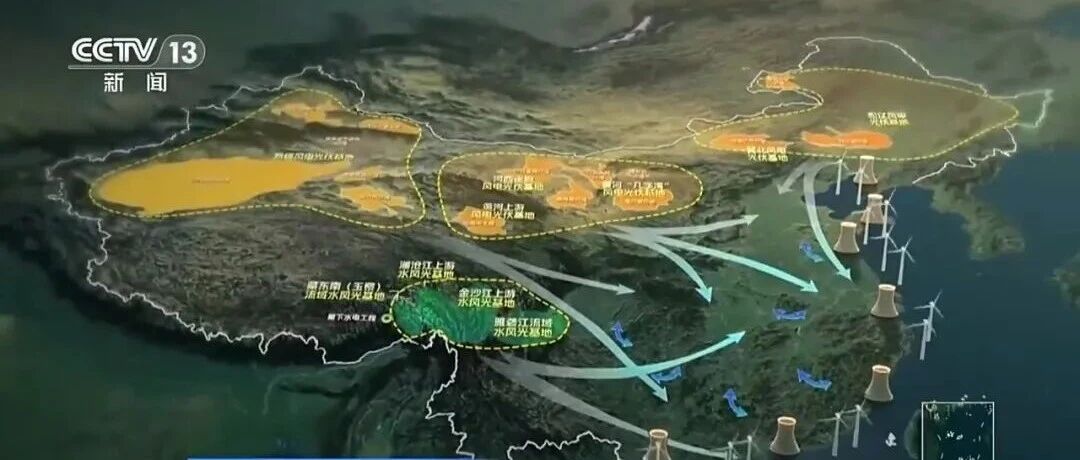
Group 1 - The core viewpoint of the article emphasizes the acceleration of comprehensive green transformation in economic and social development as outlined in the "14th Five-Year Plan" [2] - A significant green energy transition is underway in the offshore waters of western Guangdong, with projects focusing on renewable energy sources [4] - The world's largest offshore wind power project is currently in its first concentrated construction phase, utilizing eight installation vessels for giant wind turbine blades [6] Group 2 - The deep-sea wind energy resources are reported to be three to four times greater than nearshore resources, with the potential to provide over 50 billion kilowatt-hours of clean energy annually by 2030 [8] - The "14th Five-Year Plan" includes a target of over 100 million kilowatts of cumulative installed offshore wind power capacity, doubling the capacity by the end of the previous five-year period [10] - The demand for wind power equipment is projected to drive approximately 170 billion yuan in market opportunities, while specialized offshore operations could generate an additional 220 billion yuan [12] Group 3 - The "14th Five-Year Plan" outlines the establishment of various clean energy bases, including offshore wind and nuclear power, aiming for significant infrastructure development [14] - By around 2030, it is anticipated that about half of the electricity consumed will come from non-fossil energy sources [14] - The plan aims to reduce carbon dioxide emissions per unit of GDP by 17%, equivalent to constructing over 500 "Saihanba" projects annually [16] Group 4 - The emergence of new job opportunities in the green sector is highlighted, with over 200 universities adding "dual carbon" related undergraduate programs and around 300 vocational colleges introducing relevant courses [16] - Companies are increasingly utilizing carbon footprint analysis to identify high emissions and energy consumption areas, leading to new energy-saving and cost-reduction strategies [18] - The transition to a green economy is characterized by the rise of green buildings, zero-carbon factories, and green trade, with the green low-carbon industry expected to exceed 20 trillion yuan by the end of the "14th Five-Year Plan" [20]

全球热泵行业数据发展报告简介版
中国制冷学会· 2026-03-24 01:56
Investment Rating - The report does not explicitly state an investment rating for the industry Core Insights - The report highlights the growth trends and market dynamics of the air source heat pump industry in China from 2021 to 2023, indicating a significant increase in market size and application areas, particularly in heating and hot water applications [19][21][28]. Summary by Sections 1. Market Overview - The air source heat pump market in China has shown a steady growth rate, with a market size reaching approximately 350 billion yuan in 2023, reflecting a growth rate of 17.8% from the previous year [20]. - The report categorizes heat pump applications into hot water, heating, and special applications, with notable growth in heating applications, especially in northern China [21][33]. 2. Domestic Market Analysis - The domestic market for air source heat pumps is segmented into various categories, including commercial heat pumps, household heat pumps, and heating machines, with the commercial segment showing robust growth [23][24]. - Monthly sales data for 2023 indicates a consistent demand for air source heat pumps, although specific figures are not provided in the report [25]. 3. Hot Water Market Analysis - The hot water segment of the air source heat pump market is described as mature, with limited growth potential, particularly in household products [28]. - The report notes that the focus on the hot water market has diminished as the heating market gains prominence [28]. 4. Heating Market Analysis - The northern heating market for air source heat pumps is identified as a key growth area, with both household and commercial markets experiencing significant increases [33][34]. - The report emphasizes the dual growth of household and commercial markets in northern China, indicating a balanced development trajectory [35]. 5. Export Market Analysis - The report discusses the export dynamics of the air source heat pump industry, noting a decline in exports to the European market while exports to the Asia-Pacific region have increased [39]. - The challenges faced by Chinese manufacturers in meeting European standards and the need for localization in production are highlighted as critical factors for future market strategies [41]. 6. International Market Insights - The report provides insights into the overseas markets, particularly in Australia, the United States, and Europe, detailing market sizes and growth rates for various heat pump products [43][45]. - The European market is noted for its stringent requirements, which may impact the competitiveness of Chinese products [39][41].
以法固基,促能源绿色发展
中国能源报· 2026-03-22 23:33
Core Viewpoint - The promulgation of the "Ecological Environment Code of the People's Republic of China" marks a milestone in ecological civilization construction and serves as a legal foundation for high-quality energy development [2][3]. Group 1: Legal Framework and Energy Transition - The Code integrates over 30 existing ecological and environmental laws, emphasizing energy as a key area for ecological protection and improvement [3]. - It establishes a dedicated chapter on "Energy Conservation and Green Low-Carbon Transition," promoting the optimization of energy supply and consumption structures [3][5]. - The Code elevates green low-carbon development from policy guidance to legal obligation, providing a stable legal basis for energy transition and security [3][5]. Group 2: Global Context and Domestic Challenges - The Code responds to global climate change trends and sets a precedent for ecological environment codification worldwide [5]. - China's energy structure, heavily reliant on coal, faces challenges with high carbon emissions from energy-intensive industries, necessitating a shift in development and lifestyle [5][6]. - The Code aims to transition energy regulation from fragmented policies to systematic legislation, ensuring clear legal guidelines for energy activities [5][6]. Group 3: Opportunities for Energy Sector - The Code provides a solid legal guarantee for energy enterprises, supporting the development of renewable energy and establishing a legal framework for distributed photovoltaic and energy storage businesses [7][9]. - It redefines the roles of various energy sources, promoting clean and efficient use of fossil fuels while prioritizing renewable energy [8][9]. - The Code encourages technological innovation in green low-carbon development, integrating it into national planning for technological advancement [8][9]. Group 4: Market Dynamics and Competitive Landscape - The Code is expected to reshape the competitive logic and development pattern of the energy industry, emphasizing technology and market-driven approaches [10][11]. - It introduces strict penalties for non-compliance, increasing operational costs for companies and favoring those with advanced technologies and better environmental performance [10][11]. - The establishment of a legal framework for carbon trading enhances the value proposition for environmental enterprises, allowing them to gain additional carbon asset benefits [12][13]. Group 5: Implementation and Future Outlook - The Code establishes a collaborative system for carbon reduction, pollution control, and energy conservation, promoting efficiency and lowering carbon emissions across the energy sector [11][12]. - It aligns with national energy-saving and carbon reduction action plans, creating a legal basis for the implementation of these policies [11][12]. - The anticipated growth of the carbon market will incentivize the adoption of energy-saving and carbon-reducing technologies, enhancing market dynamics [13].
ESG周报:工信部等四部门印发《节能装备高质量发展实施方案(2026—2028年)》
Xinda Securities· 2026-03-22 08:24
Investment Rating - The report does not specify a direct investment rating for the industry [2]. Core Insights - The Ministry of Industry and Information Technology, along with three other departments, issued the "Implementation Plan for High-Quality Development of Energy-Saving Equipment (2026-2028)" on March 20, 2026. This plan aims to enhance the energy efficiency of energy-saving equipment with a focus on six categories: energy-saving motors, transformers, industrial heat pumps, industrial refrigeration and heating equipment, water electrolysis hydrogen production equipment, and information communication devices. The goal is to optimize energy systems and promote advanced technology development, leading to significant improvements in energy-saving equipment efficiency by 2028 [10][11]. Summary by Sections Domestic Focus - The "Implementation Plan" emphasizes the need to improve the energy efficiency of energy-saving equipment and strengthen its supply and application. It targets key industries for energy conservation and carbon reduction, aiming for international leading efficiency levels in energy-saving equipment by 2028 [10][11]. International Focus - The World Economic Forum released the "2026 Sustainable Aviation Outlook Report," which summarizes global advancements in sustainable aviation technologies and policies, highlighting the challenges faced by the aviation industry in 2025 regarding fuel prices and policy stability [3][14]. ESG Financial Products Tracking - As of March 21, 2026, China has issued 4,006 ESG bonds with a total outstanding amount of 5.84 trillion RMB, where green bonds account for 62.42% of the total. In March 2026 alone, 103 ESG bonds were issued, raising 902 billion RMB [4][25]. - The market has 1,096 existing ESG products with a total net value of 17,653.90 billion RMB, where socially responsible products make up 41.55%. In March 2026, 9 new ESG products were issued, totaling 60.98 million shares [4][31]. - There are 1,232 existing ESG bank wealth management products, with pure ESG products constituting 53.98%. In March 2026, 63 new ESG products were issued [4][37]. Index Tracking - As of March 20, 2026, major ESG indices outperformed the market, with the Shenzhen ESG 300 index experiencing the largest decline of 2.78%. Over the past year, all major ESG indices have shown growth, with the Shenzhen ESG 300 index increasing by 16.85% [5][38]. Expert Opinions - Zhang Zhentao, a member of the National Committee of the Chinese People's Political Consultative Conference, emphasized the chemical industry as a significant energy consumer with substantial carbon reduction potential. He noted that the industry can contribute significantly to the national goal of reducing carbon emissions by 3.8% [6][40].
AI赋能节能装备,四部门发文提出构建装备节能降碳大模型
第一财经· 2026-03-20 08:12
Core Viewpoint - The article discusses the implementation plan for the high-quality development of energy-saving equipment from 2026 to 2028, emphasizing the importance of enhancing energy efficiency and promoting green development in various industries [3][11]. Group 1: Development Goals - The plan aims to achieve breakthroughs in key materials and components for energy-saving equipment by 2028, with energy efficiency levels of motors and transformers reaching international standards [5][15]. - Specific targets include increasing the market share of energy-saving equipment and promoting advanced energy-saving solutions, with a focus on artificial intelligence applications [16][18]. Group 2: Key Areas of Focus - The implementation plan highlights four main areas: accelerating R&D and promotion of advanced energy-saving equipment, expanding green and low-carbon supply, enhancing system coupling and matching, and advancing digitalization of energy-saving equipment [3][6][29]. - Emphasis is placed on the need for a comprehensive approach to improve system efficiency and match energy-saving equipment with operational conditions and load requirements [6][28]. Group 3: Role of Central Enterprises - Central enterprises are identified as leaders in promoting the upgrade and transformation of energy-saving equipment, with significant investments planned in high-energy-consuming industries [8][9]. - By 2025, central enterprises are expected to invest 1.7 billion in equipment upgrades, significantly improving energy efficiency and reducing energy consumption [9]. Group 4: Specific Equipment Targets - The plan sets specific targets for various types of energy-saving equipment, including: - Energy-saving motors and pumps, with a target of 35% for new installations and 15% for existing units by 2028 [15][18]. - Energy-saving transformers, aiming for over 75% of new installations and 15% of existing units to meet efficiency standards [17]. - Industrial heat pumps and refrigeration equipment, with targets of 45% for new installations and 25% for existing units by 2028 [18][19]. - Water electrolysis hydrogen production equipment, with a goal of achieving a direct current consumption of less than 4.2 kWh per standard cubic meter by 2028 [20]. Group 5: Digitalization and Innovation - The plan encourages the integration of IoT and AI technologies to enhance the operational efficiency and intelligence of energy-saving equipment [29][31]. - It aims to build a comprehensive data model for energy-saving and carbon reduction, facilitating real-time monitoring and optimization of equipment performance [30][31]. Group 6: Environmental and Policy Support - The implementation plan calls for strengthening green design and manufacturing practices, promoting the recycling of old equipment, and establishing a robust standard system for energy-saving equipment [25][34]. - It emphasizes the need for coordinated policy support and financial incentives to drive the development and adoption of energy-saving technologies [35][34].
政策导向明确,绿色转型将成化工长期主线任务
China Post Securities· 2026-03-20 04:44
Investment Rating - The industry investment rating is "Outperform the Market" and is maintained [2] Core Insights - The report emphasizes the importance of green transformation in the chemical industry, driven by government policies aimed at reducing carbon emissions and promoting sustainable practices [5][9] - The government has set a target to reduce carbon emissions per unit of GDP by approximately 3.8% in 2026 and aims for a cumulative reduction of 17% during the 14th Five-Year Plan period [5] - The introduction of the "Ecological Environment Law" marks the beginning of a codified era for environmental protection, focusing on green and low-carbon technology innovation [7] - The "14th Five-Year Plan" outlines specific carbon reduction requirements, emphasizing the need for energy structure optimization and significant energy savings in key industries, including chemicals [8] Summary by Sections Industry Overview - The closing index for the industry is 4777.84, with a 52-week high of 5235.06 and a low of 3081.91 [2] Policy Direction - The government report highlights the need for green development standards for high-energy-consuming industries, including measures to control carbon emissions and promote clean energy utilization [5][6] - The report also addresses the need to combat "involution" in competition, ensuring fair market practices through regulatory measures [6] Investment Recommendations - The emphasis on green and low-carbon initiatives positions the chemical industry for long-term investment opportunities, particularly for leading companies with efficient production and robust carbon compliance strategies [9]
四部门关于印发《节能装备高质量发展实施方案(2026—2028年)》的通知
国家能源局· 2026-03-20 03:31
Core Viewpoint - The "Implementation Plan for High-Quality Development of Energy-Saving Equipment (2026-2028)" aims to enhance energy efficiency and reduce energy consumption through advanced technology in energy-saving equipment, supporting industrial energy utilization and national energy security [4][6]. Group 1: Overall Requirements - The plan emphasizes the integration of Xi Jinping's thoughts on ecological civilization and aims to promote energy conservation and carbon reduction in key industries, focusing on optimizing energy systems and advancing technology [5]. - By 2028, the plan targets breakthroughs in key materials and components for energy-saving equipment, with a goal of achieving international leading energy efficiency levels in motors and transformers [6]. Group 2: Accelerating R&D and Promotion of Advanced Energy-Saving Equipment - The plan outlines specific targets for energy-saving motors, fans, pumps, and compressors, aiming for a 35% share of new energy-saving equipment by 2028, with over 15% of existing equipment being energy-efficient [7]. - For transformers, the goal is to have over 75% of new energy-saving transformers by 2028, with 15% of existing transformers meeting energy efficiency standards [8]. - The plan also focuses on enhancing industrial heat pumps and cooling/heating equipment, targeting a 45% share of new energy-saving equipment by 2028 [10]. Group 3: Expanding Green and Low-Carbon Supply of Energy-Saving Equipment - The plan promotes green low-carbon design and manufacturing, emphasizing the use of recyclable materials and advanced green manufacturing processes [16][18]. - It encourages the recycling and disposal of old energy-saving equipment, utilizing technologies like 5G and IoT for better management [19]. Group 4: Strengthening System Coupling and Matching - The plan advocates for improved coupling between energy-saving equipment and their operational environments, aiming to reduce redundancy and enhance efficiency [20][21]. - It encourages the development of tailored energy-saving equipment for emerging applications, such as renewable energy generation and hydrogen production [23][24]. Group 5: Promoting Digitalization and AI Empowerment - The plan emphasizes the construction of a big model for energy-saving equipment to enhance data collection and analysis, facilitating real-time monitoring and optimization [27][28]. - It promotes the integration of AI technologies to improve energy-saving strategies and operational efficiency in various sectors [29]. Group 6: Building a Healthy Development Environment for the Industry - The plan supports the modernization of energy-saving equipment and encourages financial institutions to provide credit support for upgrades [32]. - It aims to establish a comprehensive standard system for energy-saving equipment, ensuring compliance with national energy efficiency standards [33].

工信部、国家发改委、国务院国资委、国家能源局联合发布重要实施方案
中国能源报· 2026-03-20 02:37
Core Viewpoint - The "Implementation Plan for High-Quality Development of Energy-Saving Equipment (2026-2028)" aims to enhance energy efficiency and reduce energy consumption in key industries by promoting advanced energy-saving equipment and technologies, ultimately supporting carbon neutrality goals by 2028 [3][5]. Overall Requirements - The plan emphasizes the integration of advanced technology in energy-saving equipment development, focusing on optimizing energy systems and promoting green design and manufacturing [4][5]. Accelerating R&D and Promotion of Advanced Energy-Saving Equipment - The plan targets specific equipment categories such as motors, transformers, industrial heat pumps, and communication devices, aiming for significant efficiency improvements and market penetration by 2028 [6][7][10]. - For motors and load devices, the goal is to achieve a 35% share of new energy-saving equipment and over 15% for existing equipment by 2028 [6]. - In transformers, the target is for over 75% of new transformers to be energy-saving, with 15% of existing transformers meeting energy-saving standards by 2028 [7]. Expanding Green and Low-Carbon Supply of Energy-Saving Equipment - The plan promotes green low-carbon design principles and encourages the use of recyclable materials to reduce the carbon footprint of energy-saving equipment [15][16]. - It also emphasizes the importance of recycling and proper disposal of outdated energy-saving equipment, leveraging technologies like IoT and blockchain for better management [18]. Strengthening System Coupling and Matching - The plan advocates for improved coupling between energy-saving equipment and their operational environments to enhance efficiency and reduce redundancy [19][21]. - It encourages the development of integrated systems that can adapt to varying operational conditions, ensuring optimal performance across different scenarios [22][23]. Promoting Digitalization of Energy-Saving Equipment - The initiative includes building a comprehensive model for energy-saving and carbon reduction, utilizing IoT sensors for real-time data collection and analysis [28][29]. - It aims to enhance the intelligence of energy-saving devices through advanced technologies like AI and edge computing, enabling better energy management and operational efficiency [30][31]. Constructing a Healthy Development Environment for the Industry - The plan supports the modernization of energy-saving equipment through financial incentives and tax policies, encouraging companies to upgrade older equipment [32][33]. - It also calls for the establishment of stringent energy efficiency standards for key equipment categories to ensure compliance and promote high-performance products [33].
能源早新闻丨国家发改委:累计完成投资1080亿美元!
中国能源报· 2026-03-18 22:33
News Focus - The National Development and Reform Commission has launched a new batch of 13 major foreign investment projects with a planned investment of $134 million, primarily in manufacturing sectors such as electronics, chemicals, automotive, and electrical machinery, aimed at accelerating the development of industrial clusters. To date, the cumulative investment in these projects has reached $10.8 billion [2] - The Ministry of Industry and Information Technology has announced the list of green factories and green industrial parks for 2025, with 2,038 new green factories and 128 green industrial parks being cultivated. The ministry has also removed 132 green factories and 3 green industrial parks from the previous list, while 92 green factories and 12 green industrial parks have had their names changed [2] Domestic News - The China Coal Industry Association has published the ranking of the top ten coal production companies for January-February 2026, with a total output of 390 million tons, a year-on-year decrease of 4.83 million tons, accounting for 51.3% of the industrial coal output. The top three companies are: China Energy Group with 98 million tons (down 3.9% year-on-year), Jinneng Holding Group with 66 million tons (up 0.5% year-on-year), and Shandong Energy Group with 43 million tons (down 0.7% year-on-year) [3] - A new round of mineral exploration breakthroughs in China has yielded results, with solid mineral discoveries in Mianyang, Sichuan, and Dangchang, Gansu, including rare earths, fluorite, barite, and antimony [3] - The Ministry of Finance has emphasized support for renewable energy development and the acceleration of a new energy system, promoting a comprehensive green transition and the issuance of green sovereign bonds to attract international funding for domestic green and low-carbon development [3] International News - The U.S. government plans to further relax sanctions on Venezuela's oil industry to increase crude oil production amid rising oil prices due to the Iran conflict, with related measures expected to be announced soon [5] - The International Atomic Energy Agency has received reports of an attack on Iran's Bushehr nuclear power plant, with no reports of damage or casualties so far [6] - South Korea is set to import 18 million barrels of crude oil from the UAE, following an agreement on a memorandum of understanding for oil supply chain cooperation [6] Corporate News - Sinopec has supplied a total of 24.7 billion cubic meters of natural gas during the heating season from 2025 to 2026, with a maximum daily supply reaching 248 million cubic meters, setting a historical record [7] - China Huaneng has successfully established the first international standard for carbon capture environmental monitoring and management, focusing on CO₂ capture systems based on organic amine chemical absorption, marking a significant achievement in CCUS international standardization efforts [7]
ESG市场观察周报:我国《生态环境法典》正式通过,绿色发展法治框架进一步完善-20260316
CMS· 2026-03-16 09:43
- The report does not contain any quantitative models or factors related to financial engineering or quantitative analysis[1][2][3][4][5][6][7][9][10][11][12][13][14][15][16][17][18][19][20][21][22][23][24][25][26][28][29][30][31][33][34][35][36][37][38][39][41][42][43][44][45][46][47][48][49][50][51][52][53][54][55][56][57][58][59]