电子房票

Search documents
南京“房票超市”推新概念,“全城通兑”和“电子房票”来了
Di Yi Cai Jing Zi Xun· 2026-01-27 08:37
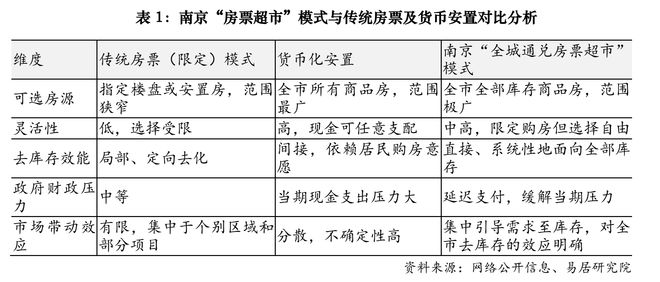
Core Insights - Nanjing has issued a policy to accelerate the cultivation of new productive forces to promote high-quality development, specifically addressing the real estate market by integrating existing inventory housing into a "housing ticket supermarket" and implementing "citywide exchange" and "electronic housing tickets" to meet the relocation needs of affected residents [1][2] Group 1: Policy Implementation - The policy aims to package unsold inventory into a selectable asset pool, providing true market choice for affected residents and facilitating cross-district housing improvement [2] - "Citywide exchange" breaks down administrative barriers, making housing tickets a universal "purchase payment certificate" within Nanjing, significantly enhancing liquidity and attractiveness [2] - The introduction of "electronic housing tickets" improves transaction security and convenience, allowing for comprehensive government oversight, data tracking, and dynamic adjustments [2][3] Group 2: Historical Context and Development - The concepts of "citywide exchange" and "electronic housing tickets" were first introduced in Nanjing's "Housing Seven Articles" released in March 2025, with the housing ticket system implemented in 2023 [3] - As of March 2025, nearly 11,000 housing tickets have been issued in Nanjing, leading to the absorption of over 6,200 unsold properties, contributing to market stability [3][4] Group 3: Market Impact and Future Implications - The expanded range of housing ticket options enhances satisfaction for affected residents, transforming them into "quasi-consumers" in the new housing market and creating substantial potential demand for existing inventory [4] - The innovative housing ticket system in Nanjing serves as a model for other regions looking to implement similar strategies for inventory reduction and market stabilization [4] - Over 130 cities across the country have introduced or optimized housing ticket policies since 2024, with major cities like Guangzhou and Shanghai reporting significant uptake and funding through housing ticket purchases [5]

南京推动库存商品房纳入房票超市,开启“全城通兑”
Jing Ji Guan Cha Bao· 2026-01-26 09:09
Core Insights - Nanjing government has implemented policies to accelerate the cultivation of new productive forces and promote high-quality development in the real estate sector, including integrating existing inventory commercial housing into a "housing ticket supermarket" for citywide exchange [1] - The policy aims to meet various housing demands, particularly for families with multiple children, by increasing the monthly limit for housing fund withdrawals for rent by 20% [1][2] - The initiative is expected to convert idle commercial housing into resettlement housing, facilitating inventory digestion and alleviating developers' cash flow issues [1] Group 1 - Nanjing's policy includes the promotion of "electronic housing tickets" and "citywide exchange" mechanisms to enhance the circulation of housing resources [1] - The 2023 national housing fund report indicates that the total amount withdrawn for purchasing, building, and renovating self-occupied housing reached 484.09 billion yuan, accounting for 18.22% of total withdrawals [1] - The cumulative housing fund loans across the country reached 7,806.07 billion yuan in 2023, suggesting potential for cross-regional collaboration to further release housing demand in the Yangtze River Delta [1] Group 2 - The policy adjustments in Nanjing are expected to increase monthly rent payment limits for families, aligning with the national policy direction to support rigid and improved housing needs [2] - The increase in withdrawal limits specifically benefits families with multiple children, easing their financial burden [2] - The allowance for intergenerational withdrawals expands the coverage of housing fund access to more family members [2]
快评|南京打造多维调控新样本,升级“以旧换新”激活改善需求
克而瑞地产研究· 2025-04-02 03:06
Core Viewpoint - Nanjing's "Housing Seven Articles" policy aims to stabilize the real estate market by canceling restrictions, promoting housing exchanges, and supporting young homebuyers, thereby creating a multi-dimensional support system for housing consumption [2][5]. Group 1: Policy Highlights - The new policy includes the cancellation of sales restrictions, an upgraded "old-for-new" housing exchange program, and support for young homebuyers, which collectively aim to stimulate market demand and optimize supply structure [2][5][12]. - Nanjing's real estate market has shown signs of stabilization, with new home prices leading among 70 major cities and a 40% year-on-year increase in new home transactions [5][21]. Group 2: Financial Innovations - Financial innovations targeting young homebuyers include low down payment options and flexible repayment plans, such as loans with a minimum down payment of 15% and monthly payments starting at 100 yuan for the first five years [11][12]. - The expansion of the provident fund withdrawal options allows families to pool resources for down payments, enhancing the affordability of home purchases [12][20]. Group 3: Upgraded Housing Exchange - The "old-for-new" policy has been significantly enhanced, offering up to 6% in purchase subsidies through government and developer contributions, thus lowering the barriers for housing exchanges [15][16]. - The policy separates the buying and selling processes, allowing buyers to receive subsidies even if their old property has not sold, thereby facilitating smoother transactions in the housing market [16][17]. Group 4: Market Confidence and Structure Optimization - The comprehensive cancellation of sales restrictions is expected to enhance liquidity in the second-hand housing market, promoting a positive cycle of resource activation and new home purchases [21][22]. - The integration of various policies, including the housing ticket system and land supply optimization, aims to create a balanced supply-demand structure and enhance the overall health of the real estate market [22][23].