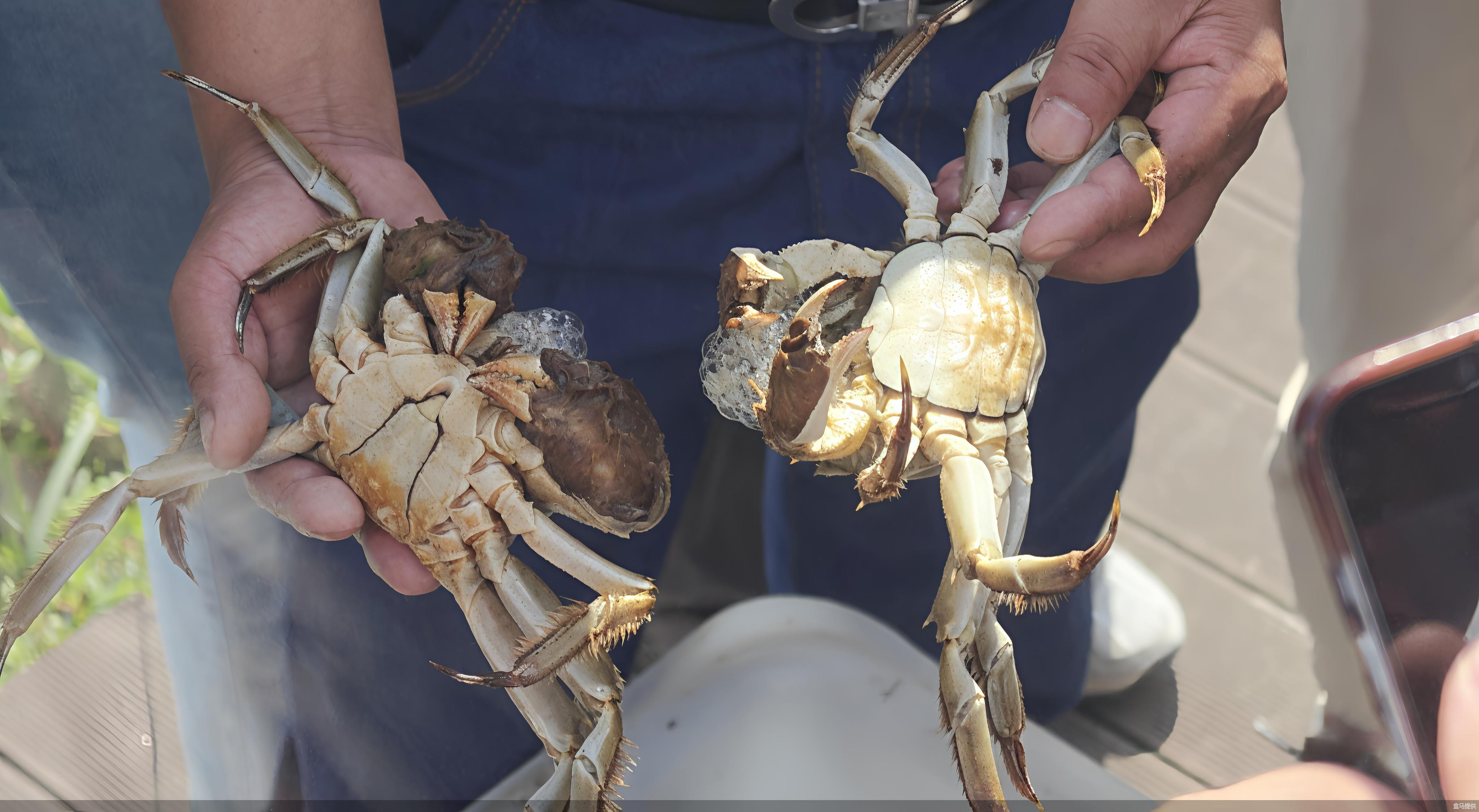
电子验蟹师

Search documents
“洗澡蟹”“听涛蟹”阴影下,大闸蟹产业从产地之争迈向价值之战
Guan Cha Zhe Wang· 2025-09-28 07:33
Core Insights - The consumption of hairy crabs in China is shifting from a traditional gift item to a regular dining choice, with consumers prioritizing the quality and fat content over the origin of the crabs [1][4][6] - The market for hairy crabs has expanded significantly, with the wholesale market size reaching 32.917 billion yuan in 2023, and the production volume exceeding 7 billion crabs, indicating a growing acceptance across various regions in China [4][6] - The industry faces challenges related to a lack of standardized quality assessment, consumer trust issues, and inconsistent supply quality, which are referred to as the "three lacks" [8][11][12] Market Trends - The market for hairy crabs has seen a compound annual growth rate of 6.1% from 2020 to 2025, with total production increasing from 634,000 tons to 850,000 tons [4] - The sales volume and coverage area of hairy crabs have expanded, with a nearly 20% year-on-year increase in sales at Hema [4][19] - Consumers are increasingly focused on the fat content and taste of the crabs rather than their geographical origin, reflecting a more rational approach to consumption [6][12] Industry Challenges - The industry lacks a unified standard for assessing crab quality, leading to inconsistent consumer experiences and difficulties for lesser-known brands to gain recognition [8][11] - Trust issues persist due to market irregularities, such as mislabeling and quality discrepancies, which have resulted in numerous consumer complaints [11][12] - The quality of hairy crabs is heavily influenced by environmental factors, making it difficult to ensure consistent supply and quality [11][12] Solutions and Innovations - Companies like Hema are collaborating with research institutions to develop quantifiable methods for assessing crab quality, such as the "electronic crab inspector" that uses AI technology [13][15] - Brands are implementing rigorous selection processes to ensure high-quality products reach consumers, with some companies discarding a significant percentage of crabs during quality checks [15][19] - To build consumer trust, companies are offering guarantees such as refunds for crabs that do not meet fat content standards, thereby shifting the risk from consumers to the platform [17][19]


大闸蟹产量提升 中秋节后蟹价将有所下降
Bei Jing Shang Bao· 2025-09-24 14:22
Core Insights - The autumn season is favorable for the growth of hairy crabs, leading to an expected increase in production and a decrease in overall prices compared to last year [1][4]. Group 1: Weather and Production - The weather conditions in August were optimal for hairy crab growth, with no prolonged high temperatures and frequent rainfall [4]. - The expected price of hairy crabs is projected to be at least 10% lower than last year due to increased production [4]. Group 2: Market Trends and Consumer Behavior - The quality of hairy crabs in the market varies significantly, leading to a consumer experience akin to "opening a blind box" [4]. - There is a shift in consumer behavior, with a growing preference for purchasing hairy crabs for personal consumption rather than as gifts, emphasizing the demand for crabs that are fat and tasty [4]. Group 3: Quality Standards and Technology - The market lacks clear standards for measuring crab quality, which disrupts pricing and consumer experience [4]. - Hema has introduced a "digital crab inspector" that uses visual AI technology to assess the size and weight of crabs, calculating a K-value to grade their quality [4]. Group 4: Sales Growth and Market Expansion - Hema's sales of hairy crabs have been consistently growing, with a projected year-on-year increase of nearly 20% in 2024 [5]. - The sales regions for hairy crabs are expanding beyond Jiangsu, Zhejiang, and Shanghai, with growth observed in Southwest, Central China, and North China [5]. Group 5: Supply Challenges - The supply of hairy crabs faces challenges from adverse weather conditions such as high temperatures and droughts, which can delay molting and affect market availability [5]. - To ensure stable supply, Hema has expanded its sourcing to multiple lake regions, including Xinjiang, Northeast China, and the Yellow River estuary in Shandong [5].