
大闸蟹

Search documents
(新春走基层)退围还湖上岸发展 江苏洪泽湖蟹农走上养殖致富新路
Zhong Guo Xin Wen Wang· 2026-02-10 07:04
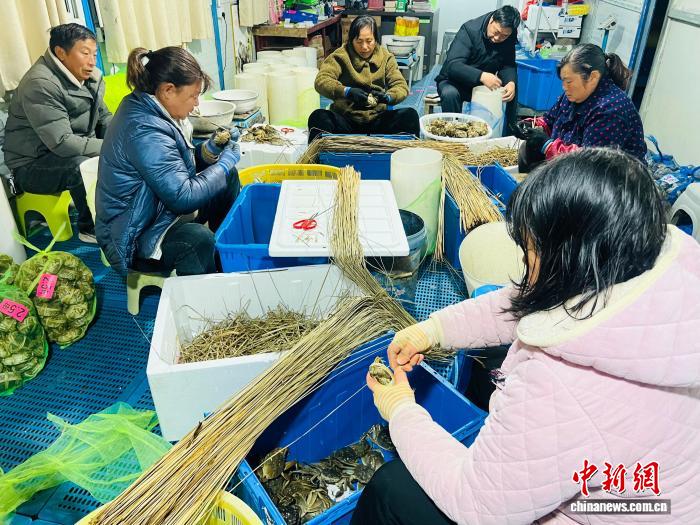
Core Viewpoint - The article highlights the successful transition of crab farmers in Jiangsu's Hongze Lake region from traditional water-based farming to land-based crab cultivation, driven by the "retreating nets and returning lakes" policy, leading to stable employment and increased income for local farmers [1][4]. Group 1: Industry Transformation - The crab farmers in Linhuai Town have shifted from water-based to land-based crab farming due to the implementation of the retreating nets and returning lakes policy in 2018, which has allowed them to establish a more stable and sustainable livelihood [1][4]. - The local crab farming industry has developed a standardized and scaled system for crab breeding and sales, ensuring fresh crabs are delivered to markets nationwide [1][3]. Group 2: Sales and Market Dynamics - During the peak sales season before the Spring Festival, daily sales can reach approximately 10,000 pounds, significantly up from the usual 3,000 pounds, indicating a strong market demand [3]. - The farmers have formed a cooperative to address issues such as inconsistent quality and limited sales channels, leading to the establishment of stable supply chains and partnerships with 32 sales markets and 3 e-commerce platforms [4]. Group 3: Adaptation and Innovation - Farmers faced initial challenges such as infrastructure development and high investment costs when transitioning to land-based farming, but with government support, they have gradually improved production conditions [4]. - The introduction of online sales through live streaming has expanded the marketing reach, allowing farmers to showcase their products and build consumer trust [6][7]. Group 4: Future Prospects - The farmers are adapting to market pressures by focusing on high-quality crab production, with a shift towards breeding premium crabs that yield higher profits per acre compared to standard farming practices [6]. - Community initiatives, such as establishing a fishing gear processing factory, are being developed to enhance local economic growth and provide employment opportunities for residents [6].

党建“链”动蟹产业 红韵赋能兴乡村
Xin Lang Cai Jing· 2026-02-07 20:47
Core Viewpoint - The development of the Yangcheng Lake hairy crab industry in Shajiabang Town, Suzhou, is significantly driven by the integration of party leadership and industry, showcasing a successful model of "党建+产业链" that enhances productivity and brand recognition [1][2]. Group 1: Industry Development - Shajiabang Town is the largest production area for "Yangcheng Lake hairy crab," with over 30,000 acres of farming area and an annual output of approximately 3,000 tons, employing thousands of workers [1]. - The town's party committee has innovated a "党建+产业链" development model, promoting the transformation of the hairy crab industry towards intensification, scale, and branding [1][2]. Group 2: Organizational Structure - The establishment of over 20 party organizations within the hairy crab industry chain has created a new framework where the party leads, enterprises participate, and the community benefits [2]. - A "chain-based party building" work system has been developed, including the deployment of 15 party building instructors and the formation of a "party member technical think tank" [2]. Group 3: Technological Advancement - The town has linked with research institutions to establish experimental bases, leading to the recognition of three seedling bases as provincial-level特色优势中心 [3]. - The implementation of a "company + base + farmer" model has improved the farming practices of over 500 crab farmers, resulting in an average income increase of over 1,000 yuan per mu [3]. Group 4: Brand and Market Expansion - The town has invested over 100 million yuan in deep processing of crab products, developing five new products and establishing a "three-level" sales system that includes online and offline channels [4]. - The establishment of a brand specialty store for Yangcheng Lake hairy crab has achieved a 100% membership rate among farmers, significantly enhancing brand value [4]. Group 5: Integration with Tourism - The integration of the hairy crab industry with red culture and rural tourism has led to the creation of a comprehensive development area, attracting over 34,000 visitors and generating more than 40 new jobs by 2025 [5]. Group 6: Talent Development - The organization has conducted over 20 training sessions covering more than 1,200 participants to foster innovation and entrepreneurship among new agricultural entities [6]. - Various events, including crab food festivals and agricultural competitions, have been organized to promote a virtuous cycle of industry growth, tourism prosperity, and community wealth [6].
蟹塘鹭影(侨乡新貌)
Ren Min Ri Bao Hai Wai Ban· 2026-02-04 00:50
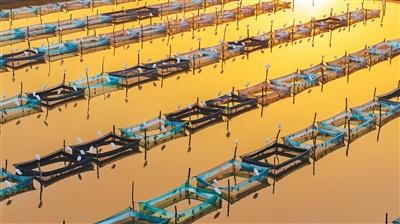
Group 1 - The article highlights a winter crab farming base in Sihong County, Suqian City, Jiangsu Province, showcasing a harmonious relationship between aquaculture and natural ecology [2] - The winter temporary breeding nets are neatly arranged, providing a winter habitat for the crabs [2] - The presence of egrets attracted to the area adds to the picturesque winter rural landscape [2]
新老零售如何破局“人心争夺战”?
Xin Lang Cai Jing· 2026-01-25 20:20
Core Insights - The retail industry is experiencing a significant transformation characterized by the emergence of new retail brands and the struggles of traditional retail giants, highlighting a divide in the market [1][5][7] Group 1: New Retail Trends - New retail brands like "悦活里" and ALDI are rapidly expanding, focusing on local consumer preferences and offering unique products to attract customers [1][2] - ALDI's strategy includes a limited but high-quality product selection, catering to essential household needs, which has resulted in a 30% increase in customer traffic on opening day [1][2] - "悦活里" emphasizes low prices and customer satisfaction guarantees, such as refunds for unsatisfactory products, enhancing customer loyalty [2] Group 2: Traditional Retail Challenges - Traditional retailers like IKEA and Carrefour are facing significant challenges due to changing consumer habits and increased competition from online platforms and discount stores [5][6] - IKEA's closure of stores reflects the difficulties of maintaining large retail spaces in a market that increasingly favors smaller, more flexible formats [5] - Carrefour's exit from the Chinese market illustrates the struggle of traditional supermarkets to compete with e-commerce and community group buying models [6] Group 3: Consumer-Centric Strategies - New retail companies are shifting their focus from price to value, emphasizing emotional connections and quality in their offerings [2][8] - Companies like 盒马 are building localized supply chains to ensure freshness and cater to regional tastes, enhancing their competitive edge [2] - The transformation of retail spaces into community hubs, as seen with 永辉 and 苏果, aims to meet diverse consumer needs beyond mere shopping [4] Group 4: Market Dynamics - The retail landscape is moving towards a model where multiple formats coexist, each catering to different consumer segments and preferences [9] - The rise of new retail brands is a response to the evolving consumer demand for personalized experiences and quality products [9] - The ongoing changes in the retail sector reflect a broader trend of consumer empowerment, where businesses must adapt to meet the specific needs of their customers [9]

科技农业绘出新风景
Xin Lang Cai Jing· 2026-01-25 18:15
Core Insights - The article highlights the transformative impact of agricultural technology in Chengdu, showcasing how innovations are redefining traditional farming practices and enhancing food diversity in winter [4][6][7]. Group 1: Agricultural Innovations - Chengdu's agricultural landscape is evolving with the introduction of "black technology," allowing for year-round production of crops like strawberries and oilseed rape, even in winter [4][6][7]. - The use of advanced techniques such as double haploid induction and controlled environment agriculture has led to the development of cold-resistant, early-blooming crop varieties [4][7][8]. - Facilities like vertical farms and smart greenhouses are enabling the cultivation of crops without reliance on traditional seasonal constraints, thus ensuring a steady supply of fresh produce [9][12]. Group 2: Seafood Production in Xinjiang - Xinjiang is emerging as a significant player in the seafood industry, producing species like salmon and shrimp through innovative inland aquaculture techniques [10][11]. - The use of saline-alkaline water for aquaculture has been optimized to create environments suitable for marine species, showcasing a breakthrough in resource utilization [10][11]. - Advanced closed-loop water recycling systems are being implemented to ensure sustainable and efficient fish farming practices in arid regions [11][12]. Group 3: Solar-Agriculture Integration - The "agriculture-photovoltaics" model is gaining traction, where solar panels not only generate electricity but also create favorable microclimates for crop growth beneath them [13][14]. - This dual-use approach is enhancing agricultural productivity in arid regions by improving soil conditions and reducing water evaporation [13][14]. - Projects like "fishing-solar" and "pasture-solar" are demonstrating the potential for synergistic benefits, leading to increased yields and diversified income streams for farmers [14][15]. Group 4: Global Agricultural Technology Trends - The global agricultural sector is witnessing a shift towards data-driven practices, moving away from traditional methods to more scientific approaches [16][17]. - Technologies such as IoT, AI, and autonomous machinery are being integrated into farming operations worldwide, enhancing efficiency and sustainability [16][17]. - China's advancements in agricultural technology are not only improving domestic production but also contributing to global agricultural practices, showcasing a blend of local innovation and international collaboration [17].

供需错配下的新蓝海:新兴城市消费上涌与一线品牌“双向奔赴”
Guan Cha Zhe Wang· 2026-01-14 00:50
Core Insights - Hema's CEO announced that the company expects a revenue growth rate exceeding 40% by 2025, with its annual GMV projected to surpass 100 billion yuan [1] - The growth is driven by Hema's expansion into 40 emerging cities, achieving high initial sales performance in these locations [1] - Other brands like Starbucks and Lululemon are also accelerating their presence in non-first-tier cities, indicating a broader market shift [1] Group 1: Market Dynamics - There is a significant shift in China's urban development, with a reversal of the traditional trend of population influx into first-tier cities, leading to increased consumer activity in emerging cities [3] - The 2024 migration index for second-tier cities and above shows a decline, with more individuals choosing to stay in their hometowns for work [3] - Over 130 cities are projected to experience net population growth by the end of 2025, with 17 of the top 30 cities being second-tier or below [3] Group 2: Consumer Behavior - The influx of new residents, including internet professionals and entrepreneurs, is driving higher income levels and consumer willingness in emerging cities [5] - The fast-moving consumer goods market is stabilizing, with three to five-tier cities contributing 80% of the market's growth [5] - A significant majority of non-first-tier cities reported positive retail sales growth, with many third-tier cities exceeding the national average [5] Group 3: Supply and Demand Mismatch - Despite rising consumer demand, the supply chain in emerging cities has not kept pace, leading to a mismatch [7] - Consumers face challenges in accessing high-quality products, as local supermarkets primarily offer traditional goods [7] - The lack of modern retail experiences in emerging cities limits consumer engagement and frequency of purchases [7][9] Group 4: Brand Strategies - Major brands are capitalizing on the supply-demand gap by expanding into emerging cities, offering established product lines and service models [10] - Hema's strategy includes leveraging a national supply chain to provide high-quality products directly to consumers in these cities [12] - Other brands, such as Haidilao and Luckin Coffee, are also expanding their presence in lower-tier cities, indicating a trend towards market saturation in these areas [12][14] Group 5: Future Outlook - Emerging cities are becoming essential markets for brands, transitioning from experimental zones to critical battlegrounds for growth [14] - There is significant potential for continued consumer growth in these areas, necessitating brands to tailor their offerings to local demands [14] - The development of local policies and infrastructure will be crucial in unlocking the full consumer potential in emerging cities [14]

大品牌纷纷扎根,新兴城市消费藏着多少潜力?
Qi Lu Wan Bao· 2026-01-13 08:31
Core Viewpoint - The consumption landscape in China is shifting as brands expand into emerging cities, breaking the previous dominance of first-tier cities in retail and lifestyle offerings [1][2]. Group 1: Emerging Cities and Consumption Growth - The growth in emerging cities is driven by population influx and upgraded consumer demand, with a projected 4% year-on-year increase in social retail sales for 2025 [2]. - Cities like Guiyang, Hefei, and Changsha are expected to see a population increase of over 100,000 in 2024, indicating a shift in migration patterns as more individuals choose to stay in their hometowns for work [2][4]. - The demand for quality and experience among young consumers in emerging cities is now comparable to that of first-tier cities, leading to a convergence in lifestyle preferences [4][6]. Group 2: Brand Performance and Market Dynamics - Hema's "Box District Index" indicates strong market performance in emerging cities, with cities like Shijiazhuang and Xuzhou showing indices of 171 and 141, respectively, surpassing the national average [4]. - Hema's sales of Dungeness crabs in Shandong increased by over 150% during the "Eleventh" holiday, with Jinan and Qingdao experiencing growth rates of 450% and 400% [5]. - The shift from low-price competition to quality, personalized, and emotional consumption is becoming mainstream, with consumers in emerging cities increasingly seeking premium products [6][8]. Group 3: Strategic Opportunities and Policy Support - Emerging cities are positioned to benefit from supportive policies aimed at expanding domestic demand and enhancing infrastructure, as outlined in the 15th Five-Year Plan for Shandong [9][11]. - The development of a multi-polar support system is encouraged, with cities like Linyi and Jining being targeted for accelerated growth, creating new opportunities for brands [11][12]. - The robust consumer base and logistics advantages in cities like Linyi, which boasts the largest market cluster in China, are attracting brands like Hema to establish a presence [11][12].

当一线不再独占消费力,新兴城市如何点亮中国消费地图?
Sou Hu Cai Jing· 2026-01-05 06:27
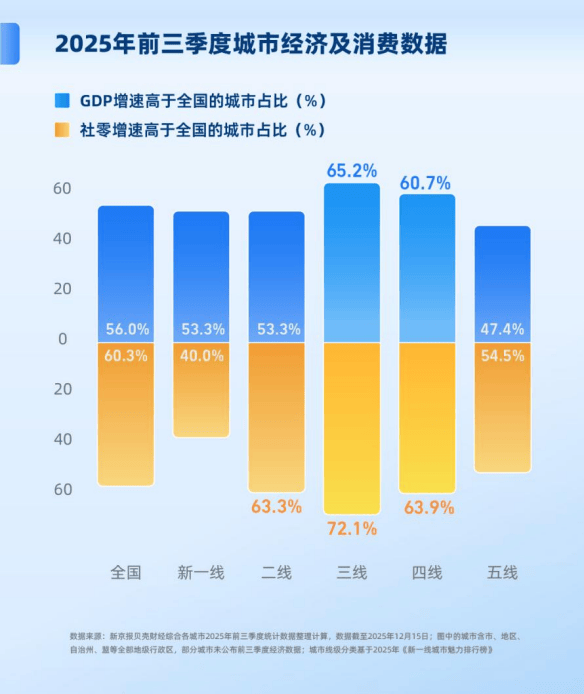
Core Insights - Consumption is a crucial component of domestic demand and a key support for the economic recovery in China, with a reported year-on-year growth of 4% in retail sales from January to November 2025, surpassing the growth rates of the previous year [1] - The Chinese government has prioritized boosting consumption as a key economic task, with recent policies aimed at enhancing financial support for consumption across various sectors [1] - Emerging cities are becoming the main drivers of consumption growth, with three to five-tier cities contributing 80% of the incremental growth in the fast-moving consumer goods market [3][4] Group 1: Economic and Consumption Trends - The macroeconomic data indicates a structural shift in China's economic growth dynamics, with emerging cities increasingly driving economic and consumption growth [4] - By December 15, 2025, 55.7% of non-first-tier cities reported GDP growth rates exceeding the national average, with significant contributions from third and fourth-tier cities [4] - Among 306 non-first-tier cities, 98.7% experienced positive growth in social retail sales, with 72.1% of third-tier cities outperforming the national average [4][6] Group 2: Consumer Behavior and Market Dynamics - The consumer market in non-first-tier cities is becoming increasingly competitive, with brands expanding their presence in these regions, leading to a shift in consumption patterns [9][10] - The rise of lifestyle brands and high-end products in emerging cities reflects a growing demand for quality and variety among consumers [10][11] - The trend of cross-city shopping is emerging, with residents of smaller cities traveling to nearby urban centers for shopping, indicating a blurring of consumption boundaries [30][32] Group 3: Retail Innovations and Supply Chain Developments - New retail models, such as Hema's integration of local products into urban consumption, are transforming traditional supply chains and enhancing consumer access to diverse products [18][20] - The "Hema Village" model is facilitating the entry of local agricultural products into urban markets, creating new consumption trends and enhancing local economies [22][24] - The performance of Hema stores in various emerging cities demonstrates that consumer enthusiasm is not strictly correlated with city tier levels, highlighting the potential for growth in these markets [26][30] Group 4: Lifestyle Changes and Consumption Patterns - The lifestyle preferences of consumers in emerging cities are evolving, with a focus on convenience and emotional satisfaction in shopping experiences [30][33] - Health-conscious consumption is on the rise, with an increasing demand for products that emphasize quality ingredients and health benefits [33][35] - The introduction of high-quality retail spaces is extending shopping hours and enhancing the overall consumer experience, contributing to a more vibrant night-time economy [36]
千城百县看中国丨山东滕州:涝洼地里蟹丰收
Xin Hua Wang· 2025-12-30 00:30
Core Viewpoint - The aquaculture base in Ganjiao Village, Xigang Town, Tengzhou City, Shandong Province, has successfully transformed idle land into a productive environment for breeding Chinese mitten crabs, extending the harvest period and enhancing market supply [1][3]. Group 1 - The aquaculture base has converted over a hundred acres of idle low-lying land into a productive breeding ground for Chinese mitten crabs [1]. - The introduction of cold-resistant crab seedlings has allowed for an extended harvest period, with supply lasting until after the Spring Festival, which is well-received in the market [1]. - The annual total output value of the crab farming at this base exceeds 3 million yuan, benefiting over 20 local households with an average annual income increase of approximately 26,000 yuan per person [3].

这些食蟹“安全红线”别踩
Xin Lang Cai Jing· 2025-12-25 16:21
Core Viewpoint - The article emphasizes the importance of safety when consuming hairy crabs, particularly during the peak season from September to December, highlighting the risks associated with eating dead or improperly stored crabs [1]. Group 1: Risks of Consuming Dead Crabs - Dead crabs can harbor harmful bacteria such as Vibrio parahaemolyticus and Salmonella, which can proliferate rapidly after death, increasing by over 100 times within 2 hours at room temperature [2] - The toxins produced during the decomposition of crab meat, particularly histamine, are resistant to heat and can remain even after cooking, making dead crabs dangerous to consume [2] - Elderly individuals have a significantly reduced immune response, making them more susceptible to severe outcomes from bacterial infections compared to younger adults [2] Group 2: Common Misconceptions - Many people mistakenly believe that dead crabs without an odor are safe to eat; however, toxins can be present even in the absence of smell, and crabs that have been dead for more than 2 hours should be discarded [3] - The idea that inducing vomiting can help after poisoning is dangerous and can lead to further complications; proper hydration and immediate medical attention are recommended instead [3] - Reheating overnight crabs does not eliminate toxins, and they should not be consumed if left at room temperature for more than 2 hours [3] Group 3: Safe Consumption Guidelines - Consumers should only select live crabs that are active and have a shiny shell; dead or nearly dead crabs should be avoided [4] - Live crabs should be stored properly in a cool environment and consumed within 2 days, while cooked crabs should be eaten within 24 hours [4] - It is crucial to thoroughly cook crabs and remove certain parts that may contain toxins before consumption [4] - Portion control is important, with recommendations for healthy adults to limit themselves to 1.5 crabs (approximately 200 grams) per serving, and special populations should be cautious or avoid consumption altogether [4]