
电子黑板

Search documents
低调又神秘的电子黑板产业,可能比家长更焦虑
Hu Xiu· 2025-10-16 12:25
Core Viewpoint - The increasing prevalence of electronic blackboards in primary and secondary education has sparked concerns among parents regarding their impact on children's eyesight, despite official assurances that they do not directly affect vision [1][3][17]. Industry Overview - As of 2023, the multimedia classroom penetration rate in Chinese primary and secondary schools has exceeded 95% [1]. - The electronic blackboard industry is substantial but lacks comprehensive market size data; however, IDC projects the market to reach approximately 18.6 billion RMB in 2024, with a year-on-year growth of 12.3% [4]. - The education sector accounts for about 68% of the electronic whiteboard market, with the number of ordinary high schools increasing by 2.36% in 2023 [7][8]. Market Dynamics - Major players in the electronic blackboard market include traditional education equipment manufacturers like Seewo and Honghe, which hold a combined market share of 52%, while tech companies like Huawei and iFlytek are growing rapidly at 120% [5][22]. - The market is experiencing a shift as the number of schools is projected to decline due to falling birth rates, impacting future growth [14]. Financial Insights - Seewo's parent company reported a revenue of 10.565 billion RMB in the first half of 2025, with a 4.39% year-on-year increase, but net profit decreased by 19.66% [12][14]. - The education funding in China has seen a compound annual growth rate of 8.17% from 2015 to 2021, increasing from 3.6129 trillion RMB to 5.7874 trillion RMB [8]. Technological Advancements - The industry is moving towards "eye protection technology," with companies like Haier and iFlytek introducing innovations aimed at reducing eye strain [20][21]. - AI integration is becoming a key focus, with the global AI education market projected to grow from 5.18 billion USD in 2024 to 7.05 billion USD in 2025, indicating a significant opportunity for electronic blackboard companies [25][30]. Competitive Landscape - The competitive environment is evolving, with companies investing heavily in R&D; Seewo's parent company allocated 1.4 billion RMB for R&D in 2024, while iFlytek's R&D spending reached 4.58 billion RMB [23]. - The market is witnessing a shift from traditional players to tech companies leveraging AI, creating a new competitive dynamic [22][29].

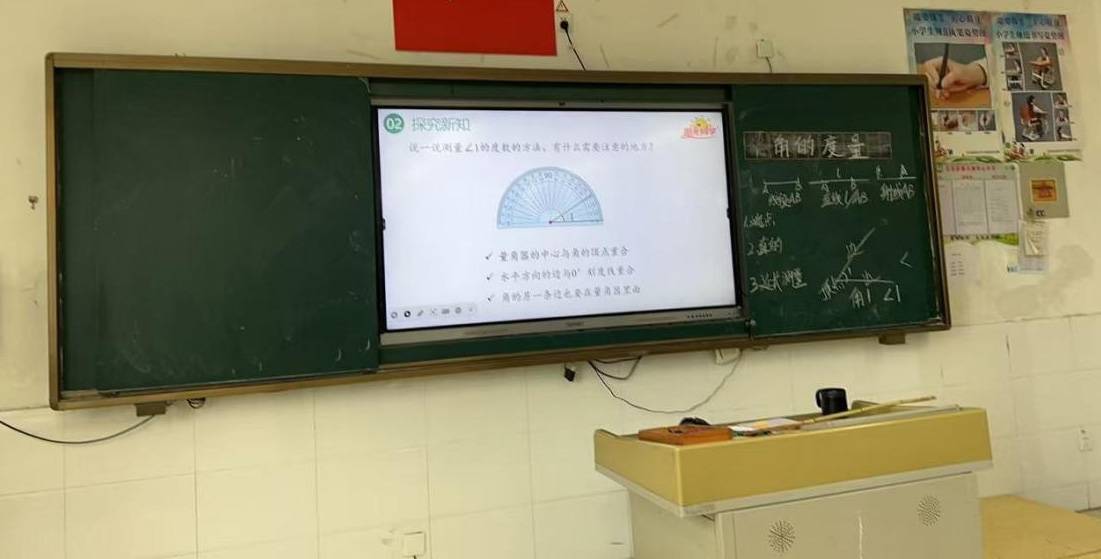
让“电子黑板”更好用、用得好(百姓关注)
Ren Min Ri Bao· 2025-09-28 22:28
Core Viewpoint - The rapid adoption of electronic blackboards in primary and secondary schools across China has raised concerns regarding their impact on students' eyesight and overall learning quality, prompting calls for a return to traditional blackboards [1][2][3][4] Group 1: Adoption and Usage Issues - Electronic blackboards have surpassed computers and projectors in terms of installation rates in schools, but many parents and students report issues such as poor quality, excessive usage time, and improper use [1][2] - A survey revealed that electronic blackboards are often used for extended periods beyond the recommended 30% of total teaching time, contributing to students' eyesight problems [2][4] - Some schools have reported malfunctioning electronic blackboards that remain in use, further exacerbating the issue of visual strain among students [2][3] Group 2: Educational Impact and Recommendations - While electronic blackboards can enhance interactive learning and improve teaching quality, improper usage, such as small font sizes and rapid transitions between slides, can hinder students' ability to absorb information [3][4] - Experts suggest that schools should implement measures to reduce screen time, optimize classroom lighting, and ensure proper equipment quality to mitigate the negative effects on students' eyesight [4] - There is a call for the establishment of national standards and regulations for the use of electronic teaching devices to ensure effective integration of technology in education [4]