
护眼技术

Search documents
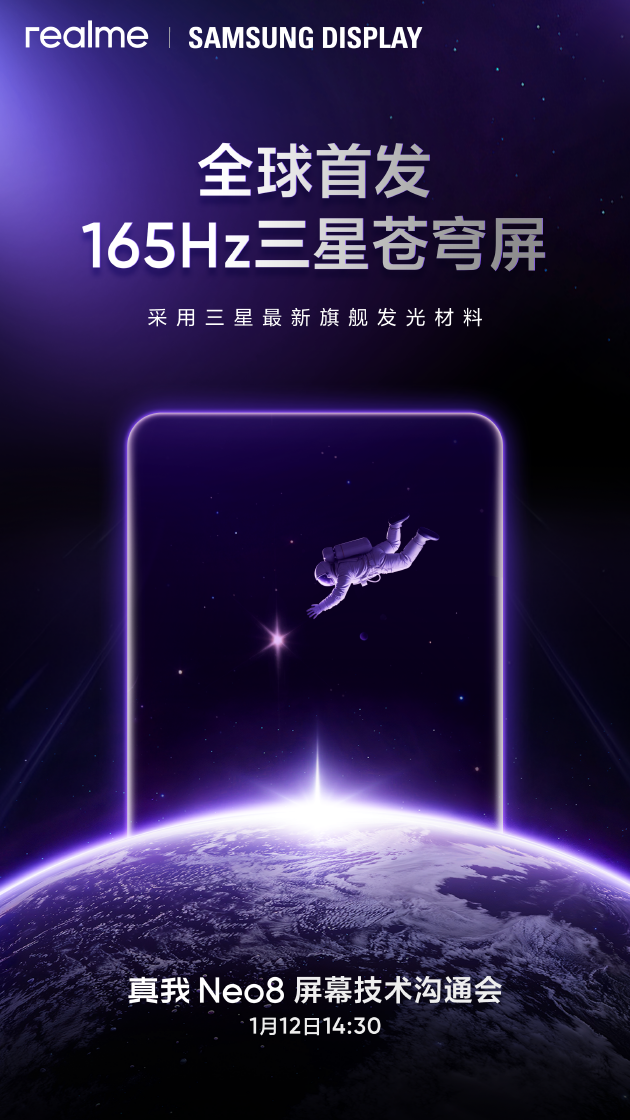
真我Neo8全球首发165Hz三星苍穹屏,以M14旗舰基材定义电竞屏幕新标杆
Xin Lang Cai Jing· 2026-01-12 12:39
Core Viewpoint - The company Realme has announced a deep collaboration with Samsung Display to launch the new gaming flagship smartphone, Realme Neo8, featuring the world's first 165Hz Samsung Aether screen, which is now available for pre-order at a promotional price of 1 yuan [1][29]. Group 1: Screen Technology - The Realme Neo8 is equipped with the latest M14 luminous material, achieving significant upgrades in brightness, lifespan, and power consumption [5][34]. - The screen boasts an industry-leading manual brightness of 1000 nits and a peak brightness of 6500 nits, with a global peak brightness of 1800 nits and a sunlight display mode of 3800 nits, surpassing 103% of the P3 color gamut [8][37]. - The screen's luminous efficiency has improved by 26% compared to other materials, and its power consumption in 165Hz mode is lower than that of traditional 144Hz screens by 16% [10][39]. Group 2: Gaming Experience - The 165Hz refresh rate is designed to enhance the gaming experience, allowing for faster aiming and smoother gameplay in competitive FPS mobile games [15][45]. - The Neo8 supports over 30 popular mobile games with native 165fps modes, covering major genres such as FPS, MOBA, racing, fighting, and music games [15][45]. - The device features a new generation of touch control technology, achieving a 3800Hz instantaneous touch sampling rate, providing precise and responsive control for gamers [20][49]. Group 3: Eye Protection Features - The Neo8 incorporates a "Green Eye Protection" system, which includes full brightness DC dimming, hardware-level low blue light, and smart eye protection features [22][50]. - The screen has received TÜV Rheinland certification for flicker-free performance, ensuring a comfortable viewing experience during prolonged use [24][50]. - The AI-driven eye protection system adapts to different usage scenarios, enhancing user comfort while maintaining an immersive experience [24][50]. Group 4: Product Launch and Promotions - The Realme Neo8 is set to officially launch this month, with a promotional pre-order event offering additional gifts valued at up to 2713 yuan [26][53]. - The device aims to redefine the limits of gaming smartphones by excelling in transparency, fluidity, control, and eye protection [51].

荣耀500系列正式发布
Zheng Quan Ri Bao Wang· 2025-11-24 14:11
Core Insights - The Honor 500 series has been officially launched, featuring significant upgrades in "imaging, performance, battery life, appearance, and experience," aiming to redefine industry standards [1] Group 1: Product Features - The Honor 500 series includes two versions: Honor 500 Super Standard Edition and Honor 500 Super Pro Edition [1] - The series features a 1/1.4-inch large sensor and a 12MP ultra-wide-angle lens, with the Pro version offering a 50MP dual-stabilized telephoto lens [1] - The imaging experience includes industry-first front and rear Live portrait capabilities, enhancing live shooting scenarios with effects like background blur and beautification [1] Group 2: Performance and Battery - The Super Standard Edition is powered by the Snapdragon 8s Gen4 chip, while the Super Pro Edition uses the Snapdragon 8 Supreme chip, providing high computational power for demanding gaming scenarios [2] - The series boasts an 8000mAh battery, setting a new record for battery capacity in its category [2] - It supports 27W wired reverse charging, allowing it to charge other devices like iPhones, and features 80W wired fast charging for the Standard Edition and a combination of 80W wired and 50W wireless fast charging for the Pro Edition [2] Group 3: Communication and Software - The Honor 500 series introduces four campus network optimizations, enabling features like automatic network switching and data usage reminders [3] - The Pro version includes the self-developed HONOR C1+ RF enhancement chip, improving communication stability in congested and weak network environments [3] - The series runs on the new MagicOS 10 operating system, featuring a unique AI key for quick access to frequently used functions [3]
低调又神秘的电子黑板产业,可能比家长更焦虑
Hu Xiu· 2025-10-16 12:25
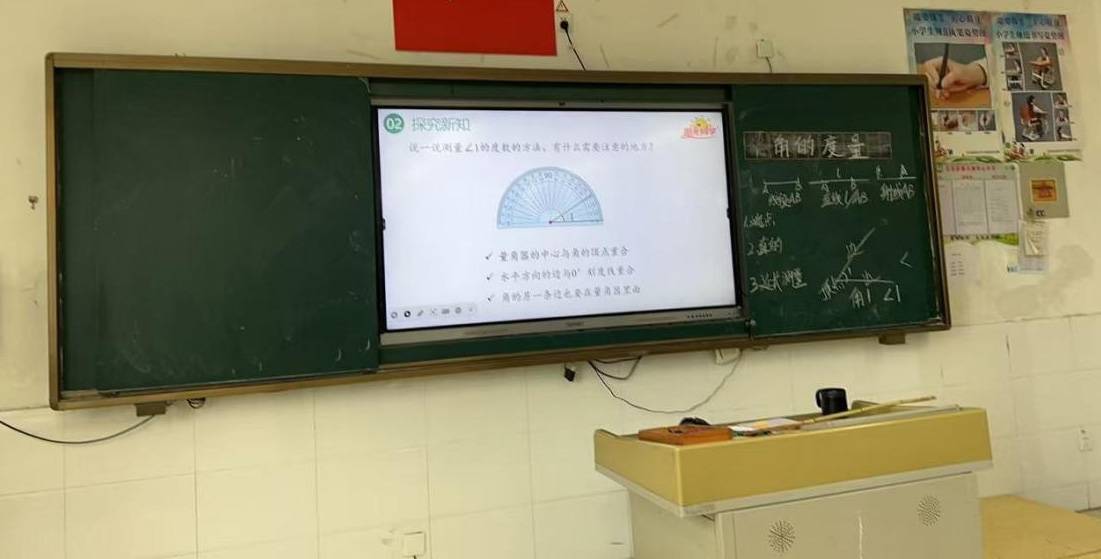
Core Viewpoint - The increasing prevalence of electronic blackboards in primary and secondary education has sparked concerns among parents regarding their impact on children's eyesight, despite official assurances that they do not directly affect vision [1][3][17]. Industry Overview - As of 2023, the multimedia classroom penetration rate in Chinese primary and secondary schools has exceeded 95% [1]. - The electronic blackboard industry is substantial but lacks comprehensive market size data; however, IDC projects the market to reach approximately 18.6 billion RMB in 2024, with a year-on-year growth of 12.3% [4]. - The education sector accounts for about 68% of the electronic whiteboard market, with the number of ordinary high schools increasing by 2.36% in 2023 [7][8]. Market Dynamics - Major players in the electronic blackboard market include traditional education equipment manufacturers like Seewo and Honghe, which hold a combined market share of 52%, while tech companies like Huawei and iFlytek are growing rapidly at 120% [5][22]. - The market is experiencing a shift as the number of schools is projected to decline due to falling birth rates, impacting future growth [14]. Financial Insights - Seewo's parent company reported a revenue of 10.565 billion RMB in the first half of 2025, with a 4.39% year-on-year increase, but net profit decreased by 19.66% [12][14]. - The education funding in China has seen a compound annual growth rate of 8.17% from 2015 to 2021, increasing from 3.6129 trillion RMB to 5.7874 trillion RMB [8]. Technological Advancements - The industry is moving towards "eye protection technology," with companies like Haier and iFlytek introducing innovations aimed at reducing eye strain [20][21]. - AI integration is becoming a key focus, with the global AI education market projected to grow from 5.18 billion USD in 2024 to 7.05 billion USD in 2025, indicating a significant opportunity for electronic blackboard companies [25][30]. Competitive Landscape - The competitive environment is evolving, with companies investing heavily in R&D; Seewo's parent company allocated 1.4 billion RMB for R&D in 2024, while iFlytek's R&D spending reached 4.58 billion RMB [23]. - The market is witnessing a shift from traditional players to tech companies leveraging AI, creating a new competitive dynamic [22][29].
京东方发布全球首款原生165Hz OLED屏幕
WitsView睿智显示· 2025-10-15 07:31
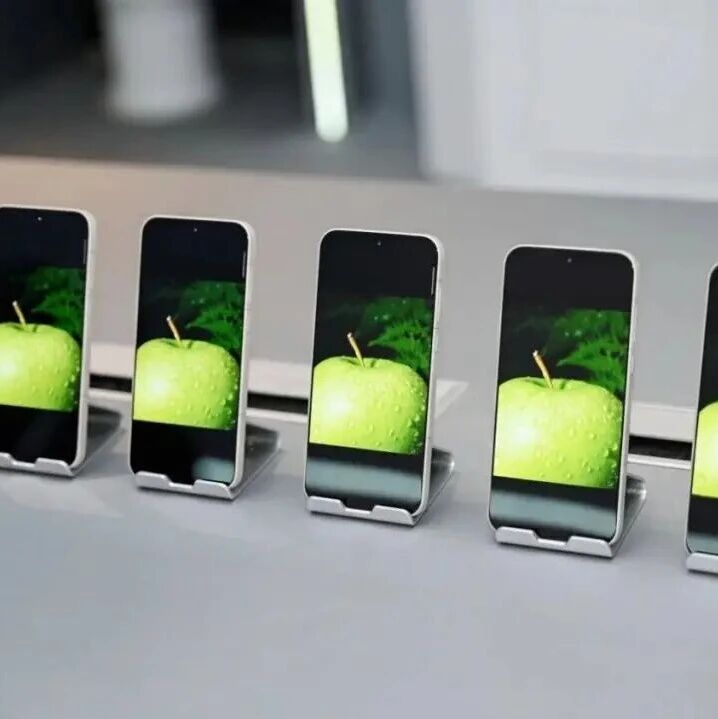
Core Viewpoint - BOE and OnePlus jointly launched the world's first native 165Hz OLED high-refresh screen, named "Oriental Screen 3.0," which boasts a 37.5% increase in frame rate compared to the mainstream 120Hz screens [2]. Group 1: Product Features - The Oriental Screen 3.0 features a display capability of 1 nit at ultra-low brightness, ensuring consistent and accurate color and brightness in any scenario, promoting eye comfort [2]. - The screen utilizes a new X3 light-emitting material co-developed by OnePlus and BOE, enhancing display performance in terms of brightness, color deviation, power consumption, and lifespan [5]. - Compared to the previous generation, the Oriental Screen 3.0 has a lifespan increase of 30%, a power consumption reduction of 10%, and a 12% improvement in color accuracy reliability [5]. Group 2: Technological Innovations - The screen is equipped with the latest "Mingmou Eye Protection" technology, which supports hardware-level low brightness, low flicker, and low blue light, along with seven active AI eye protection features [5]. - The OnePlus 15 will be the first device to feature the Oriental Screen 3.0, powered by the Snapdragon 8 Gen 2 mobile platform and featuring a 1.15mm ultra-narrow bezel [6]. Group 3: Market Context - Lenovo's recently launched Moto Razr 60 Pro/Ultra also supports a 165Hz refresh rate, utilizing LTPO screens supplied by TCL Huaxing, indicating a competitive landscape in high-refresh-rate displays [7].

国产柔性OLED手机屏占比已超六成 下一步向高端要盈利
Di Yi Cai Jing· 2025-09-20 06:30
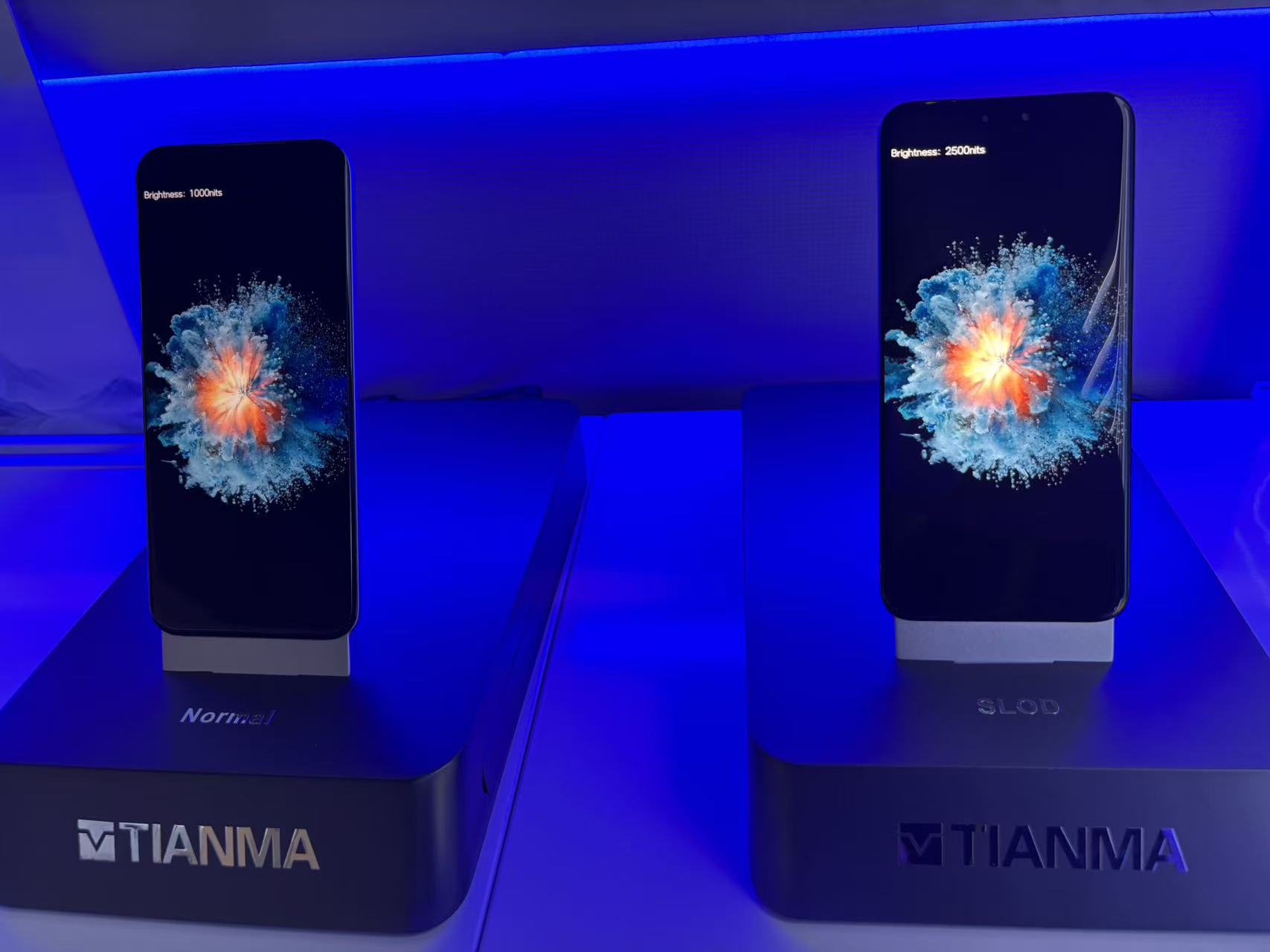
Core Viewpoint - The domestic OLED screen market, which holds over 60% of the global flexible OLED smartphone screen share, is intensifying its focus on high-end products, particularly in eye-care technology and high refresh rates [2][3]. Group 1: Product Development and Trends - Tianma and OPPO have jointly launched an eye-care OLED smartphone screen with a low brightness of 1 nit in dark environments, establishing a collaborative laboratory [2]. - Key technological trends for OLED screens include eye-care features, high refresh rates, and the development of foldable screens, with Tianma's OLED screens achieving refresh rates of up to 240Hz [2]. - The foldable smartphone market is experiencing stable growth, and Tianma is ramping up production of flexible OLED screens for both left-right and up-down folding designs [2]. Group 2: Industry Collaboration and Competitiveness - The competitiveness of domestic OLED screens relies on industry chain collaboration, with OPPO and Tianma combining their respective technologies for the development of the eye-care OLED screen [3]. - The domestic OLED industry is pushing for the localization of OLED emitting materials to enhance the competitiveness of screens and terminal products [3]. Group 3: Market Outlook and Performance - Currently, 90% of flexible OLED screens are used in smartphones, but Tianma plans to expand applications into automotive and IT sectors, with flexible OLED automotive display products expected next year [4]. - Major players like BOE, Visionox, and TCL Huaxing are establishing 8.6-generation flexible OLED or printed OLED production lines to capture opportunities in mid-size displays for IT and automotive applications [4]. - According to Sigmaintell, global shipments of flexible OLED smartphone screens are projected to reach nearly 300 million units in the first half of 2025, with a year-on-year growth of approximately 5.2% [4]. - Domestic manufacturers are expected to ship around 190 million flexible OLED smartphone screens, marking a year-on-year increase of about 7.7%, thus increasing their global market share to 62.3% [4]. - Tianma and BOE's flexible OLED smartphone screen shipments in the first half of the year were approximately 71 million and 43.2 million units, respectively, with year-on-year growth rates of 10.3% and 15.6% [4].

第二届健康显示大会在京召开:以标准护航全民视觉健康
Zhong Guo Jing Ji Wang· 2025-07-17 22:57
Core Insights - The second Health Display Conference emphasized the importance of "eye protection" as a critical public health issue, with industry leaders calling for the integration of eye care features as a core competitive advantage in display technology [1][2] - The near-sightedness rate among children and adolescents in China has reached 52.7% in 2023, highlighting the urgent need for proactive eye care solutions rather than reactive measures [1] - A report by Lutou Technology predicts that global display device shipments will exceed 2.2 billion units by 2025, with China's tablet sales expected to reach 7.137 million units (a 20% year-on-year increase) and gaming monitor sales projected to surpass 9.9 million units (a 22% increase) [1] Industry Standards - Two key standards were launched at the conference: the "Display Device Gold E Eye Protection Certification Specification," which covers blue light suppression and flicker control, and the "Visual Health Technology Specification for Learning and Practice Machines," which establishes optical characteristics and blue light control standards for e-ink devices [2] - The establishment of these standards aims to fill industry gaps and provide consumers with reliable purchasing information [2] - Experts emphasized the need for a balance between technical rigor and user experience in health display standards, advocating for a dynamic, layered system [2]