希沃白板

Search documents
视源股份:公司及旗下子公司长期深耕教育、会议等核心场景的自研软件开发
Zheng Quan Ri Bao Wang· 2026-01-20 13:18
Core Viewpoint - The company, Vision Technology (002841), emphasizes its commitment to developing proprietary software for key scenarios in education and meetings, showcasing its innovative products in these sectors [1]. Group 1: Education Sector - The company's proprietary software, the Xihuo Whiteboard, serves as a comprehensive interactive teaching platform that facilitates lesson preparation and interactive teaching [1]. Group 2: Meeting Sector - The MAXHUB Lingxiao Cloud Platform is highlighted as an integrated application software that manages devices, controls the entire meeting process, and provides cloud screen messaging and operational analysis [1].

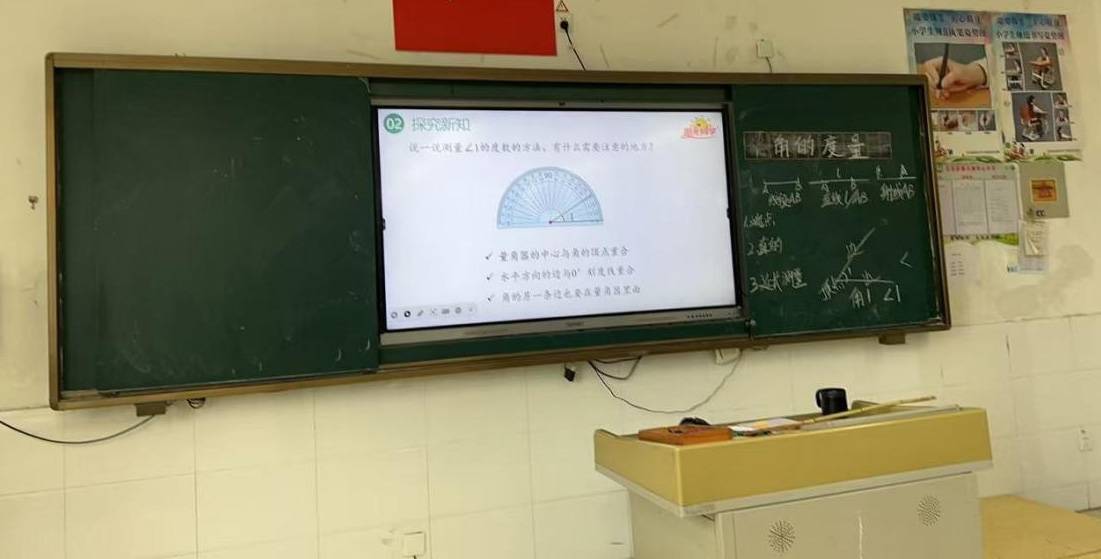
低调又神秘的电子黑板产业,可能比家长更焦虑
Hu Xiu· 2025-10-16 12:25
Core Viewpoint - The increasing prevalence of electronic blackboards in primary and secondary education has sparked concerns among parents regarding their impact on children's eyesight, despite official assurances that they do not directly affect vision [1][3][17]. Industry Overview - As of 2023, the multimedia classroom penetration rate in Chinese primary and secondary schools has exceeded 95% [1]. - The electronic blackboard industry is substantial but lacks comprehensive market size data; however, IDC projects the market to reach approximately 18.6 billion RMB in 2024, with a year-on-year growth of 12.3% [4]. - The education sector accounts for about 68% of the electronic whiteboard market, with the number of ordinary high schools increasing by 2.36% in 2023 [7][8]. Market Dynamics - Major players in the electronic blackboard market include traditional education equipment manufacturers like Seewo and Honghe, which hold a combined market share of 52%, while tech companies like Huawei and iFlytek are growing rapidly at 120% [5][22]. - The market is experiencing a shift as the number of schools is projected to decline due to falling birth rates, impacting future growth [14]. Financial Insights - Seewo's parent company reported a revenue of 10.565 billion RMB in the first half of 2025, with a 4.39% year-on-year increase, but net profit decreased by 19.66% [12][14]. - The education funding in China has seen a compound annual growth rate of 8.17% from 2015 to 2021, increasing from 3.6129 trillion RMB to 5.7874 trillion RMB [8]. Technological Advancements - The industry is moving towards "eye protection technology," with companies like Haier and iFlytek introducing innovations aimed at reducing eye strain [20][21]. - AI integration is becoming a key focus, with the global AI education market projected to grow from 5.18 billion USD in 2024 to 7.05 billion USD in 2025, indicating a significant opportunity for electronic blackboard companies [25][30]. Competitive Landscape - The competitive environment is evolving, with companies investing heavily in R&D; Seewo's parent company allocated 1.4 billion RMB for R&D in 2024, while iFlytek's R&D spending reached 4.58 billion RMB [23]. - The market is witnessing a shift from traditional players to tech companies leveraging AI, creating a new competitive dynamic [22][29].

智能设备重塑“教”与“学”
Ren Min Ri Bao Hai Wai Ban· 2025-10-12 22:59
Core Insights - The integration of artificial intelligence in education is transforming traditional teaching methods, enhancing student engagement and learning outcomes through interactive tools and personalized learning experiences [3][4][5][6][8]. Group 1: AI in Education - The collaboration between iFLYTEK and Kexin China has led to the development of an AI model that allows virtual figures of historical figures to interact with students, answering questions in an engaging manner [3]. - The Chinese government has initiated a digital education strategy aimed at leveraging AI to reform education by 2025, prompting tech companies to innovate educational tools [3]. Group 2: Interactive Learning Tools - The use of interactive whiteboards and AI-powered software in classrooms has significantly increased student participation and engagement compared to traditional methods [4][5]. - AI tools like the "AI Listening and Speaking Classroom" can generate real-time exercises based on student performance, enhancing the learning experience [4][5]. Group 3: Teacher Support and Efficiency - AI grading machines can reduce teachers' grading time by 80%, allowing them to focus more on personalized instruction and educational research [6]. - The integration of AI in grading and feedback processes has streamlined administrative tasks, enabling teachers to dedicate more time to student interaction and tailored teaching [6][7]. Group 4: Personalized Learning Experience - AI learning devices are evolving to provide personalized feedback and support, acting as virtual tutors that adapt to individual student needs [8][9]. - The design of AI learning machines incorporates emotional intelligence, allowing them to engage with students in a more relatable manner, enhancing the overall learning experience [9][10]. Group 5: Home-School Collaboration - Smart educational devices are facilitating a seamless connection between home and school, allowing parents to monitor their children's progress and engage in their learning journey [11][12]. - The effectiveness of these devices varies among students, with those who are more self-motivated benefiting the most from the technology [11][12].

龙腾光电、清越光电、南京熊猫、视源股份发布上半年业绩
WitsView睿智显示· 2025-08-27 11:50
Group 1: Longteng Optoelectronics - Longteng Optoelectronics reported a revenue of 1.289 billion yuan, a decrease of 27.91% year-on-year [2][4] - The net profit attributable to shareholders was -152 million yuan, an improvement of 74 million yuan compared to the same period last year [2][4] - The company is focusing on new development opportunities in AI, ESG, and low-altitude economy, while enhancing its product structure through innovation [5] Group 2: Qingyue Technology - Qingyue Technology achieved a total revenue of 329 million yuan, a year-on-year increase of 9.49% [6] - The net profit attributable to the parent company was -30.76 million yuan, a reduction in loss by 8.12 million yuan compared to the previous year [6][7] - The company is actively expanding new applications for its PMOLED products in various fields, including drones and smart homes [7][8] Group 3: Nanjing Panda - Nanjing Panda reported a revenue of 1.043 billion yuan, a decrease of 16.61% year-on-year [9][10] - The net profit attributable to shareholders was -45.58 million yuan [9][10] - The company is undergoing a transition in its industrial internet and smart manufacturing businesses, with a focus on upgrading its green service-oriented electronic manufacturing [11] Group 4: Vision Source - Vision Source achieved a revenue of 10.565 billion yuan, a year-on-year increase of 4.39% [12][13] - The net profit attributable to shareholders was 397.68 million yuan, a decrease of 19.66% compared to the previous year [12][13] - The company is expanding its LED product offerings and has seen a 52.26% year-on-year growth in LED business revenue [13]