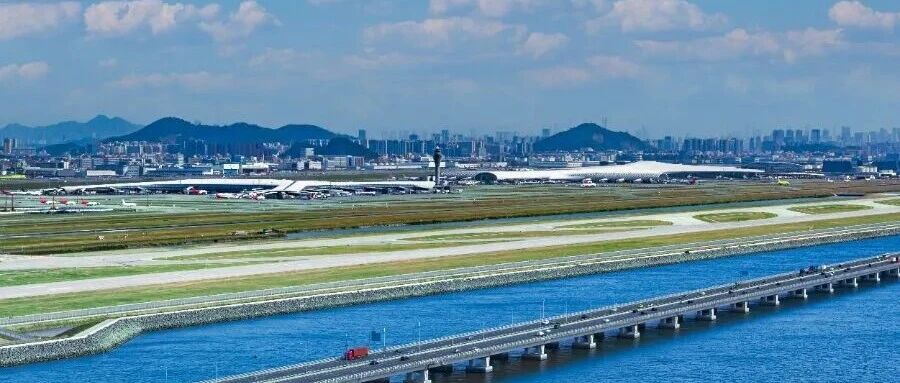
白云国际机场T3航站楼与第五跑道

Search documents
深圳机场迈入“三跑道时代”
2 1 Shi Ji Jing Ji Bao Dao· 2025-12-06 16:02
Core Viewpoint - The official operation of the third runway at Shenzhen Airport marks the beginning of the "three-runway era," enhancing the airport's capacity and operational efficiency [1][2]. Group 1: Third Runway Operations - The third runway is 3,600 meters long and 45 meters wide, classified as a 4F level, accommodating various large aircraft [2]. - The runway will operate in conjunction with the existing two runways, optimizing flight operations with eight different modes based on flight volume [2]. - The introduction of the third runway is expected to alleviate operational pressure, increase flight frequency, and enhance cargo and passenger capacity [2]. Group 2: Future Projections - By 2024, Shenzhen Airport's annual passenger flow is projected to exceed 60 million, with expectations to reach 65 million by 2025, alongside a cargo throughput surpassing 2 million tons [2]. - The airport's infrastructure will evolve into a "3+3+3+1" model, including three terminals, three cargo areas, and three runways, aiming to support an annual passenger throughput of 80 million and cargo of 4.5 million tons [2]. Group 3: Regional Airport Expansion - The Greater Bay Area is witnessing a collective expansion of airports, with significant projects like the new T3 terminal and fifth runway at Baiyun International Airport, which can handle 120 million passengers annually [3]. - Other airports in the region, such as Huizhou, Hong Kong, and Foshan, are also undergoing expansions to enhance their passenger and cargo capacities [3][4]. - The development aligns with the Guangdong-Hong Kong-Macao Greater Bay Area plan to establish a world-class airport cluster, improving the competitive position of airports in the region [4].


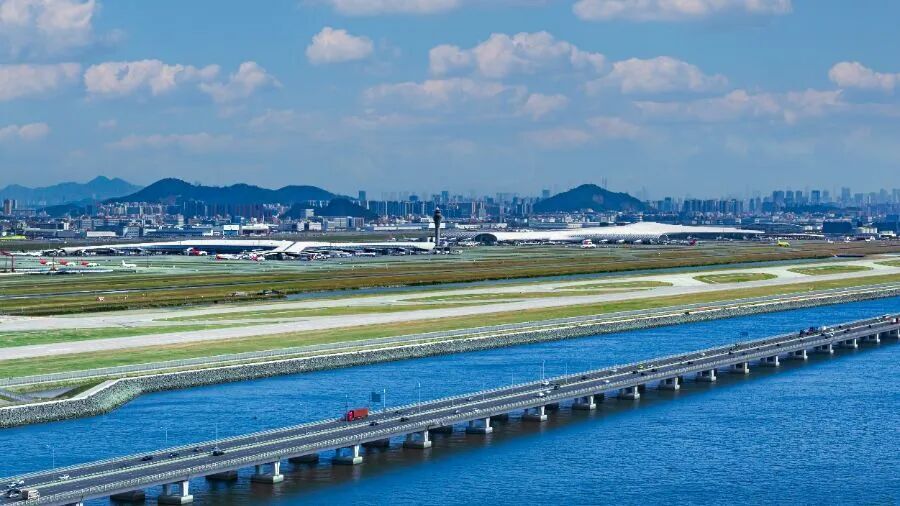
深圳机场迈入“三跑道时代”
21世纪经济报道· 2025-12-06 15:56
Core Viewpoint - The official operation of the third runway at Shenzhen Airport marks the beginning of the "three-runway era," enhancing the airport's capacity and operational efficiency [1][3]. Group 1: Shenzhen Airport Developments - The third runway is 3,600 meters long and 45 meters wide, classified as a 4F level, accommodating various large aircraft [3]. - The new runway will work in conjunction with the existing two runways, optimizing operational modes to handle different flight volumes, allowing for a total of eight operational modes [3]. - The airport's annual passenger traffic is projected to exceed 60 million in 2024 and 65 million in 2025, with cargo throughput expected to surpass 2 million tons for the first time [3]. Group 2: Greater Bay Area Airport Expansion - Other airports in the Greater Bay Area are also undergoing significant expansions, including the opening of the T3 terminal and fifth runway at Baiyun International Airport, which can accommodate 120 million passengers annually [4]. - The expansion of Huizhou Airport will increase parking spaces from 8 to 14, while Hong Kong International Airport's new runway system will enhance its annual passenger capacity to 120 million and cargo capacity to 10 million tons [5]. - The development plan for the Guangdong-Hong Kong-Macao Greater Bay Area aims to establish a world-class airport cluster, enhancing the international competitiveness of airports in Guangzhou and Shenzhen [5].