
世界级机场群建设

Search documents
江苏南通新机场要来了
Jie Fang Ri Bao· 2026-01-14 07:36
Core Insights - The Jiangsu Provincial Development and Reform Commission has released a list of major projects for 2026, prominently featuring the Nantong New Airport project, which is set to accelerate construction and aims for the completion of the feasibility report by 2026 [1] - The Nantong New Airport is positioned as a significant addition to the Shanghai international aviation hub, with plans for two 3,600-meter runways and a terminal covering 520,000 square meters, targeting a passenger throughput of 40 million by 2035, expandable to 80 million [2] - The airport's location is approximately 100 kilometers from both Shanghai Pudong and Hongqiao airports, expected to absorb some overflow passenger traffic from Shanghai and the surrounding areas [3] Project Development - The Nantong New Airport project has seen recent developments, including the establishment of a joint venture company with a registered capital of 1 billion yuan, involving Shanghai Airport Group and Nantong Urban Construction Group [2] - The project is part of the broader Yangtze River Delta integration plan, which emphasizes the need for a new airport to meet the increasing passenger demand in the region [3][4] Regional Impact - The Yangtze River Delta airport cluster is projected to handle 28.77 million passengers in 2024, reflecting a 19.5% increase from the previous year, indicating a robust growth trajectory for air travel in the region [3] - The opening of the Jiaxing Nanhu Airport in December 2025 will complement the Nantong New Airport, enhancing the cargo and passenger transport capabilities in the region and supporting the Shanghai international aviation hub's functionality [4]
河北:“十五五”期间基本建成高效协同的津冀世界级港口群
Zhong Guo Xin Wen Wang· 2026-01-13 09:26
Group 1 - The core focus of Hebei's "14th Five-Year Plan" is to enhance the modern comprehensive transportation system, aiming to develop a highly efficient and collaborative port cluster in the Tianjin and Hebei region, with a port throughput capacity reaching 1.35 billion tons [1] - Hebei plans to optimize the highway network layout in the Xiong'an New Area, completing projects such as the second phase of the Rongwu Expressway and the second phase of the Jingde Expressway, to achieve efficient connectivity of the road network [1] - The province aims to integrate deeply into the world-class airport cluster in the Beijing-Tianjin-Hebei region, with passenger and cargo throughput capacities projected to reach 29.8 million and 249,000 tons respectively [2] Group 2 - Hebei will strengthen the optimization of the transportation airport layout, constructing a convenient air service network, including the expansion of Shijiazhuang Zhengding International Airport, to establish a world-class airport cluster [2] - An investment of 123 billion RMB is planned for 2026 to enhance the construction of highways, ports, and railways, focusing on improving the comprehensive transportation network [2]
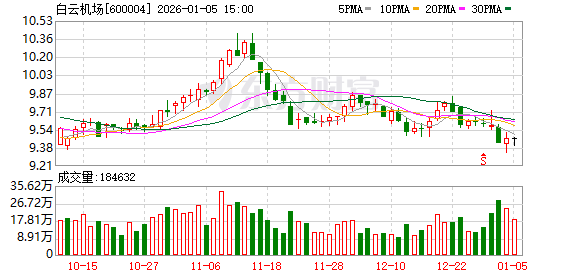
白云机场“添翼”后再获定增 打造世界一流机场迈向新阶段
Zheng Quan Ri Bao· 2026-01-05 08:39
Core Viewpoint - Guangzhou Baiyun International Airport has received approval for a capital increase, with the controlling shareholder injecting 1.6 billion yuan, enhancing the airport's cash flow and supporting its goal of becoming a world-class airport [2][7]. Group 1: T3 Terminal and Infrastructure Development - The T3 terminal officially commenced operations on October 30, 2025, as part of the airport's Phase III expansion, which includes a total investment of 53.77 billion yuan [3]. - The T3 terminal and the fifth runway mark the airport's entry into the "3.0 era," making it the first airport in China to operate five commercial runways [3]. - The airport's capacity will increase to accommodate 140 million passengers and 600,000 tons of cargo annually, a significant leap from the 76.36 million passengers and 238,190 tons of cargo in 2024 [3]. Group 2: Operational Efficiency and Design - T3 terminal features a design inspired by local culture, emphasizing high operational efficiency, short walking distances for passengers, and advanced digital management through BIM technology [4]. - The terminal integrates multiple transportation modes, including high-speed rail and metro, aiming for seamless passenger transfers and positioning the airport as a central transportation hub in the Greater Bay Area [4]. Group 3: Financial Performance and Growth - Following the T3 terminal's launch, the airport's annual passenger throughput surpassed 80 million for the first time, making it the second airport in China to achieve this milestone [5]. - The airport's revenue for 2025 is projected to continue growing, with a reported revenue of 5.697 billion yuan in the first nine months of 2025, a year-on-year increase of 7.48% [9]. - The net profit attributable to shareholders for the same period reached 1.096 billion yuan, reflecting a significant year-on-year growth of 64.06% [9]. Group 4: Future Outlook and Strategic Goals - The airport aims to enhance its international route network and capitalize on the recovery of the aviation market, with plans to open and restore over 30 international routes [9][11]. - By 2035, the aviation passenger demand in the Greater Bay Area is expected to reach 420 million, prompting the airport to accelerate its development as a world-class airport [10]. - The airport is positioned as a key international aviation hub, enhancing its connectivity to Southeast Asia, Europe, and Australia, while also serving as a vital gateway for southern China to Africa and the Middle East [10].


民航华东局组织召开2025年长三角民航协同发展战略规划落实推进工作会
Zhong Guo Min Hang Wang· 2025-12-08 08:32
Core Insights - The meeting held in Hangzhou aimed to implement the "Yangtze River Delta Civil Aviation Collaborative Development Strategic Plan" and discussed the high-quality integrated development of civil aviation in the region during the 14th Five-Year Plan period [1][2] Group 1: Achievements and Developments - Significant progress has been made in the civil aviation sector in the Yangtze River Delta, with the number of transport airports increasing from 23 at the end of the 13th Five-Year Plan to 26 [2] - A "railway-based airport group" has been largely established, enhancing connectivity and service networks across the region [2] - The development of general aviation and the rapid growth of the drone industry have contributed to the strong momentum for high-quality civil aviation development in the region [2] Group 2: Strategic Focus and Future Directions - The East China Civil Aviation Administration emphasized the importance of optimizing airspace and the need for collaboration among various stakeholders to address development bottlenecks [2][3] - The focus will be on enhancing hub capabilities, resolving airspace constraints, and integrating industries to build a world-class airport group that supports regional integration [3] - The meeting fostered consensus on advancing civil aviation collaboration and outlined specific directions for future work, aiming to inject stronger civil aviation capabilities into the integrated development of the Yangtze River Delta [3]
深圳机场迈入“三跑道时代”
21世纪经济报道· 2025-12-06 15:56
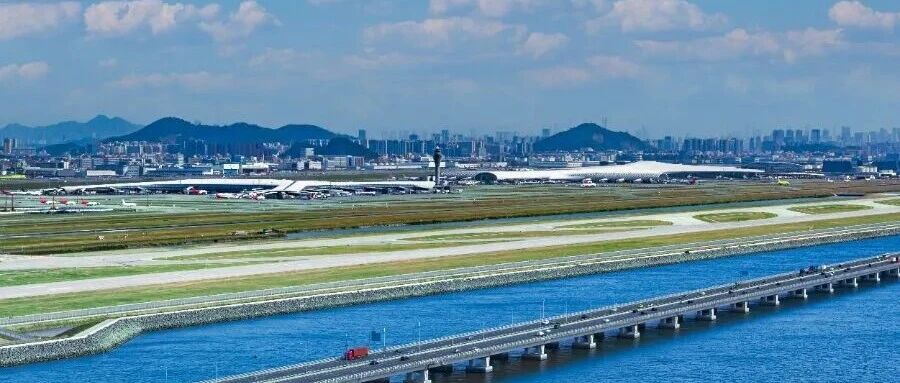
Core Viewpoint - The official operation of the third runway at Shenzhen Airport marks the beginning of the "three-runway era," enhancing the airport's capacity and operational efficiency [1][3]. Group 1: Shenzhen Airport Developments - The third runway is 3,600 meters long and 45 meters wide, classified as a 4F level, accommodating various large aircraft [3]. - The new runway will work in conjunction with the existing two runways, optimizing operational modes to handle different flight volumes, allowing for a total of eight operational modes [3]. - The airport's annual passenger traffic is projected to exceed 60 million in 2024 and 65 million in 2025, with cargo throughput expected to surpass 2 million tons for the first time [3]. Group 2: Greater Bay Area Airport Expansion - Other airports in the Greater Bay Area are also undergoing significant expansions, including the opening of the T3 terminal and fifth runway at Baiyun International Airport, which can accommodate 120 million passengers annually [4]. - The expansion of Huizhou Airport will increase parking spaces from 8 to 14, while Hong Kong International Airport's new runway system will enhance its annual passenger capacity to 120 million and cargo capacity to 10 million tons [5]. - The development plan for the Guangdong-Hong Kong-Macao Greater Bay Area aims to establish a world-class airport cluster, enhancing the international competitiveness of airports in Guangzhou and Shenzhen [5].

【奋进的中国 我们的“十四五”】我国四大世界级机场群建设初具规模
Yang Shi Wang· 2025-10-20 20:38
Core Points - The development of transportation infrastructure in China has significantly improved, with increased accessibility to railways, highways, and airports [1] - Over the past five years, the civil aviation sector has invested more than 100 billion yuan annually in infrastructure [1] - Major airport clusters such as Beijing-Tianjin-Hebei, Yangtze River Delta, Guangdong-Hong Kong-Macau, and Chengdu-Chongqing have begun to take shape [1] - The number of domestic flight routes has reached 4,513, with over 260 cities now accessible by air [1]
通航城市超260个 我国四大世界级机场群建设初具规模
Yang Shi Xin Wen Ke Hu Duan· 2025-10-20 05:32
Core Insights - The aviation industry in China has seen significant investment in infrastructure, with annual funding exceeding 100 billion yuan over the past five years, leading to the development of major airport clusters in key regions [1] - Xinjiang has established the most extensive regional airport system in the country, with a focus on enhancing the quality and efficiency of branch airport construction during the 14th Five-Year Plan [2] Group 1: Infrastructure Investment - The Chinese civil aviation sector has invested over 100 billion yuan annually in infrastructure over the past five years [1] - Major airport clusters in the Beijing-Tianjin-Hebei, Yangtze River Delta, Guangdong-Hong Kong-Macao, and Chengdu-Chongqing regions are now taking shape [1] - Domestic flight routes have reached 4,513, with over 260 cities connected [1] Group 2: Xinjiang Airport Development - Xinjiang has the largest number of branch airports in the country, with a focus on improving the airport system during the 14th Five-Year Plan [2] - The newly operational Tashkurgan Hongqilafu Airport is the highest civil transport airport in Xinjiang, enhancing connectivity for local residents [2] - Urumqi Tianshan Airport has undergone its fourth expansion, adding international cargo routes, with passenger throughput exceeding 12 million during the summer travel season and a monthly record of over 6 million [2] - Xinjiang's airport density has increased from 1.3 to 1.7 airports per 100,000 square kilometers, with total passenger throughput surpassing 170 million [2] - The region now boasts 28 transport airports, the highest number of civil airports within a provincial administrative unit in the country [2]