百度阿波罗第六代自动驾驶汽车

Search documents
美银自动驾驶深度报告:无人网约车规模可达万亿,每英里成本2美元将是引爆点
Hua Er Jie Jian Wen· 2025-12-10 08:26
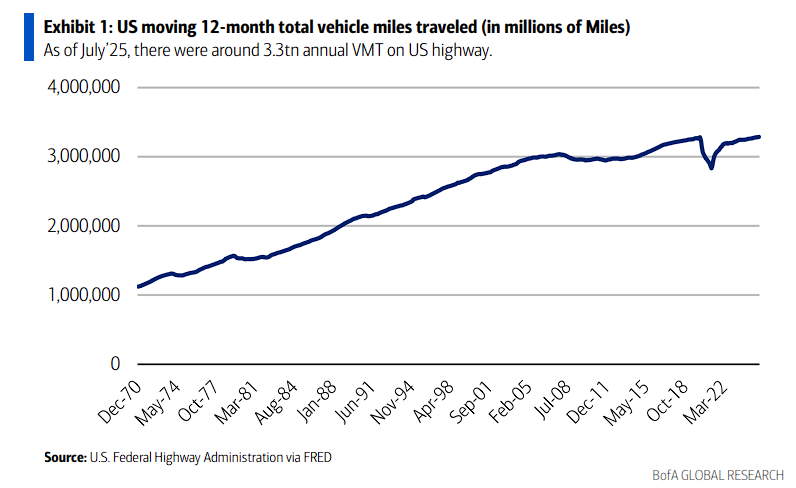
Core Insights - The current ride-hailing services account for only 1% of the annual driving mileage in the U.S., which is approximately 3 trillion miles, highlighting a significant growth opportunity for tech giants like Tesla, Google, and Amazon in the autonomous vehicle market [1][5][18] - If autonomous driving technology can reduce the cost per mile to $1.5-$2.0, the market size could reach $0.9-$1.2 trillion within 15 years, assuming a 20% penetration rate [1][8] - The cost per mile for current ride-hailing services is around $2.5-$3.0, while private car ownership costs range from $0.70 to $1.06, indicating a substantial price gap that limits the adoption of ride-hailing services [1][6][7] Market Potential - The U.S. total driving mileage is projected to be about 3.3 trillion miles by July 2025, with passenger vehicles accounting for approximately 3 trillion miles after excluding large trucks [2] - In 2024, ride-hailing mileage is expected to remain at only 1% of the total, based on assumptions regarding Uber and Lyft's order distribution and average trip length [5][6] Cost Structure and Profitability - The average cost per mile for private car ownership is significantly lower than that of ride-hailing services, which creates a barrier for consumer adoption [6][7] - A critical threshold for the widespread adoption of autonomous ride-hailing is achieving a cost per mile below $2.00 [7][8] - The report analyzes three business models: ownership, leasing, and agency, detailing the break-even points for each model under various cost scenarios [11][13][15][16] Business Model Analysis - In the ownership model, a cost of $1.95 per mile is needed to maintain a 10% profit margin, assuming a vehicle cost of $75,000 [13] - The leasing model requires a pricing of $2.08 per mile to achieve the same profit margin, with a baseline leasing fee of $0.54 per mile [15] - The agency model necessitates a price of $2.15 per mile to sustain profitability, with a payout to vehicle owners of $1.5 per mile [16] Competitive Landscape - Uber currently holds a market share of 70%-80% in the U.S. ride-hailing market, with projections indicating that even if its share drops to 50%, its order volume could still grow to $589 billion by 2040 [18][21] - The entry of well-funded competitors like Waymo, Tesla, and Zoox poses a risk of market share erosion for Uber [18][27] - The report highlights the potential for a price war among major players, as they may leverage aggressive pricing strategies to capture market share [27] Future Outlook - The report suggests that despite competitive pressures, the ride-hailing industry benefits from significant network effects, which may limit the number of viable competitors and support sustainable profit margins [25] - Early data from California indicates that the presence of autonomous vehicles may expand the overall market rather than cannibalize existing services, as seen with Waymo's growth [26]