
石英石

Search documents
捡石小欢喜
Xin Lang Cai Jing· 2026-01-15 19:28
Core Viewpoint - The article describes the experience of stone collecting in the winter season, emphasizing the challenges and the unique beauty of the environment during this time, while also reflecting on the deeper meaning of the activity beyond just finding valuable stones. Group 1: Seasonal Context - Winter is not considered a good season for stone collecting due to the cold and frozen river conditions, making it difficult for people to engage in this activity [1] - The best seasons for stone collecting are spring and autumn, while summer poses risks due to rising water levels from melting snow [1][2] Group 2: Experience of Stone Collecting - The experience of collecting stones is described as a blend of adventure and hope, with the realization that finding valuable stones is akin to winning a lottery, despite the low probability of success [3][4] - The activity serves as a means to connect with nature and appreciate the changing seasons, transcending the mere act of searching for valuable stones [5] Group 3: Community and Culture - The local community in the river's vicinity is engaged in stone-related activities, with households displaying various stones and a history of trading stones in small markets [3][4] - The article highlights the cultural significance of stone collecting as a communal activity that fosters connections among people and nature [5]
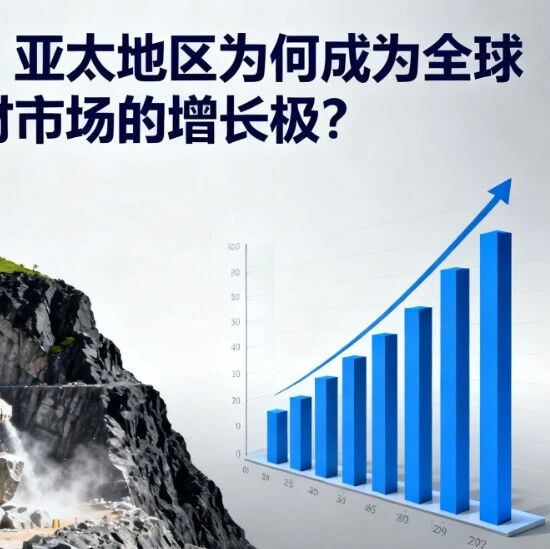
QYResearch市场洞见:亚太地区为何成为全球石材市场的增长极?
QYResearch· 2025-12-03 04:16
Core Insights - The stone industry is approaching a new cyclical turning point due to global manufacturing reshaping, urbanization adjustments, and evolving architectural aesthetics. Traditional high-end markets in Europe and the U.S. are stabilizing, while emerging regions are rapidly changing the global supply-demand structure through construction investments and infrastructure expansion [1][2]. Group 1: Market Dynamics - The Asia-Pacific region is transforming from the "largest consumption area" to the "growth engine" of the global stone industry, marked by significant capacity expansion, demand growth, supply chain integrity, and technological advancements [1][4]. - Urbanization in Asia is occurring at a rate 2-3 times faster than in Europe and the U.S., driving annual stone consumption growth of 6%-12% in cities like India and China, compared to 1%-3% in mature markets [5][6]. Group 2: Supply Chain and Competitiveness - The efficiency of the supply chain is crucial for global competitiveness, with lower system costs in stone processing, resin automation, and logistics in Asia making products more competitive globally, even prompting local European companies to shift to OEM or outsourcing models [7][8]. - The Asia-Pacific region has developed the most complete and rapidly evolving stone supply chain, encompassing upstream to downstream processes, positioning it as a major driver of global pricing and technological progress [4][8]. Group 3: Future Opportunities - The next five years will present structural opportunities driven by a reconfiguration of the industry rather than mere demand expansion. Key variables that could reshape the future landscape are being closely monitored, including policy changes and technological advancements [9][10]. - The shift from natural stone to composite material systems is notable, with Asia-Pacific's growth rate in this area being the highest globally, indicating a competitive landscape for both natural and engineered stone materials [10]. Group 4: Environmental and Competitive Landscape - Carbon requirements are expected to reshape the supply chain, with the industry transitioning from a "resource-based" to a "clean manufacturing" model, focusing on resin system replacements and energy-efficient processing equipment [11][12]. - A multi-polar competitive landscape is forming, with Indian suppliers expanding distribution networks in the Middle East, Europe, and Africa, while local processing plants in Vietnam and Indonesia are beginning to handle global orders [13][14]. Group 5: Long-term Perspective - A long-term approach is essential for understanding the complex dynamics of the stone industry, as changes can be subtle yet significant, impacting international pricing and regional supply chain strategies [15][16]. - The growth of the Asia-Pacific region as a global growth engine is not coincidental but a result of comprehensive factors including supply chain completeness, urbanization structure, technological evolution, manufacturing costs, and regional capital expenditures [16].

高纯石英砂选矿工艺流程及生产线设备
中国有色金属工业协会硅业分会· 2025-04-29 05:39
石英选矿工艺关键步骤决定其选矿设备种类,并将其选矿设备组成生产线。 统观所有的选矿工艺都是先破 碎,再研磨,然后再经过磁选机、浮选机的分选、分离,最后在进行浓缩、烘干,虽然会因具体的实际情况而不 尽相同,但是归结为 关键的选矿步骤一定是破碎、研磨、分选(提纯)、浓缩 ,石英石选矿工艺也是围绕这几 个步骤来对石英矿进行分选、提纯的。 01 破碎工艺 - 破碎种类 采用颚破、圆锥破等破碎设备组成破碎生产环节,对石英矿进行破碎处理到一定的粒度,其石英矿粒度能达 到25mm,恰好是下一步石英矿球磨机进行研磨作业的进料粒度(当然破碎粒度低于25mm更好,越有益于研磨 作业); 我国的石英矿产丰富,分为石英、鳞石英、白矽石三大类,工业中采用多种石英矿选矿工艺来对其进行提 纯、加工,进而形成石英石、石英砂等,加工后得到的石英石、石英砂外观呈多棱形、球状, 具有较高的机械强 度、强大的截污能力、耐酸性能优等特点 ,被广泛应用在各个工业领域中。 在生产中,常用的石英砂选矿工艺主要有洗矿脱泥法、磁选法、浮选法和酸洗法 ,具备批量生产、提纯度 高、效率快等优势。下面为大家详细介绍石英矿具体的选矿工艺,需要配置的选矿设备类型,以及如 ...