人造石

Search documents
华润建材科技(01313.HK)附属新增四份人造石供应合同
Ge Long Hui· 2026-02-03 14:12
Core Viewpoint - China Resources Cement Technology (01313.HK) announced the signing of five artificial stone supply contracts with Runfeng New Materials and Runzhai E-commerce, indicating a strategic partnership in the artificial stone supply chain [1] Group 1 - Runfeng New Materials will supply artificial stone and related processing to Runzhai E-commerce [1] - On February 3, 2026, Runfeng New Materials and Runzhai E-commerce further signed four additional artificial stone supply contracts [1]
华润建材科技:润丰新材料与润材电商进一步订立四份人造石供应合同
Zhi Tong Cai Jing· 2026-02-03 14:12
Core Viewpoint - China Resources Cement Technology (01313) has announced the signing of multiple artificial stone supply contracts with Runfeng New Materials and Runzhai E-commerce, indicating a strategic move to enhance its supply chain and revenue potential in the artificial stone market [1] Group 1: Contract Details - Runfeng New Materials has entered into five artificial stone supply contracts with Runzhai E-commerce, with an additional four contracts signed on February 3, 2026 [1] - The proposed annual total cap for each year is set at RMB 50 million (excluding tax) for the years ending December 31, 2026, and December 31, 2027, which will remain unchanged [1] Group 2: Financial Projections - The annual cap for transactions under the two batches of artificial stone supply contracts is based on the expected receivables (excluding VAT) for each year [1] - The reserved limit for potential artificial stone supply contracts to be signed within the year is determined based on the anticipated sales volume of artificial stones [1]
华润建材科技(01313):润丰新材料与润材电商进一步订立四份人造石供应合同
智通财经网· 2026-02-03 14:08
Core Viewpoint - China Resources Cement Technology (01313) has announced the signing of multiple artificial stone supply contracts with Runfeng New Materials and Runmai E-commerce, indicating a strategic move to enhance its supply chain and revenue potential in the artificial stone market [1] Group 1: Contract Details - Runfeng New Materials has entered into five artificial stone supply contracts with Runmai E-commerce, with an additional four contracts signed shortly thereafter [1] - The proposed annual total cap for each year, ending December 31, 2026, and December 31, 2027, is set at RMB 50 million (excluding tax), which will remain unchanged [1] - The total cap includes the expected receivables from the two batches of supply contracts and a reserved limit for potential contracts based on anticipated sales volume [1]
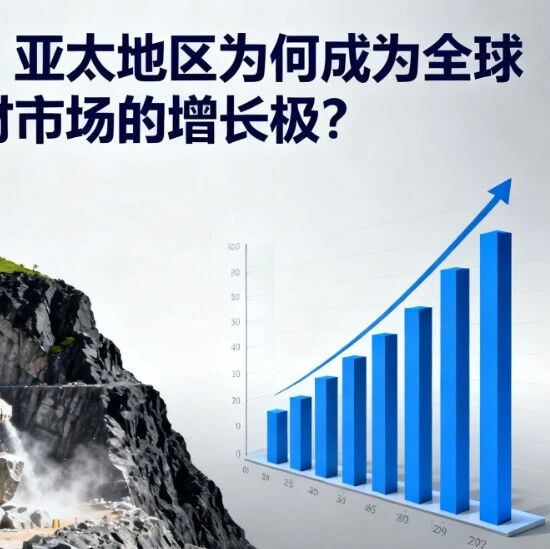
QYResearch市场洞见:亚太地区为何成为全球石材市场的增长极?
QYResearch· 2025-12-03 04:16
Core Insights - The stone industry is approaching a new cyclical turning point due to global manufacturing reshaping, urbanization adjustments, and evolving architectural aesthetics. Traditional high-end markets in Europe and the U.S. are stabilizing, while emerging regions are rapidly changing the global supply-demand structure through construction investments and infrastructure expansion [1][2]. Group 1: Market Dynamics - The Asia-Pacific region is transforming from the "largest consumption area" to the "growth engine" of the global stone industry, marked by significant capacity expansion, demand growth, supply chain integrity, and technological advancements [1][4]. - Urbanization in Asia is occurring at a rate 2-3 times faster than in Europe and the U.S., driving annual stone consumption growth of 6%-12% in cities like India and China, compared to 1%-3% in mature markets [5][6]. Group 2: Supply Chain and Competitiveness - The efficiency of the supply chain is crucial for global competitiveness, with lower system costs in stone processing, resin automation, and logistics in Asia making products more competitive globally, even prompting local European companies to shift to OEM or outsourcing models [7][8]. - The Asia-Pacific region has developed the most complete and rapidly evolving stone supply chain, encompassing upstream to downstream processes, positioning it as a major driver of global pricing and technological progress [4][8]. Group 3: Future Opportunities - The next five years will present structural opportunities driven by a reconfiguration of the industry rather than mere demand expansion. Key variables that could reshape the future landscape are being closely monitored, including policy changes and technological advancements [9][10]. - The shift from natural stone to composite material systems is notable, with Asia-Pacific's growth rate in this area being the highest globally, indicating a competitive landscape for both natural and engineered stone materials [10]. Group 4: Environmental and Competitive Landscape - Carbon requirements are expected to reshape the supply chain, with the industry transitioning from a "resource-based" to a "clean manufacturing" model, focusing on resin system replacements and energy-efficient processing equipment [11][12]. - A multi-polar competitive landscape is forming, with Indian suppliers expanding distribution networks in the Middle East, Europe, and Africa, while local processing plants in Vietnam and Indonesia are beginning to handle global orders [13][14]. Group 5: Long-term Perspective - A long-term approach is essential for understanding the complex dynamics of the stone industry, as changes can be subtle yet significant, impacting international pricing and regional supply chain strategies [15][16]. - The growth of the Asia-Pacific region as a global growth engine is not coincidental but a result of comprehensive factors including supply chain completeness, urbanization structure, technological evolution, manufacturing costs, and regional capital expenditures [16].

世界石都泉州南安:谱写当代石头记
Hu Xiu· 2025-08-07 08:47
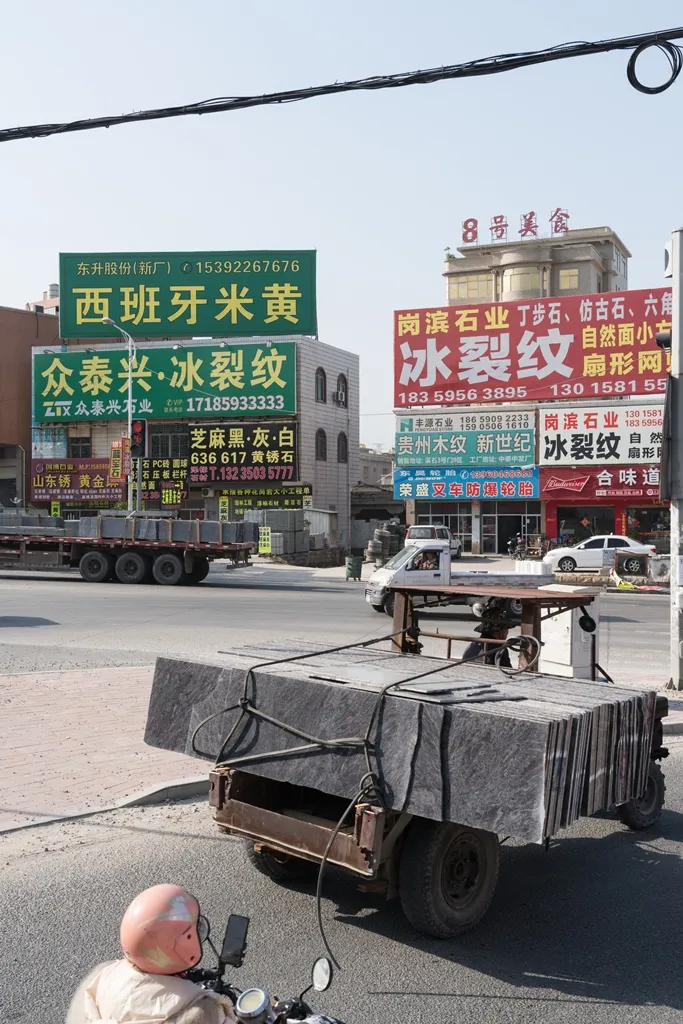
Core Insights - The article highlights the evolution of the stone industry in Nan'an, particularly in the town of Shuitou, which has transformed into a global stone trading hub despite not producing stones locally. The success is attributed to the collaborative spirit and learning culture among local entrepreneurs and industry workers [3][9]. Group 1: Historical Context - Quanzhou, as the starting point of the Maritime Silk Road, has a rich history of trade and cultural exchange, with the stone industry being a significant part of its heritage [2][8]. - The ancient Anping Bridge, known as "Wuliqiao," served as a vital link for overseas Chinese and played a crucial role in the development of local commerce [8]. Group 2: Entrepreneurial Stories - Entrepreneurs like Huang Changan and Wang Shaofang exemplify the spirit of perseverance and innovation in the stone industry, with Wang starting his journey in stone procurement despite language barriers [3][12]. - Wang Huawwei, a second-generation entrepreneur, emphasizes the importance of adapting management practices to enhance operational efficiency in the family business [20][21]. Group 3: Industry Development - Shuitou has become a renowned stone transshipment center, showcasing a variety of stones from around the world, including Spanish yellow and Brazilian white [9][10]. - The local industry has evolved from small factories to a comprehensive global network, with a focus on both natural and engineered stones [3][13]. Group 4: Cultural and Educational Initiatives - The establishment of the Yingliang Stone Natural History Museum reflects the need to narrate the cultural and historical significance of the stone industry, integrating natural and human sciences [27][28]. - Local entrepreneurs are actively involved in educational outreach, promoting stone culture and its applications to schools and design communities [17][29]. Group 5: Community and Collaboration - The phrase "输人不输阵" (losing people but not losing the battle) encapsulates the competitive yet supportive nature of the Nan'an community, where mutual assistance and shared learning are prevalent [18][24]. - The collaborative atmosphere has led to collective prosperity, with local businesses often supporting each other through financial and operational challenges [17][24].
新加坡国际工程机械及建筑展览会BuildTechAsia:东南亚基建创新平台
Sou Hu Cai Jing· 2025-04-30 16:51
Group 1 - The BuildTech Asia exhibition will take place from March 24 to 26, 2026, at the Singapore Expo, highlighting its significance in the global construction industry [1][3] - The event serves as a crucial platform for technology demonstration, experience exchange, and business collaboration within the construction sector [3][8] - BuildTech Asia showcases a comprehensive range of products covering the entire construction industry chain, including construction machinery, new building materials, electrical and mechanical engineering, smart building technologies, and digital solutions [5][6][8] Group 2 - The exhibition features advanced construction machinery designed to enhance efficiency and safety, such as cement mixers, road rollers, and cranes [5] - Innovative building materials presented include high-strength alloys, environmentally friendly coatings, and energy-efficient glass [5] - Smart building solutions like prefabricated structures, autonomous construction machinery, and 3D printing technologies are emphasized for their potential to reduce pollution and improve efficiency [6][8] Group 3 - BuildTech Asia is positioned as an annual event that not only showcases the latest developments and trends in the construction industry but also promotes technological innovation and sustainable development [8] - The exhibition facilitates international cooperation and market expansion among participants from different countries and regions, enhancing the global construction industry's collaborative growth [8]