天然石材

Search documents
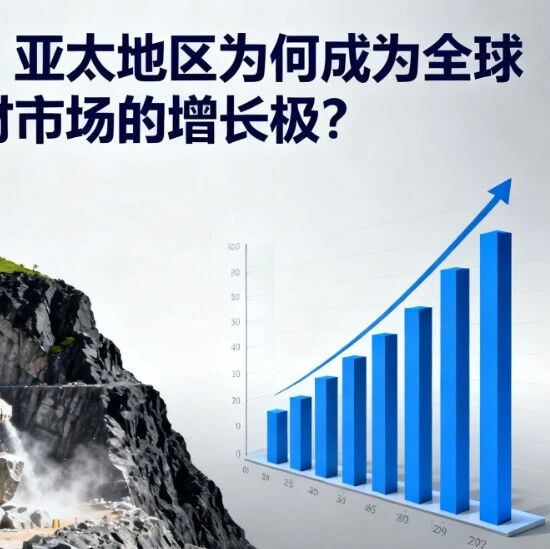
QYResearch市场洞见:亚太地区为何成为全球石材市场的增长极?
QYResearch· 2025-12-03 04:16
Core Insights - The stone industry is approaching a new cyclical turning point due to global manufacturing reshaping, urbanization adjustments, and evolving architectural aesthetics. Traditional high-end markets in Europe and the U.S. are stabilizing, while emerging regions are rapidly changing the global supply-demand structure through construction investments and infrastructure expansion [1][2]. Group 1: Market Dynamics - The Asia-Pacific region is transforming from the "largest consumption area" to the "growth engine" of the global stone industry, marked by significant capacity expansion, demand growth, supply chain integrity, and technological advancements [1][4]. - Urbanization in Asia is occurring at a rate 2-3 times faster than in Europe and the U.S., driving annual stone consumption growth of 6%-12% in cities like India and China, compared to 1%-3% in mature markets [5][6]. Group 2: Supply Chain and Competitiveness - The efficiency of the supply chain is crucial for global competitiveness, with lower system costs in stone processing, resin automation, and logistics in Asia making products more competitive globally, even prompting local European companies to shift to OEM or outsourcing models [7][8]. - The Asia-Pacific region has developed the most complete and rapidly evolving stone supply chain, encompassing upstream to downstream processes, positioning it as a major driver of global pricing and technological progress [4][8]. Group 3: Future Opportunities - The next five years will present structural opportunities driven by a reconfiguration of the industry rather than mere demand expansion. Key variables that could reshape the future landscape are being closely monitored, including policy changes and technological advancements [9][10]. - The shift from natural stone to composite material systems is notable, with Asia-Pacific's growth rate in this area being the highest globally, indicating a competitive landscape for both natural and engineered stone materials [10]. Group 4: Environmental and Competitive Landscape - Carbon requirements are expected to reshape the supply chain, with the industry transitioning from a "resource-based" to a "clean manufacturing" model, focusing on resin system replacements and energy-efficient processing equipment [11][12]. - A multi-polar competitive landscape is forming, with Indian suppliers expanding distribution networks in the Middle East, Europe, and Africa, while local processing plants in Vietnam and Indonesia are beginning to handle global orders [13][14]. Group 5: Long-term Perspective - A long-term approach is essential for understanding the complex dynamics of the stone industry, as changes can be subtle yet significant, impacting international pricing and regional supply chain strategies [15][16]. - The growth of the Asia-Pacific region as a global growth engine is not coincidental but a result of comprehensive factors including supply chain completeness, urbanization structure, technological evolution, manufacturing costs, and regional capital expenditures [16].

我在石材厂写诗
Ren Min Ri Bao· 2025-08-03 22:10
Core Insights - The article reflects on the journey of individuals in the stone industry, emphasizing the beauty and uniqueness of natural stone, which is likened to a mirror of personal growth and experience [1][2][5] - The narrative highlights the challenges faced by new employees in the stone business, including the difficulty of selling stone and the pressure of meeting customer demands [3][4] Group 1: Company Operations - The company offers over 200 varieties of stone, with a training requirement for new employees to learn about 20 types per day [1] - Orders below 2 million are often assigned to new sales staff, indicating a division of labor based on experience [3] - The company faced communication challenges due to poor signal reception, impacting customer interactions and order management [3] Group 2: Employee Experiences - New employees initially struggled with their roles, with some leaving the company or failing to meet sales expectations [2][4] - The narrative illustrates the personal development of employees, such as learning computer skills to improve work efficiency [4] - The long-term journey of employees is noted, with only a few remaining in the company after 20 years, highlighting the transient nature of the workforce in the industry [5]
Floor & Decor (FND) Q2 EPS Rises 12%
The Motley Fool· 2025-08-01 23:34
Core Insights - Floor & Decor reported better-than-expected GAAP results with diluted earnings per share of $0.58 and revenue of $1.21 billion, surpassing consensus estimates [1][5] - The company achieved its first positive same-store sales growth since late 2022, indicating a potential stabilization in performance [1][6] - Management maintains a cautious outlook for fiscal 2025, anticipating challenges in consumer demand and housing [1][11] Financial Performance - Revenue increased by 7.1% year-over-year to $1,214.2 million, exceeding analyst expectations [2][5] - Diluted EPS rose by 11.5% from the prior period, reflecting improved profitability [2][5] - Comparable store sales growth was recorded at 0.4%, marking a return to positive territory [2][6] - Operating income grew to $81.9 million, a 14.8% increase, while Adjusted EBITDA rose by 9.7% to $150.2 million [2][6] Strategic Focus - The company operates as a specialty retailer of hard surface flooring, targeting both professional installers and homeowners [3] - Key strategic pillars include a direct sourcing model, warehouse-format store growth, and competitive pricing [4] - The company sources from over 240 vendors across 26 countries, reducing reliance on Chinese suppliers [9] Operational Developments - Floor & Decor opened three new warehouse-format stores, bringing the total to 257, with plans to add 20 new stores in FY2025 [8] - Management emphasized disciplined cost control, with operating expenses growing at a slower rate than sales [7] - Digital sales accounted for approximately 18.3% of net sales in Q1 FY2025, supported by product innovation [10] Future Guidance - Management provided guidance for FY2025, projecting net sales of $4.66–4.75 billion and diluted EPS between $1.75 and $2.00 [11] - The guidance reflects ongoing universal tariffs and anticipates potential volatility in consumer demand [11][12] - Investors are advised to monitor the company's navigation of supply-chain dynamics and pricing power as market conditions evolve [12]