
矿山智能机器人

Search documents
国家矿山安全监察局:将推动机器人代替危险繁重岗位作业
Nan Fang Du Shi Bao· 2025-12-30 11:58
Core Viewpoint - The Chinese government is promoting the integration of advanced technologies such as industrial internet, artificial intelligence, and robotics into mining operations to enhance safety and efficiency in the industry [1][2]. Group 1: Intelligent Mining Applications - The State Council's implementation opinion emphasizes the construction of high-level intelligent application scenarios for mining safety production [1]. - The National Mine Safety Administration will guide mining enterprises to develop comprehensive intelligent mining scenarios, focusing on areas such as information infrastructure, geological assurance, and safety monitoring [1]. - The goal is to create a model for intelligent mining that minimizes human presence and utilizes automation [1]. Group 2: Specific Intelligent Scenarios - In the area of mining operations, there will be a push for large-scale application of unmanned mining trucks in open-pit mines and accelerated intelligent transformation of underground mining operations [2]. - The initiative includes the development and application of 56 types of robots as outlined in the "Key R&D Directory for Mining Intelligent Robots" [2]. - For safety management, the integration of big data, cloud computing, and AI technologies will facilitate intelligent monitoring of key operations and early warning of hazards [2].

国家明确矿山智能机器人重点方向,共56个
机器人圈· 2025-09-05 10:39
Core Viewpoint - The National Mine Safety Administration has released the "Key Research and Development Directory for Mining Intelligent Robots," aiming to reduce labor intensity, minimize safety risks, and enhance safety capabilities in mining operations [1][4]. Group 1: Overview of the Directory - The directory focuses on replacing hazardous and labor-intensive jobs in mining with intelligent robots, proposing 56 types of robots across seven categories: tunneling, mining, transportation, mineral processing, auxiliary operations, safety control, and rescue [1][4]. Group 2: Categories of Intelligent Robots - **Tunneling Robots**: Designed for underground coal and metal mines, these robots must have capabilities such as autonomous navigation, coal and rock identification, and efficient dust removal [7][8]. - **Mining Robots**: These robots are required to perform tasks like coal mining with features such as environment perception and adaptive cutting [16][17]. - **Transportation Robots**: Focused on autonomous driving in complex underground conditions, these robots must ensure safety and efficiency in transporting materials [25][26]. - **Mineral Processing Robots**: Aimed at coal preparation plants, these robots will automate tasks like reagent preparation and grinding media addition [32][33]. - **Auxiliary Operation Robots**: These robots will assist in various tasks, including support installation and maintenance, to reduce labor intensity and enhance safety [37][38]. - **Safety Control Robots**: Designed for monitoring and inspection, these robots will ensure safety in mining operations by detecting hazards and monitoring environmental conditions [54][55]. - **Rescue Robots**: These robots will be deployed in disaster scenarios to perform tasks such as environment detection and emergency rescue operations [66][67].

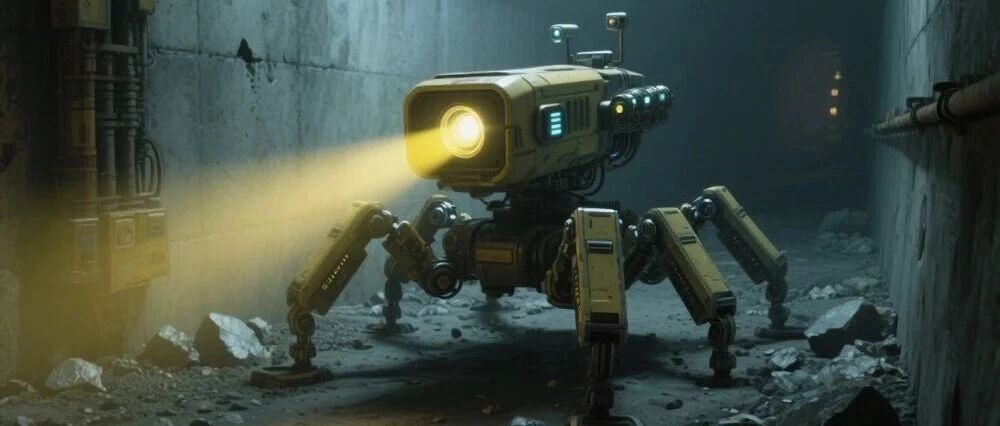
国家矿山安全监察局:加快矿山智能机器人研发及产业化应用
Shang Hai Zheng Quan Bao· 2025-09-04 14:57
Core Viewpoint - The National Mine Safety Administration has approved the "Key Research and Development Directory for Mining Intelligent Robots," encouraging collaboration between mining enterprises, equipment manufacturers, and academic institutions to accelerate the development and industrial application of intelligent mining robots, aiming to enhance safety and efficiency in mining operations [1]. Group 1: Intelligent Robot Categories - **Category 1: Tunneling Intelligent Robots** - Tunneling robot groups are required to have unified operating systems and standard communication protocols, with capabilities for environmental perception, autonomous navigation, and intelligent data analysis [2]. - Individual tunneling robots must possess features such as multi-sensor data fusion, precise positioning, and autonomous cutting [3]. - **Category 2: Drilling and Anchoring Intelligent Robots** - Drilling robots should be capable of remote or autonomous operation, automatic drilling, and dynamic optimization of drilling parameters [4]. - Anchoring robots must include features for automatic positioning and installation of anchor rods [5]. - **Category 3: Mining Intelligent Robots** - Mining robot groups are expected to work collaboratively with various mining equipment, ensuring safe and efficient operations [10]. - Individual mining robots should have capabilities for coal-rock identification and autonomous cutting [11]. Group 2: Transportation and Auxiliary Robots - **Category 4: Transportation Intelligent Robots** - Autonomous transportation robots must include features for precise positioning, path planning, and dynamic obstacle avoidance [17][18]. - These robots are designed to operate safely under complex underground conditions [19]. - **Category 5: Auxiliary Operation Intelligent Robots** - Exoskeleton robots are aimed at enhancing the physical capabilities of workers, reducing labor intensity and occupational injuries [28]. - Robots for tunnel support and repair are designed to autonomously navigate and perform tasks such as installation and maintenance [29][31]. Group 3: Safety and Emergency Response Robots - **Category 6: Safety Monitoring Intelligent Robots** - Robots for monitoring ventilation systems and pipelines are equipped with capabilities for real-time parameter monitoring and anomaly detection [52][53]. - These robots are essential for ensuring safety in mining operations by identifying potential hazards [54]. - **Category 7: Rescue Intelligent Robots** - Disaster detection robots are designed for post-disaster environments, capable of life detection and hazard identification [58]. - Fire extinguishing robots are equipped with features for rapid response to fire incidents in mining environments [62].