碳酸酯类溶剂

Search documents
【行业研究】电解液:“一超两强”格局的稳固与挑战
Xin Lang Cai Jing· 2026-01-08 11:43
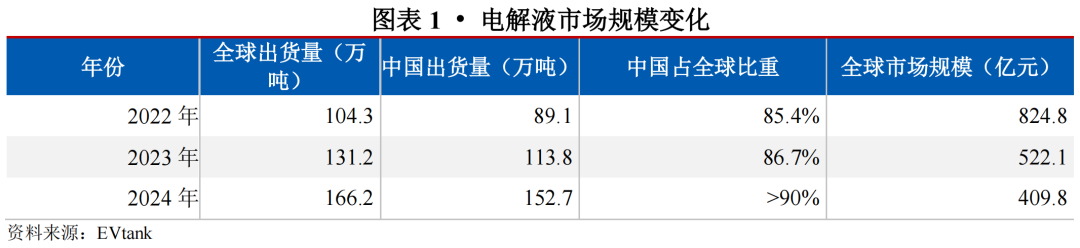
Core Viewpoint - The electrolyte industry is in the midstream of the new energy supply chain, currently experiencing a phase of expansion after destocking, with a focus on cost control as its core competitive advantage. The global market is dominated by China, with a highly concentrated domestic market characterized by a "one super, two strong" structure. Future trends indicate diversification, structural adjustments, and accelerated technological iterations driven by the rapid expansion of the new energy vehicle and energy storage industries [1][36]. Industry Overview - The electrolyte industry is positioned in the midstream of the new energy supply chain, with lithium salts and organic solvents upstream and battery cell manufacturers downstream. The industry is currently in the early stages of expansion following destocking. Compared to other lithium battery materials, the entry barriers in the electrolyte industry are relatively low [2][40]. - Electrolytes are a key component of lithium batteries, responsible for ion conduction, accounting for approximately 10-20% of the manufacturing cost. The main components include lithium salts, organic solvents, and additives, with lithium hexafluorophosphate (LiPF₆) being the mainstream lithium salt [2][37]. - From 2022 to 2024, global shipments of electrolytes are expected to continue growing due to increasing demand from lithium batteries, with Chinese companies' shipment share rising to over 90% by 2024. However, the significant decline in electrolyte prices has led to a contraction in the global market sales scale during this period [2][38]. Production Capacity and Market Dynamics - Between 2022 and 2024, the expansion rate of electrolyte production capacity is expected to exceed market demand growth, resulting in structural overcapacity in the industry. By 2024, China's electrolyte production capacity is projected to exceed 5 million tons, but the average capacity utilization rate is only between 25-35% [8][43]. - The pricing pressure on electrolytes is exacerbated by the strong bargaining power of downstream customers, such as battery manufacturers and automotive companies, leading to prolonged accounts receivable periods. Consequently, electrolyte prices are expected to decline continuously from 2022 to 2024, remaining below 20,000 yuan per ton from 2025 onwards [8][44]. Competitive Landscape - Cost control is the core of competition in the electrolyte industry. Chinese electrolyte companies dominate the global market, with a high concentration in the domestic market. The first-tier companies, including Tianqi Materials, BYD, and Xinzhou Bang, collectively hold about 60% market share [11][49]. - The first-tier companies leverage vertical integration to build competitive advantages, while second-tier companies focus on niche markets or specific regions for differentiated competition. The second-tier includes companies like Ruifeng New Materials and Kunlun New Materials, which face unique structural challenges [11][52]. - By 2024, the first-tier companies are expected to maintain a significant market share, while the second-tier companies are projected to grow their shipments by approximately 40% year-on-year in the first half of 2025, potentially encroaching on the first-tier's market share [11][52]. Financial Performance of Key Companies - In 2024, the total revenue of sample electrolyte companies is expected to decline, with a decrease in profit margins and overall revenue quality. Notably, Xinzhou Bang's revenue is projected to increase due to growth in its electronic information chemical business, while other sample companies are expected to see revenue declines [21][56]. - The asset structure of these companies shows a high proportion of accounts receivable, indicating significant capital occupation, while fixed assets remain high, suggesting potential depreciation pressures in the future [21][56]. - Operating cash flow for these companies is expected to decline in 2024, primarily due to decreased revenue and quality of revenue realization. Tianqi Materials is expected to maintain positive cash flow despite lower revenue quality, while other companies may face cash outflows [23][58]. Future Trends - The rapid expansion of new energy vehicles and energy storage industries is expected to drive diversification and structural adjustments in the electrolyte market. The demand for electrolytes is anticipated to grow, supported by the global electrification process and the explosion of the energy storage market [33][68]. - The rise of solid-state batteries presents structural challenges for the electrolyte industry. In the short term, the demand for gel electrolytes and composite solid-liquid electrolytes is expected to increase, while traditional liquid electrolytes may see stable or declining demand in the medium to long term [34][69].


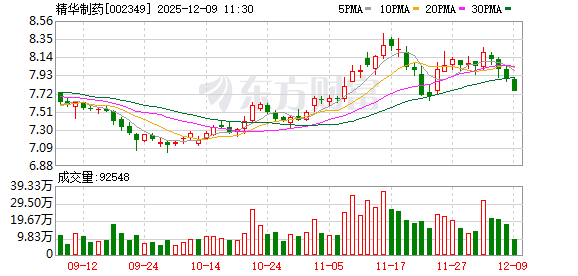
精华制药:孙公司二氧五环产品主要应用与共聚甲醛的合成,小部分用于磷酸铁锂路线一次电池的电解液
Mei Ri Jing Ji Xin Wen· 2025-12-09 04:09
Core Viewpoint - The company clarifies the applications and market positioning of its products, specifically the use of its Dioxolane electrolyte solvent in comparison to carbonate solvents produced by listed companies, addressing investor concerns about product demand and market recognition [2]. Group 1: Product Applications - The company's Dioxolane products are primarily used in the synthesis of co-polymer formaldehyde, with a small portion utilized in lithium iron phosphate battery electrolyte [2]. - The pricing of Dioxolane products is determined based on market demand, indicating a responsive pricing strategy [2]. Group 2: Market Performance - The production and sales volume of the Dioxolane products have remained stable, suggesting consistent demand in the market [2]. - Despite the positive outlook for carbonate solvent companies, the company faces challenges in gaining market recognition, raising questions about its sales performance [2].

六氟磷酸锂最新8大核心龙头股分析,一篇文章了解清楚
Xin Lang Cai Jing· 2025-11-08 00:48
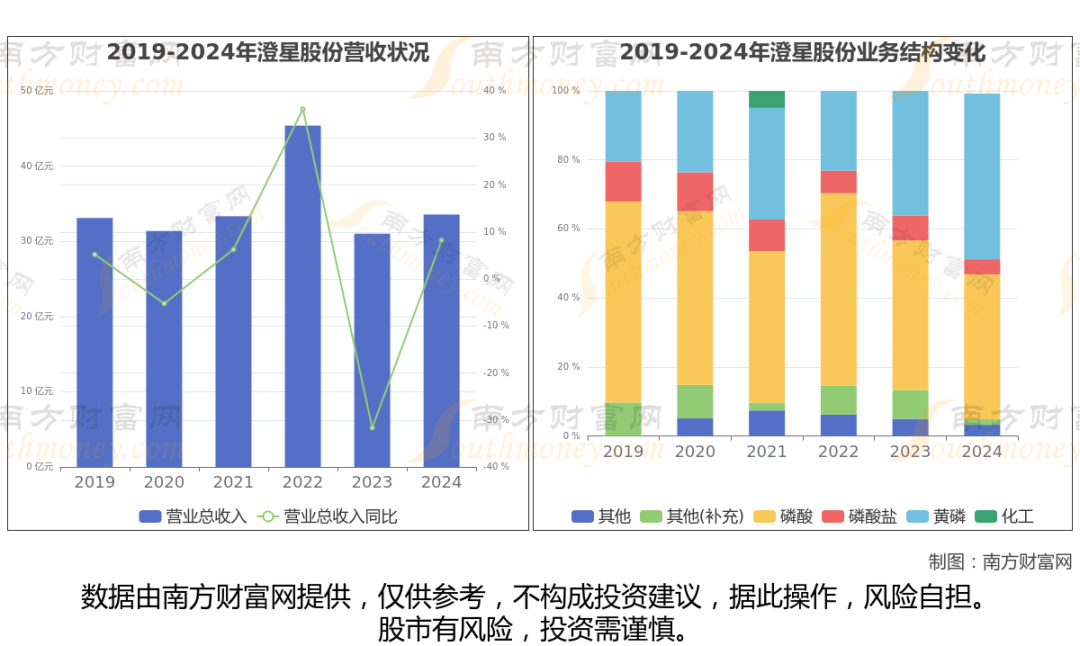
Core Insights - Lithium hexafluorophosphate (LiPF6) is the most commercially developed and widely used lithium salt, accounting for 12%-14% of electrolyte mass but contributing nearly half of the cost [1] - The electrolyte, while only comprising 10%-15% of the total battery cost, is essential for lithium ion flow, likened to "blood" in the battery [1] Company Summaries Chengxing Co., Ltd. - Chengxing Co., Ltd. is a fine phosphorus chemical enterprise with a high degree of refinement, diverse product types, and mature technology, listed on June 27, 1997 [1] - The company’s product line includes phosphorus ore, phosphoric acid, phosphates, and yellow phosphorus, widely used in daily chemicals and electronics [1] - In 2024, Chengxing achieved total revenue of 3.356 billion, a year-on-year increase of 8.22%, with a five-year compound annual growth rate (CAGR) of 1.7% [3] Shida Shenghua - Shida Shenghua, listed on May 29, 2015, focuses on carbonate solvents, lithium salts, additives, and silicon-based anode materials for lithium batteries [5] - The company’s products are used in chemical products, new energy vehicles, fluorine chemicals, and lithium batteries [5] - In 2024, Shida Shenghua reported total revenue of 5.547 billion, a year-on-year decrease of 1.56%, with a five-year CAGR of 5.51% [9] Shenzhen New Star - Shenzhen New Star is the only manufacturer in the industry with a complete industrial chain for aluminum grain refiners and has produced 5,800 tons/year of lithium hexafluorophosphate [8] - The company, listed on August 7, 2017, has a product line that includes aluminum grain refiners and lithium battery materials [10] - In 2024, Shenzhen New Star achieved total revenue of 2.563 billion, a year-on-year increase of 62.32%, with a five-year CAGR of 26.98% [12] Lianhua Technology - Lianhua Technology, listed on June 19, 2008, produces pharmaceutical and agricultural intermediates, primarily sold to the US, Europe, and Japan [13] - The company’s product line includes herbicides, insecticides, fungicides, and pharmaceutical intermediates [15] - In 2024, Lianhua reported total revenue of 5.677 billion, a year-on-year decrease of 11.88%, with a five-year CAGR of 4.38% [17] Yongtai Technology - Yongtai Technology, listed on December 22, 2009, is a leader in fluorobenzene fine chemicals and a producer of lithium hexafluorophosphate [19] - The company’s products are used in industrial manufacturing, pharmaceutical research, and agriculture [19] - In 2024, Yongtai reported total revenue of 4.589 billion, a year-on-year increase of 11.18%, with a five-year CAGR of 7.39% [21] Duofu Du - Duofu Du ranks among the top two globally in lithium hexafluorophosphate market share and is the first domestic company to commercialize sodium hexafluorophosphate [23] - The company, listed on May 18, 2010, focuses on high-performance inorganic fluorides and electronic chemicals [23] - In 2024, Duofu Du achieved total revenue of 8.207 billion, a year-on-year decrease of 31.25%, with a five-year CAGR of 17.92% [25] Tianci Materials - Tianci Materials is a global leader in electrolytes and ranks among the top two in lithium hexafluorophosphate market share [27] - The company, listed on January 23, 2014, specializes in fine chemical new materials [27] - In 2024, Tianci reported total revenue of 12.518 billion, a year-on-year decrease of 18.74%, with a five-year CAGR of 32.03% [29] Tianji Co., Ltd. - Tianji Co., Ltd. focuses on the research and production of lithium hexafluorophosphate and new lithium salts, listed on May 28, 2015 [31] - The company’s product line includes various lithium salts and fluorinated salts, widely used in new energy vehicles and consumer electronics [31] - In 2024, Tianji reported total revenue of 2.055 billion, a year-on-year decrease of 6.32%, with a five-year CAGR of 28.96% [35]