
祥源系理财产品

Search documents
董事长被抓!浙金中心真相:理财资金流入关联企业,地产债权成“定时炸弹”
Sou Hu Cai Jing· 2025-12-23 15:30
Core Viewpoint - The Zhejiang Jinzhong Center is facing a liquidity crisis due to the inability of investors to redeem financial products linked to the Xiangyuan Group, following the detention of its chairman Ding Jianlin by local authorities [2][4]. Group 1: Company Background - Zhejiang Jinzhong Center, originally established in December 2013, was founded by local state-owned enterprises and financial institutions, aiming to provide a platform for inclusive finance [4][5]. - The company underwent a name change in early 2015 and has been involved in various financial products, attracting investors with its state-owned background [5]. Group 2: Recent Developments - Since late November, reports have emerged of investors being unable to redeem Xiangyuan Group's financial products purchased through Zhejiang Jinzhong Center, leading to significant concerns [4][6]. - On December 12, Ding Jianlin was detained by the Shaoxing Public Security Bureau, confirming the company's leadership instability amid the ongoing crisis [2][3]. Group 3: Financial Product Structure - The financial products linked to Xiangyuan Group are structured with vague funding purposes, primarily aimed at supplementing liquidity for the trading institution, with underlying assets being debts owed by real estate companies controlled by Xiangyuan [9]. - These products have been marketed with Xiangyuan Group as a credit enhancer, but the quality of the underlying debts has been questioned, with many companies involved facing overdue payment issues and tax liabilities [9]. Group 4: Corporate Relationships - The Zhejiang Jinzhong Center has close ties with Xiangyuan Group, particularly after a capital increase in 2019 that resulted in significant shareholding changes and management overlaps [7][8]. - The interconnections between the two entities have been established through various partnerships and joint ventures, further complicating the financial landscape for investors [8].


祥源系理财产品陷兑付危机,浙金中心董事长丁建林被刑事拘留
Sou Hu Cai Jing· 2025-12-23 11:33
Core Viewpoint - The Zhejiang Jin Center is facing a crisis due to the inability of investors to redeem financial products linked to the Xiangyuan Group, following the criminal detention of its chairman Ding Jianlin and the actual controller of Xiangyuan, Yu Faxiang [2][3][7]. Group 1: Company Background - Zhejiang Jin Center, originally established in December 2013, was founded by local state-owned enterprises and financial institutions, and it rebranded in 2015 [3][4]. - The company has been involved in providing financial products with a focus on inclusive finance, allowing investments starting from 1,000 yuan, and has offered 5 billion yuan in stable income financial products [4][5]. Group 2: Leadership and Management - Ding Jianlin has served as the chairman and general manager of Zhejiang Jin Center since December 2013, previously holding a position as the vice president of Minsheng Bank's Hangzhou branch [4][5]. - The company has undergone changes in ownership, with Hangzhou Minzhi Investment Management Co., which has ties to Xiangyuan, acquiring a controlling stake in 2019 [5][6]. Group 3: Financial Product Issues - Since late November, reports have emerged regarding the inability of investors to redeem Xiangyuan-related financial products, which has been confirmed by announcements from companies under Xiangyuan [3][7]. - The financial products in question are linked to real estate projects associated with Xiangyuan, and the underlying assets are debts owed by real estate companies controlled by Xiangyuan [7][8]. Group 4: Interconnections with Xiangyuan Group - Zhejiang Jin Center has established close ties with Xiangyuan Group, with shared management and ownership structures, including the establishment of several limited partnerships involving both entities [6][7]. - The financial products issued by Zhejiang Jin Center often featured Xiangyuan as a credit enhancer, raising concerns about the quality of the underlying debts, as many of these real estate companies have faced overdue payment issues [7][8].

旗下产品陷兑付危机,祥源系实控人俞发祥被采取刑事强制措施
Nan Fang Du Shi Bao· 2025-12-22 15:15
Core Viewpoint - The financial products associated with the Xiangyuan Group have faced overdue repayment issues, leading to the criminal investigation of its actual controller, Yu Faxiang, by the Shaoxing Public Security Bureau [2][3] Group 1: Financial Product Issues - Since late November, investors have reported that financial products from the Zhejiang Jin Center linked to the Xiangyuan Group have been unable to be redeemed or withdrawn [2][3] - As of December 5, the Xiangyuan Group's executive vice president admitted that approximately 2 to 3 products had not been repaid, stating, "We currently have no money" [2] - The stock prices of Xiangyuan's listed companies, including Jiaojian Co. and Xiangyuan Cultural Tourism, have significantly declined, with Jiaojian Co. dropping 46.6% from a high of 14.93 yuan to 7.97 yuan, and Xiangyuan Cultural Tourism falling 35.7% from 9.45 yuan to 6.08 yuan [2] Group 2: Government Intervention - A government support task force was established on December 12 to investigate the financial situation of the Xiangyuan Group and ensure the protection of investors' rights [3][4] - The task force aims to understand the company's operational difficulties and demands while categorizing various assets for targeted assistance and debt risk management [4] Group 3: Relationship with Zhejiang Jin Center - Zhejiang Jin Center, established in 2013, has close ties with the Xiangyuan Group, having issued multiple financial products backed by Yu Faxiang and Xiangyuan Holdings [5][6] - The center's ownership structure includes significant stakes held by entities with state-owned backgrounds, which attracted investors [5] - The financial products in question are primarily structured to supplement liquidity for trading institutions, with underlying assets being debts owed by Xiangyuan's real estate companies, which have questionable credit quality [7][8]
祥源控股理财事件背后:收益超4%理财风险几何?
Nan Fang Du Shi Bao· 2025-12-12 07:17
Core Viewpoint - The liquidity crisis faced by Xiangyuan Holdings Group and its subsidiaries has raised concerns about the risks associated with seemingly low-yield financial products, challenging the perception that low returns equate to low risk [1][3]. Group 1: Company Overview - Xiangyuan Holdings, founded in 1992, is a leading enterprise in the cultural tourism investment and operation sector, controlling listed companies such as Xiangyuan Cultural Tourism, Haichang Ocean Park, and Jiaojian Co [2]. - The company reported total assets of 60 billion and total liabilities exceeding 40 billion, indicating a significant financial strain as the real estate sector undergoes deep adjustments [2]. Group 2: Financial Product Issues - Approximately 2 to 3 financial products issued by Xiangyuan Holdings are currently overdue for payment, with expected yields of 4% to 5% [1][2]. - The overdue financial products are linked to real estate projects in collaboration with Xiangyuan Holdings, and the company and its actual controller bear joint guarantee responsibilities for these payment obligations [1]. Group 3: Market Context and Risks - The recent default incident has prompted investors to question the risk levels associated with financial products offering yields above 4%, as many such products may carry hidden risks [3]. - As of December 11, over 2,300 RMB bank wealth management products had performance benchmarks exceeding 4%, with only 15% achieving annualized returns above this threshold since inception [3]. Group 4: Investment Strategies - Investors are advised to be cautious of financial products with yields significantly above the prevailing market rates, as these may indicate higher risks or potential losses [5]. - It is essential for investors to thoroughly understand the characteristics of the financial products they intend to purchase, including asset allocation and historical performance, to assess their suitability in a changing market environment [5]. Group 5: Trust and Regulatory Changes - Many investors trusted the Zhejiang Financial Asset Trading Center (Zhejiang Jin Center) as a reliable platform, but recent changes in ownership and regulatory status have raised concerns about its credibility [6]. - The Zhejiang Provincial Financial Management Bureau announced the discontinuation of the financial asset trading business qualification for Zhejiang Jin Center, which has since been renamed Zhejiang Jin Asset Operation Co [6].
“金字招牌”理财产品爆雷!有投资者称,到期无法兑付,也无法提现
Sou Hu Cai Jing· 2025-12-09 15:02
Core Viewpoint - The financial products associated with Xiangyuan Group are facing default issues, leading to investor concerns about the ability to redeem both matured and unmatured products [2][3]. Group 1: Default and Investor Concerns - Since late November, rumors of default on financial products purchased at Zhejiang Jin Center have emerged, confirmed by Xiangyuan Group's executive stating that around 2 to 3 products have not been redeemed due to lack of funds [2]. - Investors have expressed worries about the redemption of unmatured products, with reports of inability to transfer these products on the app [2][3]. - Following the news, shares of related companies, including Jiaojian Co., Xiangyuan Cultural Tourism, and Ocean Park, experienced significant declines, with Jiaojian Co. hitting a daily limit down [3]. Group 2: Company and Platform Relationships - Zhejiang Jin Center, a platform for financial asset trading, has historical ties to state-owned enterprises, which initially attracted investors [5]. - The platform has undergone ownership changes, with Hangzhou Minzhi Investment Management Co. becoming the controlling shareholder, which has close connections to Xiangyuan Group [5][6]. - Xiangyuan Group is a leading player in the cultural tourism industry, with its subsidiaries listed on stock exchanges, and has been involved in issuing financial products with guarantees from its own entities [7][8]. Group 3: Financial Product Structure - The financial products in question are primarily backed by debts owed by real estate companies associated with Xiangyuan Group, with funds reportedly used to supplement liquidity [8][12]. - Legal documents indicate that Xiangyuan Group has obligations to repurchase any unpaid principal related to these products, with the group's actual controller providing guarantees [12]. - The underlying assets of these products are debts from Xiangyuan's real estate ventures, which have been under financial strain due to a downturn in the real estate market [14]. Group 4: Regulatory Response - The Zhejiang Provincial Financial Regulatory Bureau is currently conducting a comprehensive review of the financing products involved, promising to keep investors informed about their rights [3][15].
“祥源系”理财产品审计报告被指“违规”,还有多份“查无此报告”
第一财经· 2025-12-09 11:49
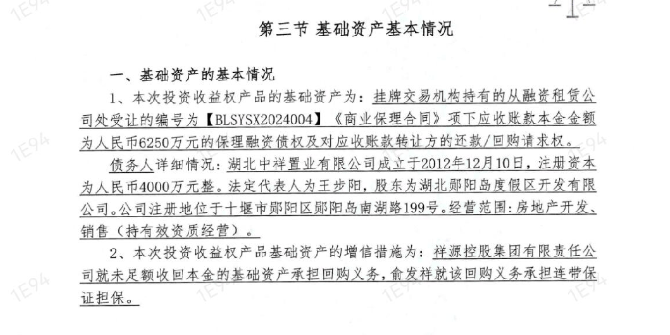
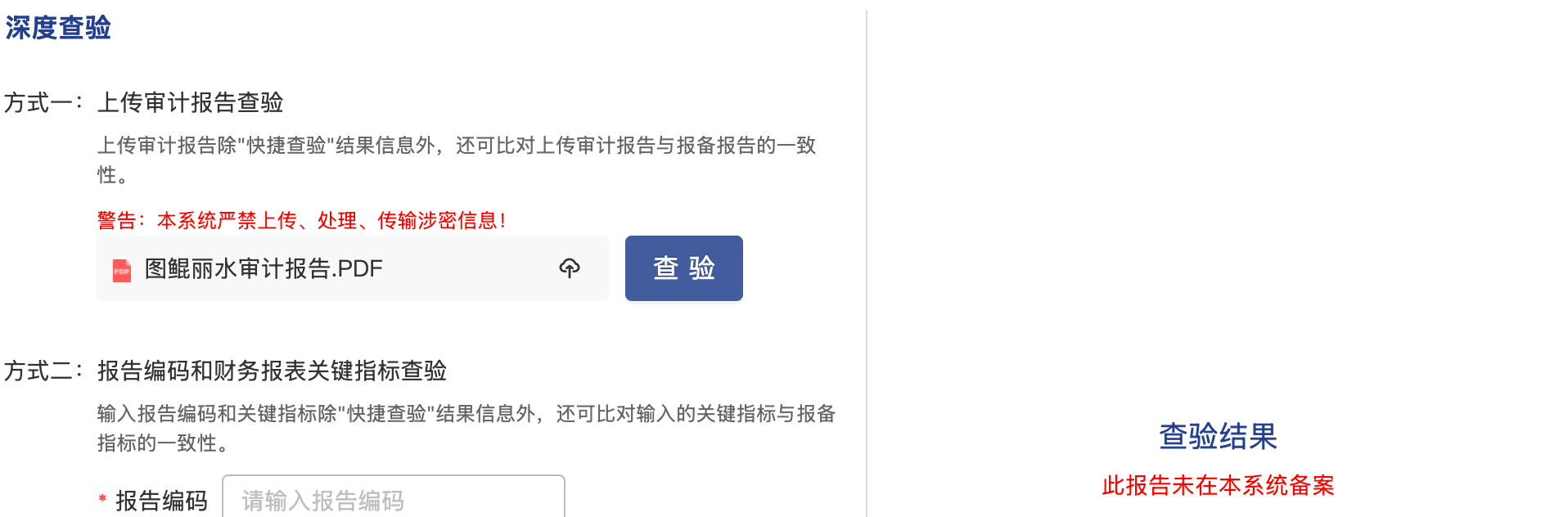
Core Viewpoint - The article discusses the emerging flaws in the "Xiangyuan System" financial products, particularly focusing on the audit reports that have not been properly registered and coded, raising concerns about their validity and compliance with regulatory standards [3][6]. Group 1: Audit Report Issues - Several audit reports related to "Xiangyuan System" financial products were found to lack registration and coding on the unified regulatory platform, violating relevant regulations [3][6]. - The Zhejiang Provincial Finance Department confirmed that the audit reports from three accounting firms did not comply with the registration requirements, leading to stricter regulatory scrutiny [6]. - The absence of QR codes on the audit reports indicates that they were not properly registered, rendering them ineffective and untrustworthy [5][6]. Group 2: Financial Product Details - The audit report for the "Lishui Mingche" product indicated that the original debt was from Hubei Zhongxiang Real Estate Co., Ltd., with a principal amount of 100 million yuan and a transfer price of 80 million yuan [4]. - The financial backing for these products includes unconditional and irrevocable joint liability guarantees provided by the owner of Xiangyuan Holdings, Yu Faxiang, covering the principal and associated costs [5]. Group 3: Regulatory Responses - Following complaints from investors, the involved audit reports were subject to early redemption, indicating potential investor concerns about the legitimacy of the products [7]. - The regulatory framework mandates that audit reports must be registered and coded before delivery to clients, emphasizing the importance of compliance in maintaining the integrity of financial products [6][8].

“祥源系”理财产品审计报告被指“违规”,还有多份“查无此报告”
Di Yi Cai Jing· 2025-12-09 09:05
Core Viewpoint - The "Xiangyuan" financial products have been found to have audit report deficiencies, leading to early redemption after investor complaints to regulatory authorities [1][4]. Group 1: Audit Report Issues - Multiple "Xiangyuan" financial products were found to have audit reports that were not filed with the unified regulatory platform and lacked QR codes [1][3]. - The Zhejiang Provincial Finance Department confirmed that the audit reports from three accounting firms did not comply with regulations, marking them for strict supervision [3]. - According to industry insiders, unfiled audit reports lack validity and do not meet regulatory requirements, rendering them unreliable [3]. Group 2: Financial Transactions - The "Lishui Mingche" product involved a debt transfer contract with a principal amount of 100 million yuan, with a transfer price of 80 million yuan [1]. - The owner of Xiangyuan Holdings, Yu Faxiang, provided unconditional joint liability guarantees for the repayment obligations related to the financial products [2]. Group 3: Regulatory Compliance - The regulatory framework requires that audit reports be filed and assigned codes before being delivered to clients, as per the guidelines issued in September 2023 [3]. - The unified regulatory platform allows for verification of audit reports, but discrepancies between submitted reports and those in the system can lead to a "not filed" status [7].
浙金中心祥源系产品陷兑付危机,多个产品底层为地产公司债权
Nan Fang Du Shi Bao· 2025-12-09 07:49
Core Viewpoint - The financial products associated with Xiangyuan Group are facing default issues, leading to investor concerns about the ability to redeem both matured and unmatured products [1][2][7]. Group 1: Default Issues - Since late November, rumors have emerged regarding the inability to redeem financial products purchased by investors at Zhejiang Jin Center, which were confirmed on December 5 when Xiangyuan Group's executive stated that about 2 to 3 products had not been redeemed, indicating a lack of funds [1]. - On December 7, several companies controlled by Xiangyuan Group announced that financial products related to real estate cooperation projects were experiencing overdue payments, with the actual controller assuming joint guarantee responsibilities [2]. - As of December 9, shares of Xiangyuan Group's listed companies experienced significant declines, with Jiangjian Co. hitting a trading halt and Xiangyuan Culture and Ocean Park also facing substantial drops [2][13]. Group 2: Company and Product Background - Zhejiang Jin Center, established in 2013, is a comprehensive financial asset trading platform supported by local government and has undergone ownership changes, with a significant stake now held by Hangzhou Minzhi Investment Management Co., which has close ties to Xiangyuan Group [3][4]. - Xiangyuan Group, founded in 1992, has evolved into a leading enterprise in the cultural tourism investment and operation sector, controlling several listed companies [4]. - The financial products in question are primarily backed by debts from real estate companies associated with Xiangyuan Group, with funds reportedly used to supplement liquidity for the trading platform [7][8]. Group 3: Investor Concerns - Investors holding unmatured products are worried about their ability to redeem these investments, as some products have become untransferable on the trading app [1][7]. - The underlying assets of these financial products are primarily debts owed by real estate companies controlled by Xiangyuan Group, raising concerns about the financial health of these companies [8][12]. - Recent reports indicate that several underlying debtors have been in a state of continuous overdue payments, further exacerbating investor anxiety [10][11].