福海贷

Search documents
金融服务谱新篇 “牧海耕山”赋新能
Zhong Guo Xin Wen Wang· 2025-11-04 06:57
Core Insights - Postal Savings Bank of China (PSBC) in Quanzhou is actively supporting local rural industries through targeted financial services, focusing on marine and agricultural sectors [1][4] - The bank has provided significant loans to fishermen and agricultural enterprises, facilitating the transition from traditional practices to modernized operations [2][3] Marine Economy - The marine economy is identified as a key growth driver for rural revitalization in Quanzhou, with PSBC developing a comprehensive financial service system tailored to marine industry needs [1] - As of September 2025, PSBC's agricultural loans reached CNY 19.7 billion, with inclusive agricultural loans at CNY 7.7 billion, supporting local marine industry development [1] Financial Support for Fishermen - PSBC has issued over CNY 1.2 billion in marine fishery loans, benefiting nearly 738 fishermen and enabling them to modernize their operations [2] - The bank's innovative loan products, such as "fishing boat mortgage loans" and "Fuhai loans," have been crucial in providing timely financial support during critical periods like the fishing season [2] Agricultural Development - The bank is also focusing on the mountainous regions of Quanzhou, promoting specialty agriculture through products like "Fucha loans" and "Fuguo loans" to enhance local agricultural output [2][3] - In Anxi, the tea industry has seen significant growth, with 60,000 acres of standardized tea gardens producing 31,000 tons and generating a value of CNY 6.8 billion in the first half of 2025 [3] Overall Impact - PSBC's financial initiatives have effectively expanded the scale and efficiency of rural industries in Quanzhou, contributing to farmers' income growth and supporting the implementation of rural revitalization strategies [4] - The bank plans to continue optimizing its financial services and increasing credit investments to further empower local industries [4]

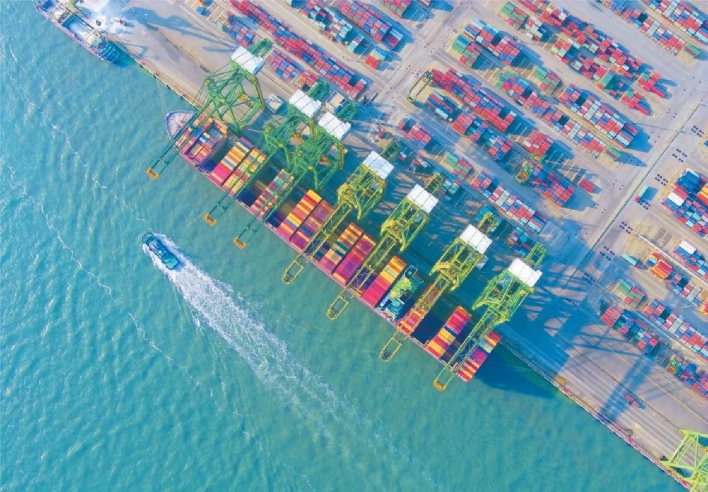
长三角产业融合升级,海洋经济发展示范区建设稳步推进——东海区海洋经济动能澎湃
Zhong Guo Zi Ran Zi Yuan Bao· 2025-06-06 05:06
Core Viewpoint - The East China Sea region is experiencing significant growth in its marine economy, with a focus on high-quality development and innovation in marine resources and industries [3][4]. Economic Performance - In 2024, the marine GDP of the East China Sea region reached 45,992.9 billion yuan, marking a 7.1% increase year-on-year, accounting for 43.6% of the national marine GDP and 13.6% of the regional GDP [3]. - The value added from marine industries, marine scientific research and education, marine public management services, upstream and downstream related industries amounted to 18,247.6 billion yuan, 1,786.1 billion yuan, 7,523.4 billion yuan, 7,767 billion yuan, and 10,668.7 billion yuan respectively, with marine industries contributing 39.7% [3]. Sector Growth - The marine first, second, and third industries contributed 4.0%, 36.3%, and 59.7% to the marine GDP respectively, indicating an ongoing optimization of the marine industry structure with an increasing share of the tertiary sector [3]. - In 2024, the value added of 15 marine industries grew by 8.5%, with marine engineering construction, shipbuilding, marine pharmaceuticals, marine equipment manufacturing, and marine transportation leading the growth [4]. Regional Development - Each province and city in the East China Sea region achieved steady growth in marine economies, with Jiangsu, Shanghai, Zhejiang, and Fujian reporting marine GDPs of 10,046.2 billion yuan, 11,387 billion yuan, 12,012.4 billion yuan, and 12,547.3 billion yuan respectively, reflecting growth rates of 6%, 11.2%, 6.5%, and 6.1% [5]. - The marine GDP of the Yangtze River Delta region reached a historical high of 33,445.6 billion yuan, accounting for 11.9% of the regional GDP, driven by enhanced port collaboration and logistics integration [6]. Development Demonstration Zones - The East China Sea region has established 7 marine economic development demonstration zones, which have shown significant effects in innovation, project construction, and replicable models [7][9]. - Various demonstration zones are exploring differentiated development strategies, such as integrated logistics models, ecological protection, and private sector participation in marine projects [8][9].