
茶业

Search documents
八马茶业: 深度改造传统农产品,成就高端茶叶第一企
Soochow Securities· 2026-03-20 07:45
Investment Rating - The report assigns an "Buy" rating for the company, marking its first coverage [1]. Core Insights - The company, Baima Tea, is positioned as a leader in the high-end tea market in China, leveraging its heritage and brand recognition to drive growth [8][39]. - The tea market in China is highly fragmented, with Baima Tea holding a leading position in the Oolong tea segment, specifically Tieguanyin, and implementing a full-category strategy [8][39]. - The company's competitive advantages stem from its deep transformation of the traditional tea industry, establishing a "brand-channel-standard" system that is difficult to replicate [8][39]. Financial Performance and Projections - Revenue projections for Baima Tea are as follows: - 2023: 2,122 million CNY - 2024: 2,143 million CNY (up 0.99% YoY) - 2025: 2,192 million CNY (up 2.25% YoY) - 2026: 2,377 million CNY (up 8.47% YoY) - 2027: 2,628 million CNY (up 10.56% YoY) [1] - Net profit attributable to shareholders is projected to be: - 2023: 205.83 million CNY - 2024: 224.34 million CNY (up 8.99% YoY) - 2025: 226.55 million CNY (up 0.98% YoY) - 2026: 259.34 million CNY (up 14.48% YoY) - 2027: 305.75 million CNY (up 17.89% YoY) [1] - The report anticipates that the company's earnings per share (EPS) will increase from 2.42 CNY in 2023 to 3.60 CNY in 2027 [1]. Market Position and Strategy - Baima Tea has established a significant presence with 3,585 stores by the first half of 2025, leading the industry in store count [8]. - The company is transitioning from a traditional agricultural product to a standardized consumer product, enhancing quality and supply chain stability through digitalization and smart production [8][39]. - The competitive landscape of the tea industry is characterized by a large number of small enterprises, with Baima Tea capturing approximately 1.7% of the high-end tea market, ranking first among competitors [39][40]. Brand and Heritage - Baima Tea is rooted in a 300-year tea-making heritage, with its founder being a recognized representative of traditional tea-making techniques [8][39]. - The company has successfully built a brand matrix that includes Baima Tea, Xinjihua, and Wanshanhong, targeting different consumer segments [8][39]. Growth Potential - The report highlights the company's low current valuation and the potential for recovery in sales and profitability as consumer scenarios improve [8]. - The tea market in China is expected to grow, with sales projected to reach 4,079 billion CNY by 2029, indicating a compound annual growth rate (CAGR) of 4.6% from 2024 to 2029 [8][30].
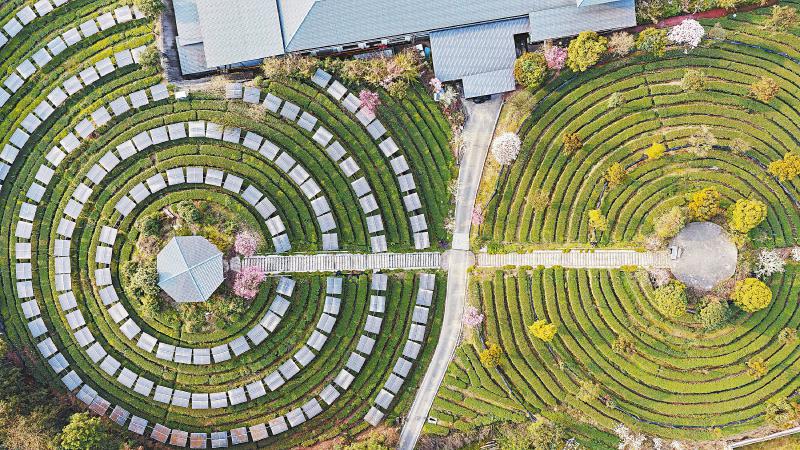
板上发电 板下种茶
Xin Lang Cai Jing· 2026-02-27 22:32
Core Viewpoint - The article highlights the innovative "photovoltaic+" model implemented in Yibin City, which combines clean energy generation with traditional tea cultivation, showcasing a unique approach to sustainable agriculture and energy production [2] Group 1: Company Initiatives - Sichuan Zaobai Jian Tea Industry Co., Ltd. has established an ecological early tea base in the Dayanling Scenic Area, integrating solar panels with tea cultivation [2] - The "tea-light complementary" and "agriculture-light complementary" projects represent a new model for combining clean energy with local pillar industries [2] Group 2: Industry Trends - The integration of photovoltaic systems in agricultural practices is part of a broader trend towards sustainable energy solutions in the agricultural sector [2] - This model not only enhances energy efficiency but also promotes the growth of traditional industries like tea, indicating a shift towards more sustainable agricultural practices [2]

福建省武夷山市祥袍茶厂总经理杨庆娇:茶香氤氲写人生 岩骨花香见精神
Xin Lang Cai Jing· 2026-02-25 04:35
Core Insights - The article highlights the journey of Yang Qingjiao, who transformed her passion for Wuyi rock tea into a thriving brand, demonstrating how modern business thinking can revitalize ancient tea-making techniques and cultural heritage [1] Group 1: Personal Background and Early Career - Yang Qingjiao, born in 1976, is a descendant of tea farmers from Wuyi Mountain, where her family has been engaged in traditional tea-making for generations [2] - After completing middle school, she left home to work, driven by a desire to find a market for her family's tea, which became a guiding dream for her entrepreneurial journey [2] Group 2: Market Entry and Brand Development - Upon arriving in Fuzhou, Yang faced a challenging entrepreneurial environment dominated by jasmine and Tieguanyin teas, with little awareness of Wuyi rock tea [3] - Lacking funds and connections, she relied on hard work and sincerity to build her market presence, while continuously enhancing her knowledge of tea through formal education and industry associations [3] - Despite facing numerous challenges, including market indifference and financial pressures, she remained committed to quality and service, ultimately establishing the "Xiang Pao" brand in Fuzhou [3] Group 3: Building a Tea Industry Ecosystem - Yang and her siblings leveraged Wuyi Mountain's tourism resources to create a tea tourism ecosystem, integrating various business models around tea [4] - The Xiang Pao tea factory adheres to traditional tea-making methods while meeting modern standards, establishing a dual-track model that ensures quality [4] - Since 2014, they have developed multiple business ventures, including a tea-themed guesthouse and a high-end resort, creating a comprehensive "planting-production-experience-consumption" cycle [4] Group 4: Social Responsibility and Community Engagement - Yang emphasizes the importance of shared prosperity, collaborating closely with local tea farmers to ensure mutual benefits and contribute to rural revitalization [5][6] - Her commitment to quality and community has fostered deep trust among customers, reflecting her belief that true wealth comes from collective success [6] Group 5: Vision for the Future - Yang envisions that every interaction with Xiang Pao will convey not just quality tea but also a lifestyle connected to Wuyi Mountain [7] - Her entrepreneurial journey illustrates the potential for traditional tea industries to thrive in the modern era, blending heritage with innovation [7]
福州仓山:新春佳节共商茉莉花茶产业发展大计
Xin Lang Cai Jing· 2026-02-22 07:36
Core Viewpoint - The Fuzhou Cangshan District is actively promoting the development of the jasmine tea industry through collaboration between government, state-owned enterprises, and private enterprises, aiming for a comprehensive integration of the industry by 2025 [1][2]. Group 1: Industry Development - The Cangshan District has planned a systematic approach to integrate the primary, secondary, and tertiary sectors of the jasmine tea industry, focusing on enhancing competitiveness and influence [2]. - The district has established an industrial cluster led by 2 national-level and 6 provincial-level leading enterprises, with a target of exceeding 5 billion yuan in total industrial chain output value by 2025 [2]. Group 2: Strategic Initiatives - The district aims to leverage the "Double World Heritage" status of Fuzhou jasmine tea to promote the brand concept of "the best jasmine flower is in Cangshan" [2]. - Key initiatives include the implementation of the "Six Ones" project to ensure deep integration and high-quality development of the industry [2]. Group 3: Stakeholder Engagement - District leaders expressed expectations for entrepreneurs to become optimal partners in development, brand ambassadors, and contributors to industrial upgrades [1]. - The district government commits to supporting entrepreneurs by optimizing the business environment and enhancing the industrial chain [1].
茶旅相融 安溪飘香
Xin Lang Cai Jing· 2026-02-15 23:23
Group 1 - The "Rainbow Horse" series mascots, themed "Fortune Comes Soon," have attracted many visitors in Anxi County, Fujian Province, showcasing local cultural elements [1][2] - Anxi is known as the birthplace of Tieguanyin tea, with a tea production history spanning over a thousand years, and its tea culture system is recognized as a global agricultural cultural heritage [2][3] - The Dabaofeng Tea Garden has 600 acres of tea plantation and has developed a "tea tourism integration" model, offering various experiential activities and services to meet diverse tourist needs [2][3] Group 2 - Anxi County government is actively promoting tea tourism by transforming tea gardens into comprehensive tourism sites that include production, processing, leisure, and cultural displays, with 41 representative tea gardens established [3] - The Qing Shui Yan Hot Spring Resort offers a unique experience combining hot springs and tea, enhancing visitor satisfaction [3] - Anxi County aims to attract over 10 million tourists and generate over 11.5 billion yuan in tourism revenue by 2025, with ongoing efforts to develop key cultural tourism projects [3]
凤凰单丛再显“国际范”,亮相巴黎中法马年春晚|广货行天下
Nan Fang Nong Cun Bao· 2026-02-14 13:33
Core Viewpoint - The event showcased the unique charm of Fenghuang Dancong tea, enhancing its international presence and promoting Guangdong products globally [3][4][8]. Group 1: Event Overview - The "Jinma Welcoming the Auspicious" Chinese-French Spring Festival Gala was held on February 11 at Chantilly Racecourse, co-hosted by the Chinese Embassy in France and the Hauts-de-France region [2][3]. - Fenghuang Dancong tea was presented as a special gift to over 600 guests, highlighting its role as a cultural ambassador for Guangdong [3][4]. Group 2: Cultural Significance - The event featured a blend of traditional Chinese lion dance and European equestrian elegance, symbolizing cultural exchange between China and France [7][8]. - Fenghuang Dancong tea, known as "the perfume of tea," served as a taste bridge, receiving positive feedback from French tea enthusiasts for its rich aroma and pleasant aftertaste [11][12]. Group 3: Product Characteristics - Fenghuang Dancong tea originates from Phoenix Mountain in Chaozhou and is classified as oolong tea, recognized for its unique production method involving single bud picking, processing, and sales [13][14]. - It is noted for its diverse floral aromas and regional uniqueness, making it a distinctive product in the tea market [14]. Group 4: Market Expansion - The tea has been included in the first batch of products protected under the China-EU Geographical Indications Agreement, facilitating its entry into the EU market [16][17]. - The tea's presence at significant diplomatic events underscores its role in promoting Chinese culture internationally [18]. Group 5: Industry Development - Chaozhou is focusing on high-quality development of the tea industry, implementing measures to strengthen its foundation and stimulate growth [29][30]. - Initiatives include ecological tea garden construction, promotion of green pest control technologies, and the establishment of geographical indication product management [32][33]. - The city aims to achieve a tea cultivation area of 297,300 acres and a production value of 9.521 billion yuan by the end of 2025, positioning Fenghuang Dancong as a pillar industry for local development and rural revitalization [39][40].

闽东红集团拟收购湖北大观茶业控股权
Jing Ji Guan Cha Wang· 2026-02-13 22:45
Business Development - Min Dong Hong Group announced on December 30, 2025, that it signed a non-binding letter of intent to acquire a controlling stake in Hubei Daguan Tea Industry Group. This move aims to strengthen its control over the upstream supply chain and optimize its product portfolio [1] - As of February 13, 2026, there has been no further substantial progress reported regarding this acquisition in publicly available information [1]
理响中国|创意长图:在田野沃土,耕耘农业农村高质量发展新希望
Huan Qiu Wang· 2026-02-12 12:20
Core Viewpoint - The article emphasizes the importance of agricultural modernization and rural revitalization in the context of China's overall modernization strategy, highlighting the release of the Central Document No. 1 as a guiding framework for agricultural work in the new five-year plan [4][15]. Group 1: Agricultural Modernization - The Central Document No. 1 focuses on ensuring national food security by emphasizing the need to maintain production capacity, ecological sustainability, and income growth simultaneously [5][6]. - The document sets a clear target for stabilizing the total grain production for the year, aiming for a specific percentage increase [8]. - Agricultural modernization is identified as crucial, with a particular focus on the modernization of agricultural technology [14]. Group 2: Income Growth for Farmers - Increasing farmers' income remains a central task of agricultural work, with the document proposing a comprehensive set of measures to promote income growth [15]. - The article highlights successful examples of local agricultural products, such as high mountain tea, which have seen significant sales, indicating potential for income generation [16][18]. - Innovative approaches in rural areas, such as integrating agricultural product sales with experiential activities, have led to increased revenue for local communities [20][23]. Group 3: Resource Utilization and Community Engagement - The document stresses the importance of effectively utilizing various rural resources, with initiatives like "village BA" and cultural activities revitalizing idle land and properties [23]. - Community engagement through cultural and sports activities has transformed local economies, allowing villagers to become active participants in income generation [23].


一片“金叶子”撬动大产业——福建南平武夷山以“三茶”统筹引领茶产业高质量发展新格局
Zhong Guo Zhi Liang Xin Wen Wang· 2026-02-12 05:16
Core Insights - The article highlights the significant progress made by Wuyishan in promoting the Wuyi Rock Tea brand and advancing the tea industry's green and high-quality development through a "Three Teas" coordinated approach [1][2] Brand Value and Recognition - By 2025, the brand value of "Wuyi Rock Tea" is projected to reach 75.018 billion yuan, ranking third in the geographical indication product regional brand list, with a brand strength of 915, the highest in the tea category [1] - The brand value of "Wuyi Black Tea" is expected to increase to 12.136 billion yuan, reflecting the city's commitment to brand strategy and systematic promotion [1] Cultural Integration and Market Expansion - Wuyishan has deepened the integration of tea culture and tourism, hosting various events such as the "Tea and the World" non-heritage exchange meeting and the "Tea Fragrance Gathering" sales connection meeting during the 17th Cross-Strait Tea Expo [2] - The establishment of the "Wuyishan Three Teas Coordinated Innovation Research Institute" and participation in promotional activities across cities have effectively expanded market channels and enhanced brand influence [2] Quality Management and Technological Empowerment - All 2,032 tea production enterprises in Wuyishan have been incorporated into a traceability system, with over 1.52 million traceability records logged, ensuring quality safety from the source [2] - Collaborations with research institutions have led to the establishment of a research center, providing technological support for sustainable industry development [2] Standardization and Future Directions - Wuyishan has led the revision of the national standard for "Geographical Indication Product Quality Requirements for Wuyi Rock Tea," with 41 tea-related national and industry standards established or revised [3] - The city plans to continue focusing on brand building, enhancing the tea industry chain, and exploring new business models such as "Internet + Tea" to stimulate industry integration and expand the reach of Wuyi tea [3]
四川税务全周期服务共绘内陆开放高地
Xin Lang Cai Jing· 2026-02-09 19:16
Core Viewpoint - The Sichuan provincial tax authority is enhancing its tax services to support local enterprises in their international expansion and to attract foreign investment, aligning with the "Belt and Road" initiative and the province's strategic goals for open development [1][2]. Group 1: Support for Local Enterprises - Sichuan's tax department has created the "Tax Road Pass · Inclusive Service" brand to provide comprehensive tax support for local companies venturing abroad, addressing the complexities of cross-border taxation [2][3]. - The implementation of a paperless export tax refund process has significantly improved efficiency, reducing the average processing time for normal refunds to within 3 working days, with over 1,030.87 billion yuan in refunds processed since the start of the 14th Five-Year Plan [2]. - For example, Sichuan Huayi Tea Co. benefited from a timely export tax refund of 270,000 yuan, which alleviated financial pressure during market fluctuations, and has received a total of 949.22 million yuan in refunds since 2021 [2]. Group 2: Risk Management and Compliance - The tax authority is focusing on providing tailored services to different types of enterprises, ensuring that tax benefits are effectively communicated and implemented through a direct connection mechanism [3]. - A comprehensive list of key foreign-related enterprises is maintained to facilitate the targeted delivery of tax incentives, enhancing the certainty of international tax services for businesses [3]. Group 3: Attracting Foreign Investment - Sichuan has become a leading province for foreign investment in central and western China, supported by effective tax incentive policies that have been successfully implemented [4]. - For instance, Jeff Microelectronics (Sichuan) Co., Ltd. has benefited from nearly 15 million yuan in tax incentives during the 14th Five-Year Plan, which has allowed the company to invest more in R&D and production [4]. - The tax department has established specialized teams to assist high-tech foreign enterprises, enhancing service quality and helping them mitigate cross-border tax risks [4]. Group 4: Enhancing Consumption and Tax Refund Services - The Sichuan tax authority is improving tax refund services to support the construction of international consumer centers, expanding the scope of departure tax refunds and enhancing the overall experience for consumers [6][7]. - The number of departure tax refund stores has reached nearly 700, with a focus on popular shopping areas and tourist attractions, ranking fourth in the country for sales volume of tax refund goods [6]. - The introduction of a "buy and refund" service model has streamlined the refund process, with over 200 stores now participating in this initiative, contributing to a significant increase in inbound tourism and consumption [7].