秦兵马俑

Search documents
秦军出巡五十年:277次海外展览背后的文化外交
Xin Lang Cai Jing· 2026-01-17 03:19
Core Viewpoint - The book "Qin Army's Expedition: A Record of the Terracotta Army's Overseas Exhibitions" fills a gap in the systematic and contemporary research on the role of the Terracotta Army in cultural exchange, documenting its exhibitions from 1976 to 2024 and providing insights into the value of these artifacts and their impact on civilization exchange [1][5]. Group 1: Exhibition Documentation - The book records the entire process of 277 overseas exhibitions of the Terracotta Army, detailing the origins, preparations, and academic discussions associated with each exhibition, supported by 550 images [2]. - Notable moments include a visitor's emotional response in the Philippines in 1976 and a wheelchair-bound woman visiting the exhibition in Spain three times in 1991, highlighting the profound impact of these exhibitions on audiences [2]. Group 2: Cultural Impact - The book positions the Terracotta Army within the framework of a unified yet diverse Chinese civilization, emphasizing its significance in cultural diplomacy and the promotion of Chinese culture globally [3]. - The exhibitions have coincided with various cultural exchange events, generating significant interest and contributing to a "Chinese cultural fever" [3][4]. Group 3: Successful Exhibition Factors - Three key reasons for the success of the Terracotta Army exhibitions include high-level government attention, extensive media coverage, and the organization of academic conferences that enhance the cultural impact of the exhibitions [6][7]. - The exhibitions have been described as "cultural diplomacy" events, facilitating exchanges between different civilizations and promoting traditional Chinese culture [7].
明互鉴视野下的文物外展创新表达
Xin Lang Cai Jing· 2026-01-11 22:25
Core Viewpoint - The book "Qin Army's Expedition: A Record of the Terracotta Army's Overseas Exhibitions" fills a gap in the systematic and contemporary research on the role of the Terracotta Army in cultural exchange, documenting its exhibitions from 1976 to 2024 and highlighting its significance in promoting Chinese civilization globally [1][2]. Group 1: Exhibition Documentation - The book records the entire process of 277 overseas exhibitions of the Terracotta Army, detailing the origins, preparations, and academic discussions associated with each event, supported by 550 images [2]. - Notable moments include a visitor's emotional response in the Philippines in 1976 and a wheelchair-bound woman's multiple visits in Spain in 1991, showcasing the profound impact of these exhibitions on audiences [2]. Group 2: Cultural Impact - The book positions the Terracotta Army within the framework of a unified yet diverse Chinese civilization, emphasizing its unique charm and significance in cultural diplomacy [3]. - The exhibitions have coincided with various cultural exchange events, generating significant interest and contributing to a "Chinese cultural fever" worldwide [3][4]. Group 3: Successful Exhibition Strategies - Three key factors contributing to the success of the Terracotta Army exhibitions include: 1. High-level attention from foreign governments, exemplified by visits from leaders such as the Austrian President in 1985 and the Swedish King in 2010 [5][6]. 2. Extensive media coverage that amplified the exhibitions' reach, with significant attendance exceeding expectations, such as the 611,000 visitors in Liverpool in 2018 [6]. 3. The organization of academic conferences that enhanced the cultural influence of the Terracotta Army, further promoting its significance in cultural exchange [6].
拂去历史的尘埃
Xin Lang Cai Jing· 2025-12-26 14:58
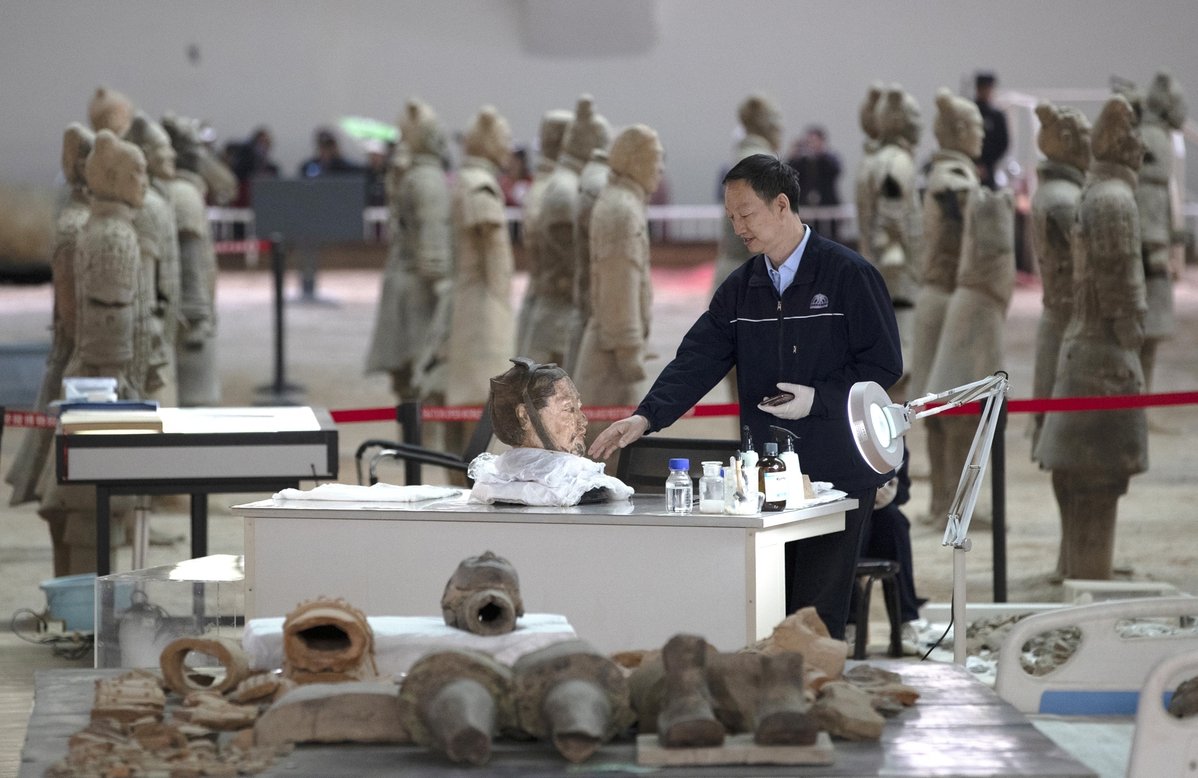
Group 1 - The article highlights the importance of cultural heritage preservation in China, emphasizing the role of restoration experts in maintaining historical artifacts and sites [2][3][10] - It mentions the ongoing restoration projects at significant cultural sites, including the Terracotta Army in Xi'an and the Mogao Caves in Dunhuang, showcasing the integration of traditional techniques and modern technology [6][8][13] - The article provides statistics on movable and immovable cultural relics in China, with 108 million movable cultural relics and 767,000 immovable cultural sites, underscoring the vast scope of preservation efforts [10] Group 2 - The narrative illustrates the dedication of restoration professionals, comparing their work to that of medical practitioners who diagnose and treat artifacts, ensuring their longevity [6][8] - It discusses the use of advanced technologies such as 3D laser scanning and digital archiving in the preservation of cultural sites, which aids in future research and cultural industry development [8] - The article reflects on the generational commitment of restoration experts, highlighting their passion and responsibility in safeguarding cultural heritage [10][13]