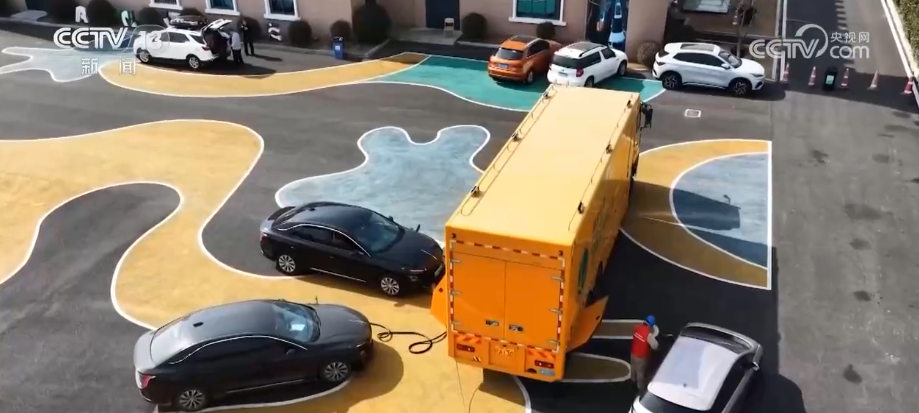
移动储能充电车

Search documents
春节假期高速公路充电量创新高,新能源车出行迈过“里程焦虑”
Jin Rong Jie· 2026-02-24 11:25
Core Insights - The Spring Festival travel period saw a record high in electric vehicle charging, with a total of 14,976.75 million kilowatt-hours charged from February 15 to February 23, marking a 52.01% increase in daily average charging compared to last year [1][2][7] Group 1: Charging Demand and Infrastructure - During the Spring Festival, the total number of electric vehicle charging sessions reached 6.021 million, with a daily average charging volume of 1,664.08 million kilowatt-hours, reflecting a significant increase in electric vehicle ownership and travel intent during holidays [2][7] - The first three days of the holiday saw a daily average charging volume of 1,180.08 million kilowatt-hours, a year-on-year increase of 63.05% [2][3] - Various regions implemented measures such as facility expansion and technology upgrades to meet the charging demands of electric vehicle owners during the holiday [1][2] Group 2: Infrastructure Upgrades - Shandong province increased its highway service area charging spots to over 3,800, a 30% increase from last year, while Jiangsu province saw a 70% increase in charging stations to over 3,500 [3] - The Zhejiang Taolu service area on the Changshen Expressway has the largest charging station in the country, with 216 charging spots and a maximum daily service capacity exceeding 6,000 vehicles [3] - Upgrades in charging facilities included the installation of high-power charging stations, which improved power supply capacity by five times and reduced average waiting time from 1.5 hours to under 20 minutes [3] Group 3: Smart Operations and Services - Smart operation methods became crucial for enhancing the charging experience, with real-time monitoring and fault alerts implemented across various service areas [4] - Innovative solutions such as cross-line diversion were employed to alleviate charging congestion at popular service stations [4] - Humanized services were also emphasized, with staff providing one-on-one assistance for users unfamiliar with smart devices, ensuring a smoother charging experience [5][6] Group 4: Future Outlook - The increase in charging sessions and reduced waiting times indicate that electric vehicles are transitioning from niche to mainstream, supported by improved charging infrastructure [7] - The National Energy Administration plans to implement a "three-year doubling" initiative to enhance the service capacity of electric vehicle charging facilities [7]
“智慧充电”续航春运绿色出行 科技赋能让游客畅游无忧
Yang Shi Wang· 2026-02-19 07:13
Core Viewpoint - The article highlights the increased demand for smart charging services for electric vehicle (EV) owners during the Spring Festival holiday, addressing concerns about "range anxiety" through technological solutions. Group 1: Charging Infrastructure Developments - Multiple regions have launched smart charging services to support EV owners during peak travel times, particularly during the Spring Festival holiday [1] - In Changzhou, Jiangsu, 15 smart charging pilot projects were established in residential communities to dynamically adjust charging power, allowing residents to save on electricity costs [4] - Mobile charging facilities have been added at service areas, such as the Gaozu service area on the Huai-Xu Expressway, capable of charging up to 72 vehicles in a day [5] Group 2: Operational Challenges and Solutions - Charging stations experienced high operational loads during the holiday, compounded by winter weather challenges, prompting local power companies to conduct thorough inspections and maintenance of charging facilities [7] - In Xinjiang's Tacheng, local power departments performed safety checks on charging stations near tourist attractions, utilizing drone inspections and infrared temperature monitoring to ensure reliability [9] Group 3: User Experience - EV owners reported improved charging efficiency and peace of mind due to the availability of emergency charging equipment during their travels [3]