空气净化耳机Dyson Zone

Search documents
22年神话终破灭!戴森营收首次下滑 缺席双11榜单
Xin Lang Ke Ji· 2025-10-23 02:17
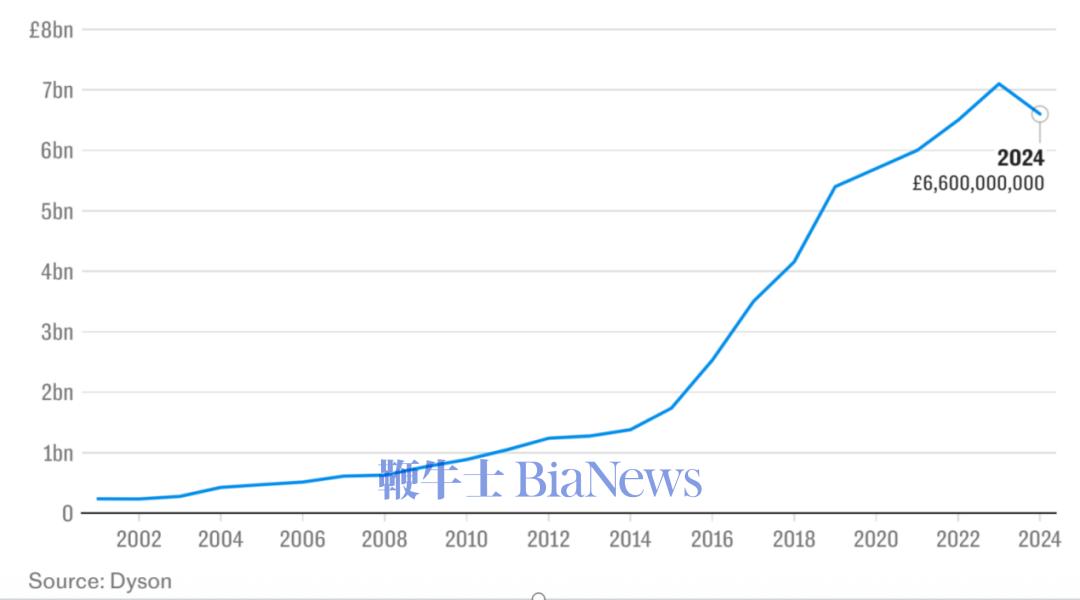
Core Points - Dyson's revenue has declined for the first time in 22 years, with a reported revenue of £6.6 billion in 2024, down 7.04% from £7.1 billion in 2023 [1][2][4] - The company's pre-tax profit fell by approximately 49% to £561 million, indicating a significant drop in profitability [1][4] - CEO Hanno Kirner described 2024 as a challenging but necessary transformation year for Dyson, attributing the revenue decline to decreased consumer confidence, global business restructuring, and currency fluctuations [4][12] Revenue and Profit Performance - Dyson's revenue of £6.6 billion in 2024 marks the first decline since 2002, with a notable drop in pre-tax profit to £561 million [1][2][4] - Despite achieving record global sales of over 20 million units, this increase did not translate into revenue or profit growth [4][12] Market Position and Competition - Dyson's market share in China has significantly decreased, with its online share in the high-end hair dryer market dropping to 7% in the first half of 2024 [6][12] - The company faces stiff competition from domestic brands like Midea and Leifheit, which offer similar products at lower prices, leading to a loss of market share [6][10][12] - Dyson's products are perceived as expensive, with consumers increasingly favoring local brands that provide comparable performance at a better price [10][12] Consumer Sentiment and Brand Perception - Consumer sentiment has shifted, with many viewing Dyson products as overpriced compared to domestic alternatives that match or exceed their performance [10][12] - The brand's innovative edge has diminished, as recent product launches have not generated significant consumer excitement, leading to a perception of stagnation [12][14] Sales Channels and Customer Engagement - Dyson's physical retail presence is struggling, with lower foot traffic compared to competitors like Midea and Roborock [8][9] - The lack of customer engagement in Dyson stores highlights a growing disconnect between the brand and its consumer base [9][10]

22年神话终破灭!戴森营收首次下滑,缺席双11榜单
Xin Lang Ke Ji· 2025-10-23 02:07
Core Insights - Dyson's revenue for 2024 was £6.6 billion, a 7.04% decline from £7.1 billion in 2023, marking the first revenue drop in 22 years since 2002 [1][5] - The company's pre-tax profit fell to £561 million, a nearly 49% decrease year-over-year [1] - Despite achieving record global sales of over 20 million units in 2024, this did not translate into revenue or profit growth [4] Market Performance - Dyson's product sales in the domestic market are showing weakness, with no products making it to the top 10 sales list for hair dryers on a major e-commerce platform [1][6] - In the vacuum cleaner category, Dyson holds two positions in the top 10 but is significantly trailing behind domestic brands like Midea [1][6] - The online market share of Dyson's high-end hair dryers in China dropped to 7% in the first half of 2024 [6] Competitive Landscape - The decline in Dyson's market share is attributed to the rise of domestic brands such as Midea, Leifeng, and others offering lower-priced products with comparable features [5][6] - In 2016, Dyson held over 80% of the high-end hair dryer market in China, but this has drastically changed due to increased competition [5][6] - Consumer sentiment has shifted towards value for money, leading to a decline in Dyson's appeal as domestic brands improve their technology and design [11][14] Consumer Perception - Foot traffic in Dyson's stores is noticeably lower compared to nearby domestic brands, indicating a shift in consumer interest [8][10] - Former Dyson customers express concerns over the high prices relative to the performance of domestic alternatives, which are perceived as offering similar or better value [10][11] - The perception of Dyson as a premium brand is being challenged as consumers become more price-sensitive and informed [14] Innovation and Product Development - Dyson's recent product launches, including the Dyson Zone headphones, have not met consumer expectations, leading to a perception of diminishing innovation [13][14] - The company's core technologies, particularly in motor performance, are being matched or surpassed by domestic competitors, reducing Dyson's competitive edge [11][14] - The challenge for Dyson lies in maintaining its high-end image while addressing the growing demand for affordable alternatives in the market [14]