高端平替

Search documents
从负债累累到年销50亿,这个男人凭啥被雷军“相中”?
Sou Hu Cai Jing· 2025-11-11 14:05
Core Viewpoint - Lei Jun, recognized as the "Growth King" in the 2025 Hurun Rich List, is investing in the down jacket sector, specifically in the high-end goose down brand Gaofan, which has recently completed a new round of financing from Jun's Shunwei Capital [2][6][7]. Company Overview - Gaofan was founded in 2004 by Wu Kunming, who faced significant challenges early on, including a supply chain collapse due to surging orders, leading to a debt of 100 million yuan [3][9][10]. - In 2020, Wu made a strategic pivot by eliminating the duck down product line to focus solely on high-end goose down jackets, resulting in annual sales exceeding 5 billion yuan [3][11][12]. Market Position and Challenges - Gaofan is currently facing multiple challenges, including a slowdown in global high-end down jacket market growth and increasing industry competition [4][19]. - The company is actively seeking new opportunities, such as targeting the rapidly growing light outdoor market and launching a children's clothing sub-brand [5][19]. Strategic Initiatives - Gaofan is enhancing its online and offline channel strategies, with significant sales contributions from platforms like Douyin (40%) and Tmall (over 30%) [12][17]. - The brand is also expanding its physical presence, having opened new stores in cities like Changchun, Harbin, and Changsha [17][28]. Product Development and Innovation - Gaofan's product lines include three series (Gold, Black, and Twin) priced between 1,000 to 5,000 yuan, focusing on high-quality materials and innovative designs [16][17]. - The company emphasizes R&D, with annual investment in innovation accounting for 6-8% of its revenue, leading to a strong patent portfolio [17][24]. Industry Trends - The down jacket market is evolving from a "winter necessity" to a "quality lifestyle" focus, with consumers demanding higher quality products [14][15]. - The domestic light outdoor market is expanding rapidly, projected to reach 45 billion yuan by 2025, with a significant portion of the population showing interest in lightweight outdoor activities [25]. Competitive Landscape - Gaofan competes with established brands like Bosideng and Canada Goose, as well as outdoor brands such as Nike and Adidas, in a highly competitive environment [19][25]. - Despite its growth, Gaofan needs to improve consumer experience and brand positioning in high-end markets, as indicated by customer complaints regarding product quality [25][28].


福建老板卖羽绒服,年交易额50亿,获雷军押注
2 1 Shi Ji Jing Ji Bao Dao· 2025-11-10 07:43
Core Insights - Lei Jun's investment in Gaofan through Shunwei Capital highlights the growing interest in the down jacket market [1][3] - Gaofan has undergone multiple transformations since its founding in 2004, focusing on high-end goose down jackets and outdoor fashion [3][12] - The competitive landscape includes traditional players like Bosideng and emerging sports brands, making market positioning crucial for Gaofan [3][13] Company Overview - Gaofan was founded by Wu Kunming in 2004 and initially represented several well-known down jacket brands before launching its own [1][3] - The company shifted its strategy in 2020 to focus on high-end products priced around 2000 RMB, achieving a GMV of over 5 billion RMB in 2024 [3][12] - Gaofan's sales performance during the 2025 Double Eleven event ranked fourth in the down jacket category [10] Market Dynamics - The down jacket market is highly competitive, with both traditional and sports brands vying for market share, particularly in the 2000 RMB and above price segment [3][13] - The high-end segment is experiencing structural changes, with domestic brands increasing their market share from 15% in 2020 to 28% in 2024 [12][13] - Global luxury brands like Moncler and Canada Goose are facing stagnant growth, indicating a challenging environment for high-end down jackets [16] Strategic Initiatives - Gaofan is diversifying its product offerings by entering the lightweight outdoor market, which is rapidly expanding [18][22] - The company has filed multiple patents for lightweight outdoor apparel, emphasizing functionality and urban consumer needs [18][22] - The lightweight outdoor market in China is projected to grow significantly, with a market size expected to exceed 45 billion RMB by 2025 [22] Challenges Ahead - Despite its high-end positioning, Gaofan faces challenges in brand recognition, channel development, and consumer trust [23] - The company must address quality concerns raised by consumers, as evidenced by numerous complaints regarding product issues [14][23] - The crowded outdoor market requires Gaofan to effectively differentiate itself to attract middle-class consumers [23]

福建老板卖羽绒服,年交易额50亿,获雷军押注
21世纪经济报道· 2025-11-10 07:33
Core Viewpoint - The article discusses the recent financing of Gaofan, a down jacket brand founded by Wu Kunming, by Lei Jun's Shunwei Capital, highlighting the brand's strategic shift towards high-end down jackets and outdoor fashion in a competitive market [1][2]. Group 1: Company Overview - Gaofan was founded in 2004 by Wu Kunming, who previously represented several well-known down jacket brands before establishing his own [1]. - The company has undergone multiple transformations, including a significant shift in 2020 to focus on high-end goose down jackets priced around 2000 RMB [2][9]. - Gaofan's gross merchandise volume (GMV) is projected to exceed 5 billion RMB in 2024, with significant contributions from e-commerce platforms like Douyin and Tmall [2][9]. Group 2: Market Competition - Gaofan faces intense competition from traditional players like Bosideng and Yaya, as well as sports brands such as Nike and Adidas, particularly in the high-end segment [2][10]. - The brand aims to position itself against luxury brands like Moncler and Canada Goose, which have maintained high price points in the Chinese market [2][10]. Group 3: Consumer Trends and Market Dynamics - The high-end down jacket market is experiencing structural changes, with domestic brands increasing their market share from 15% in 2020 to 28% in 2024 within the 2000-5000 RMB price range [9]. - The outdoor market is expanding rapidly, with the lightweight outdoor equipment market expected to reach 45 billion RMB by 2025, driven by a growing consumer base [17]. Group 4: Strategic Initiatives - Gaofan is diversifying its product offerings to include lightweight outdoor apparel, emphasizing functionality and urban lifestyle compatibility [14][17]. - The company has filed multiple patents for new products aimed at the lightweight outdoor segment, indicating a strategic pivot to capture emerging market opportunities [16][17]. Group 5: Challenges and Consumer Perception - Despite its growth, Gaofan has faced quality complaints, with 425 issues reported on consumer platforms, indicating a need for improvement in product quality and customer service [12][18]. - The brand's recognition and trust among consumers, as well as its distribution channels, require further development to effectively compete in the high-end market [18].

被雷军押注的高梵:年入50亿,还盯上了户外赛道
2 1 Shi Ji Jing Ji Bao Dao· 2025-11-10 02:27
Core Insights - Lei Jun's investment in Gaofan through Shunwei Capital highlights the brand's ambition to compete in the high-end down jacket market, particularly against international luxury brands like Moncler and Canada Goose [1][2] - Gaofan has successfully transitioned to a high-end positioning, focusing on goose down jackets and leveraging e-commerce channels, achieving a GMV of over 5 billion yuan in 2024 [3][4] Company Overview - Gaofan was founded in 2004 by Wu Kunming and initially focused on representing various well-known down jacket brands before establishing its own [1] - The company underwent multiple transformations, including a significant shift in 2020 to eliminate duck down products and concentrate on high-end goose down jackets priced around 2000 yuan [3][4] - Gaofan's sales strategy includes a strong online presence, with significant contributions from platforms like Douyin and Tmall [3] Market Positioning - The competitive landscape for Gaofan includes traditional players like Bosideng and Yaya, as well as sports brands such as Nike and Adidas, which are also targeting the down jacket segment [1][4] - The high-end segment of the down jacket market is experiencing structural changes, with domestic brands increasing their market share from 15% in 2020 to 28% in 2024 in the 2000-5000 yuan price range [4] Financial Performance - Gaofan's GMV reached over 5 billion yuan in 2024, with 40% of sales coming from Douyin and over 30% from Tmall [3][4] - The luxury market is facing challenges, with forecasts indicating a slowdown in growth rates for the luxury sector to 1%-3% by 2025 [6] Strategic Initiatives - Gaofan is diversifying its product offerings by entering the lightweight outdoor market, which is rapidly expanding, with the market size expected to reach 45 billion yuan by 2025 [8][9] - The company is also exploring opportunities in the children's clothing segment, having opened its first store for Gaofan KIDS in Hangzhou [10] Challenges and Competition - Despite its high-end positioning, Gaofan faces significant competition from established brands in the down jacket market, and its brand value still lags behind top luxury brands [5][9] - Consumer complaints regarding product quality and after-sales service indicate areas for improvement as Gaofan seeks to enhance its market position [5][10]
这届00后,去市场淘布做“高定”
3 6 Ke· 2025-10-30 03:20
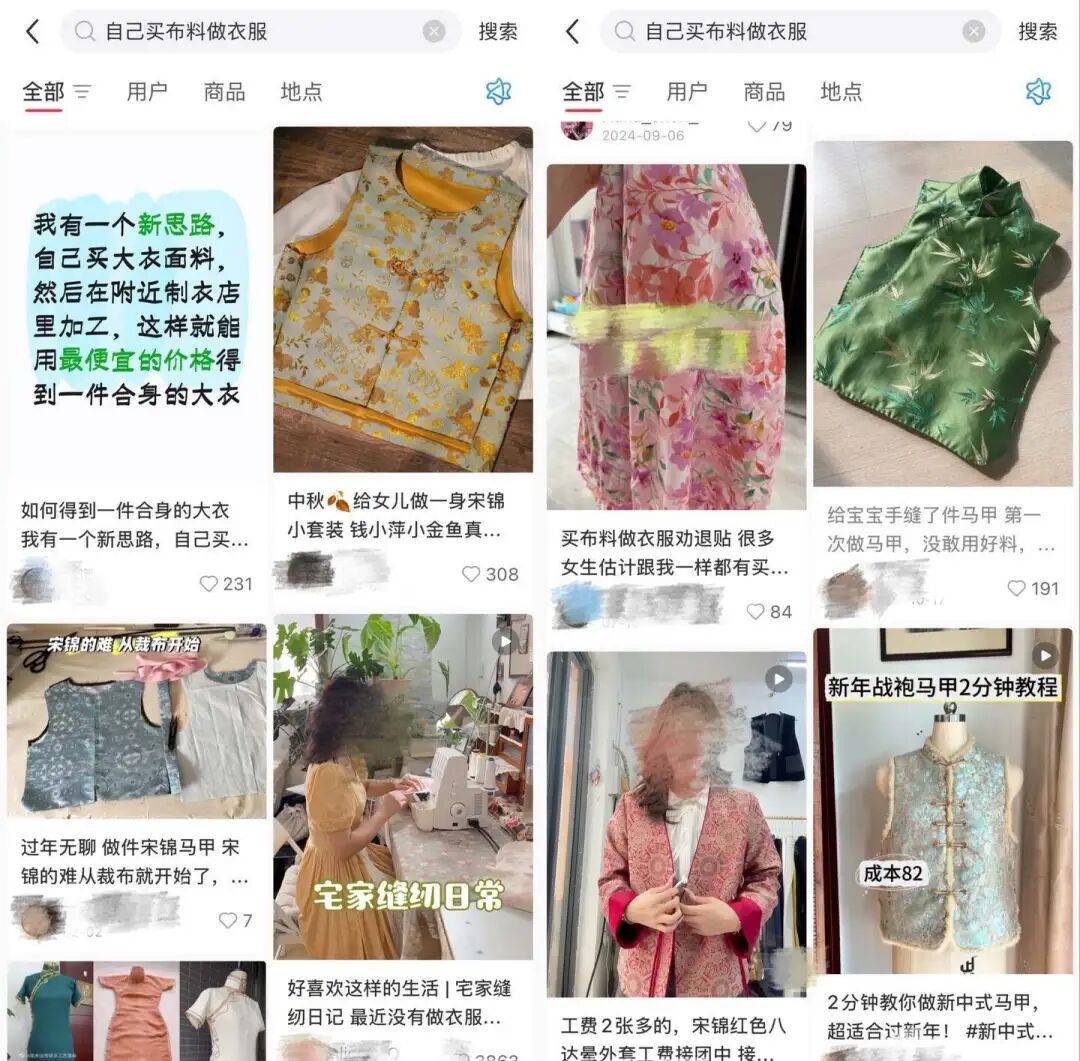
Core Insights - The article discusses a shift in consumer behavior among the younger generation, particularly Generation Z, towards DIY clothing by purchasing fabric and creating custom garments, marking a departure from traditional brand-centric fashion consumption [2][3][15]. Group 1: Consumer Behavior - Young consumers are increasingly engaging in fabric markets, driven by a desire for individuality and self-expression, as they seek to avoid the social awkwardness of wearing the same outfits as others [2][4][7]. - The trend reflects a broader "fashion revolution" where the focus has shifted from brand logos to the quality and uniqueness of materials and designs [3][15]. - A significant 70% of surveyed individuals aged 18-35 expressed dissatisfaction with the homogenized designs of fast fashion brands, leading to a 280% increase in those opting for DIY clothing over three years [15][16]. Group 2: Economic Implications - The cost-effectiveness of making clothes from purchased fabric is highlighted, with examples showing that the cost of DIY garments can be significantly lower than retail prices for similar quality items [5][12][16]. - The article notes that the fabric market is experiencing a revival, with reports of increased business for fabric vendors and tailoring shops, particularly among younger customers [10][12]. - The shift towards DIY clothing is also seen as a response to the high prices of ready-made garments, with custom-made options often costing a fraction of branded items [12][16]. Group 3: Social Media Influence - Social media platforms play a crucial role in promoting this trend, with tutorials and DIY content encouraging more individuals to explore fabric markets and sewing [7][18]. - The rise of "interest e-commerce" and community-driven content on platforms like Xiaohongshu and Douyin has lowered the barriers to entry for learning sewing skills and has fostered a sense of community among DIY enthusiasts [18][19]. - The article suggests that this trend could lead to a transformation in the traditional fashion industry, pushing brands to rethink their business models to incorporate sustainability and personalization [18][19].
22年神话终破灭!戴森营收首次下滑 缺席双11榜单
Xin Lang Ke Ji· 2025-10-23 02:17
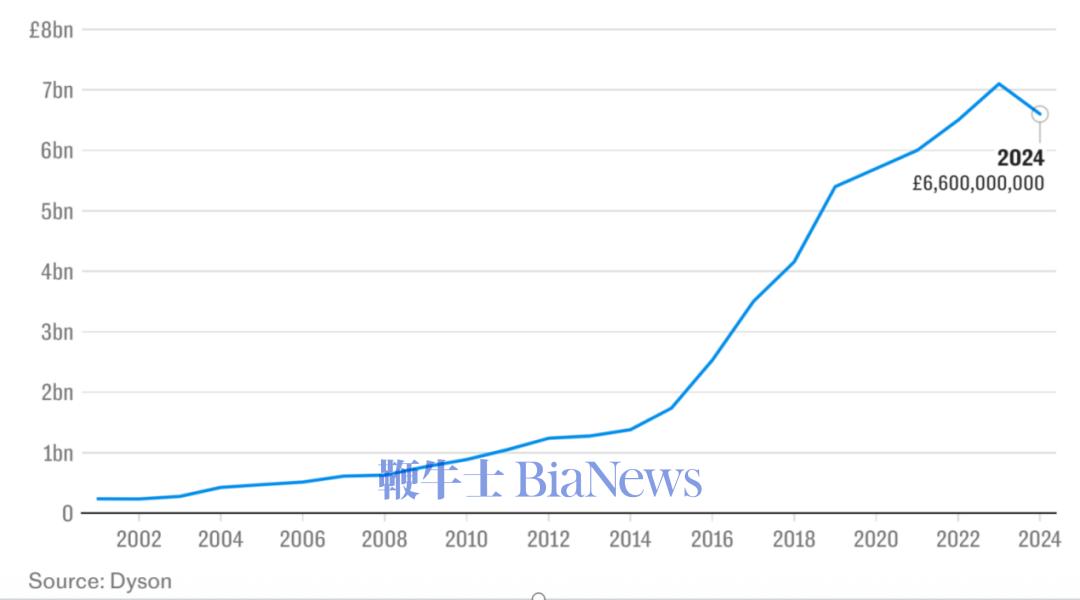
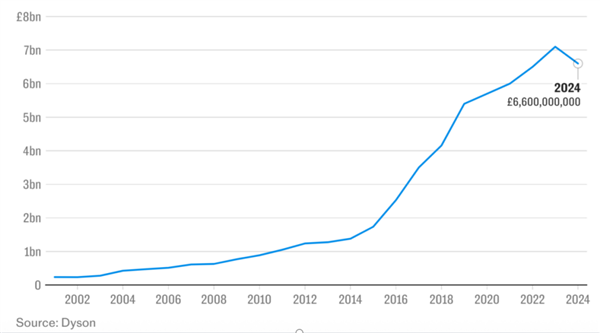
Core Points - Dyson's revenue has declined for the first time in 22 years, with a reported revenue of £6.6 billion in 2024, down 7.04% from £7.1 billion in 2023 [1][2][4] - The company's pre-tax profit fell by approximately 49% to £561 million, indicating a significant drop in profitability [1][4] - CEO Hanno Kirner described 2024 as a challenging but necessary transformation year for Dyson, attributing the revenue decline to decreased consumer confidence, global business restructuring, and currency fluctuations [4][12] Revenue and Profit Performance - Dyson's revenue of £6.6 billion in 2024 marks the first decline since 2002, with a notable drop in pre-tax profit to £561 million [1][2][4] - Despite achieving record global sales of over 20 million units, this increase did not translate into revenue or profit growth [4][12] Market Position and Competition - Dyson's market share in China has significantly decreased, with its online share in the high-end hair dryer market dropping to 7% in the first half of 2024 [6][12] - The company faces stiff competition from domestic brands like Midea and Leifheit, which offer similar products at lower prices, leading to a loss of market share [6][10][12] - Dyson's products are perceived as expensive, with consumers increasingly favoring local brands that provide comparable performance at a better price [10][12] Consumer Sentiment and Brand Perception - Consumer sentiment has shifted, with many viewing Dyson products as overpriced compared to domestic alternatives that match or exceed their performance [10][12] - The brand's innovative edge has diminished, as recent product launches have not generated significant consumer excitement, leading to a perception of stagnation [12][14] Sales Channels and Customer Engagement - Dyson's physical retail presence is struggling, with lower foot traffic compared to competitors like Midea and Roborock [8][9] - The lack of customer engagement in Dyson stores highlights a growing disconnect between the brand and its consumer base [9][10]
22年神话终破灭!戴森营收首次下滑,缺席双11榜单
Xin Lang Ke Ji· 2025-10-23 02:07
Core Insights - Dyson's revenue for 2024 was £6.6 billion, a 7.04% decline from £7.1 billion in 2023, marking the first revenue drop in 22 years since 2002 [1][5] - The company's pre-tax profit fell to £561 million, a nearly 49% decrease year-over-year [1] - Despite achieving record global sales of over 20 million units in 2024, this did not translate into revenue or profit growth [4] Market Performance - Dyson's product sales in the domestic market are showing weakness, with no products making it to the top 10 sales list for hair dryers on a major e-commerce platform [1][6] - In the vacuum cleaner category, Dyson holds two positions in the top 10 but is significantly trailing behind domestic brands like Midea [1][6] - The online market share of Dyson's high-end hair dryers in China dropped to 7% in the first half of 2024 [6] Competitive Landscape - The decline in Dyson's market share is attributed to the rise of domestic brands such as Midea, Leifeng, and others offering lower-priced products with comparable features [5][6] - In 2016, Dyson held over 80% of the high-end hair dryer market in China, but this has drastically changed due to increased competition [5][6] - Consumer sentiment has shifted towards value for money, leading to a decline in Dyson's appeal as domestic brands improve their technology and design [11][14] Consumer Perception - Foot traffic in Dyson's stores is noticeably lower compared to nearby domestic brands, indicating a shift in consumer interest [8][10] - Former Dyson customers express concerns over the high prices relative to the performance of domestic alternatives, which are perceived as offering similar or better value [10][11] - The perception of Dyson as a premium brand is being challenged as consumers become more price-sensitive and informed [14] Innovation and Product Development - Dyson's recent product launches, including the Dyson Zone headphones, have not met consumer expectations, leading to a perception of diminishing innovation [13][14] - The company's core technologies, particularly in motor performance, are being matched or surpassed by domestic competitors, reducing Dyson's competitive edge [11][14] - The challenge for Dyson lies in maintaining its high-end image while addressing the growing demand for affordable alternatives in the market [14]