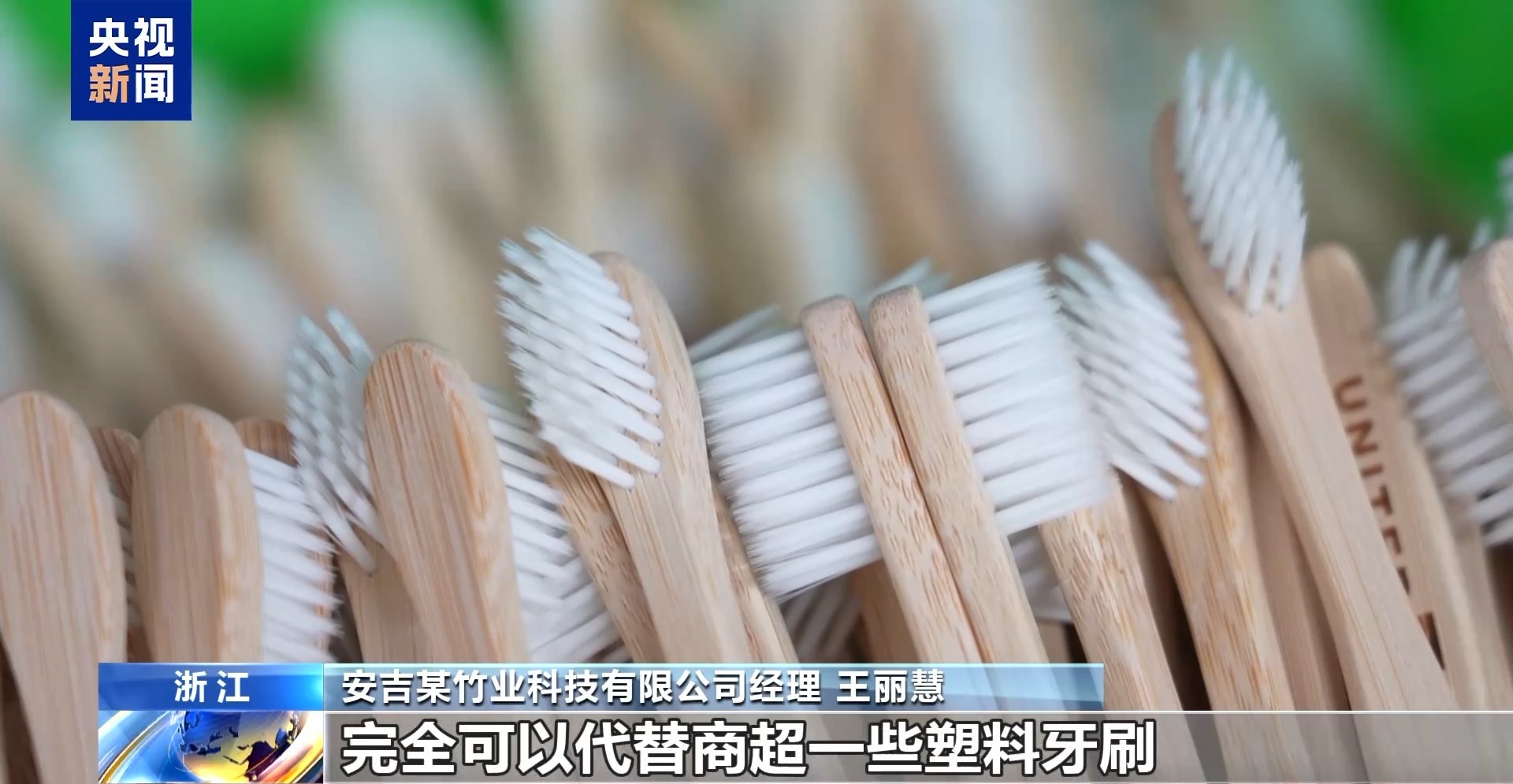
竹制牙刷

Search documents
减塑不止步 增绿再提速
Xin Lang Cai Jing· 2026-01-19 22:17
Core Viewpoint - Plastic pollution management is a crucial aspect of promoting green consumption and ecological civilization, with the Chinese government implementing measures to strengthen regulatory frameworks, promote green alternatives, and deepen governance in key industries [2][3]. Group 1: Achievements in Plastic Pollution Management - Under the guidance of the "14th Five-Year Plan" for plastic pollution management, China has made significant progress in reducing the use of single-use plastic products and promoting alternative products [3]. - The Ministry of Commerce has established a nationwide reporting system for the use and recycling of single-use plastic products, creating a multi-faceted governance structure that includes source reduction, alternative promotion, and recycling supervision [3][4]. - In the first half of 2025, the use of environmentally friendly alternatives in the business sector increased by 26.31% compared to the previous period, while the intensity of single-use plastic products continued to decline [3]. Group 2: Promotion of Green Alternatives - The promotion of green alternative products has been notably successful, with initiatives such as the "Bamboo Instead of Plastic" campaign gaining consumer acceptance [4]. - The application of biodegradable plastic technology is expanding in areas like express packaging and dining utensils, creating a complementary relationship with bamboo products [4]. Group 3: Comprehensive Governance Framework - The government has identified three main directions for plastic pollution management, transitioning from a focus on bans to a more systematic governance approach [5]. - Continuous strengthening of regulatory frameworks and responsibility enforcement is planned, including the establishment of a "double random, one public" supervision mechanism to ensure compliance in retail, e-commerce, and dining sectors [6]. - Efforts will be made to promote green alternatives further, including expanding the supply of biodegradable plastics and plant fiber products while reducing their cost premium [6][7]. Group 4: Public Participation and Consensus - Experts emphasize the need for policy guidance, market-driven initiatives, and public participation to create a collaborative effort in plastic pollution management [8]. - Consumers are increasingly recognizing the benefits of plastic pollution management, as evidenced by their adoption of reusable bags and biodegradable products [8]. - The collaborative approach among multiple departments reflects a comprehensive strategy that focuses on source reduction, alternative supply, and recycling, aligning with the principles of reduction, resource utilization, and harmlessness [8][9]. Group 5: Future Directions - Recommendations include accelerating the establishment of standards for alternative products and creating incentives for plastic waste recycling to enhance industry regulation [9]. - The systematic and normalized approach to plastic pollution management is expected to facilitate a seamless "production-consumption-recycling-disposal" chain, promoting green consumption ideals [9].


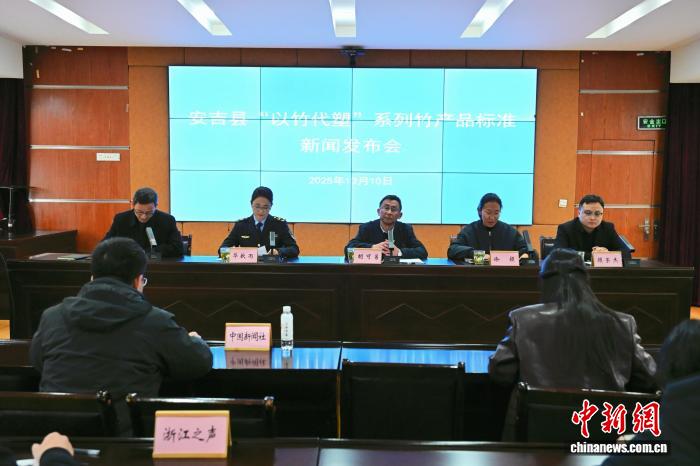
浙江安吉发布首批“以竹代塑”系列竹产品标准
Zhong Guo Xin Wen Wang· 2025-12-10 13:10
Core Viewpoint - Anji County in Zhejiang has launched the first batch of bamboo product standards under the "Bamboo Instead of Plastic" initiative, integrating environmental impact assessment into product requirements, aiming to promote sustainable consumption and reduce plastic waste [1][3]. Group 1: Standards and Products - Six group standards were released, including bamboo woven storage baskets and bamboo fiber plates, focusing on "green, safe, and practical" attributes [1][3]. - The standards incorporate quantifiable indicators such as replacement reduction rate, material substitution rate, and product renewal ratio into actionable production requirements [1][3]. Group 2: Market Impact and Adoption - Anji, known as "China's Bamboo Town," has nearly 1,000 bamboo industry enterprises, with bamboo products becoming commonplace in daily life [3][4]. - Bamboo toothbrushes produced by a local company are gaining popularity, especially in South Korea, with 70% of their products exported [3]. - Bamboo pulp paper straws are now used in over 300 local cafes, with projected sales reaching 500 million units by 2024 [3][4]. Group 3: International Recognition and Future Plans - Anji's bamboo products will be showcased at the Asia-Pacific Plastic Pollution Governance meeting in Bangkok in March 2025, highlighting China's efforts in plastic pollution management [3][8]. - The local government aims to leverage the new standards to expand the "Bamboo Instead of Plastic" initiative from regional to national and international levels [8]. - Future plans include deepening the integration of standards, industry, and ecology to provide a comprehensive solution for global plastic pollution [8].
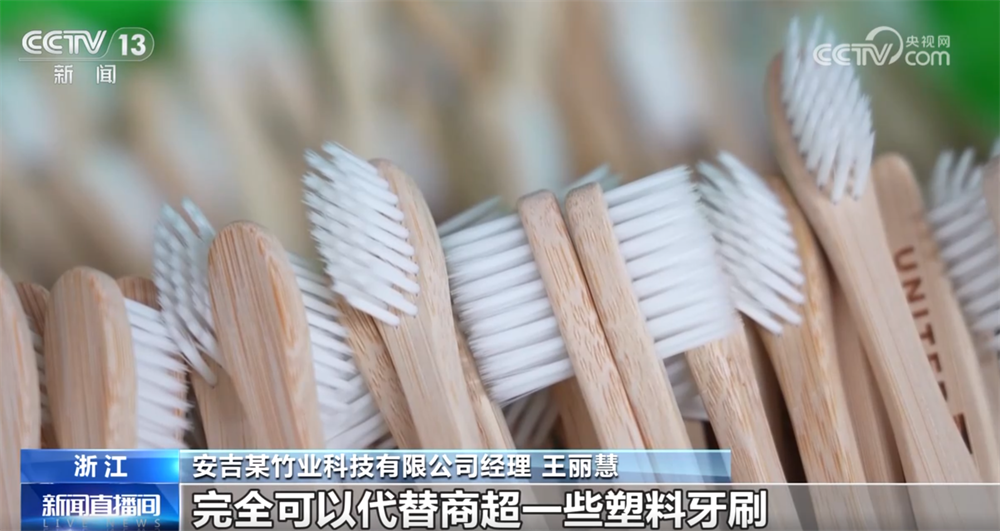
从牙刷到交通护栏 “以竹代塑”让竹子可以“百变”
Yang Shi Xin Wen Ke Hu Duan· 2025-07-30 01:53
Core Viewpoint - The article highlights the growing trend of using bamboo as a sustainable alternative to plastic, showcasing various applications and innovations in the bamboo industry in China [5][16]. Group 1: Bamboo Industry Development - Anji, Zhejiang, is recognized as "China's Bamboo Town," where bamboo toothbrush production lines operate efficiently, with 70% of products exported, particularly performing well in South Korea [4][5]. - The range of bamboo products has expanded significantly, now including furniture, utensils, industrial materials, and construction supplies, with the recent update of the "List of Major Products for Bamboo to Replace Plastic" increasing product categories from 17 to 25 [5][16]. - Technological advancements are enhancing product performance and expanding the application scenarios for bamboo products, with a focus on replacing plastic [7][13]. Group 2: Innovations and Applications - In Jiangxi, bamboo is processed into high-quality boards for various uses, including cutting boards and flooring, while also efficiently utilizing bamboo processing waste to produce high-value bamboo particle boards [9][11]. - The development of "bamboo steel," a composite material made primarily from bamboo, demonstrates significant strength advantages over traditional materials, with applications in infrastructure such as highway guardrails [13][15]. - The carbon footprint of bamboo-based products is notably lower, with "bamboo steel" having a negative carbon emission of 43 kg per ton produced, contrasting sharply with traditional steel production [15]. Group 3: Cost Reduction and Market Expansion - Efforts to reduce costs in bamboo production include the introduction of efficient transportation systems for bamboo, significantly increasing transport capacity and reducing costs to 160 yuan per ton [18][20]. - Collaborations with brands and the development of bamboo-themed tourism initiatives are being explored to enhance market acceptance and expand the application of bamboo products in the cultural and tourism sectors [20][22]. - The "Three-Year Action Plan to Accelerate the Development of Bamboo to Replace Plastic" aims to strengthen sales channels and promote bamboo products with high market potential and public acceptance [22].
“小竹子”发挥“大作用” “以竹代塑”助力经济社会发展全面绿色转型
Yang Shi Wang· 2025-07-29 06:46
Core Viewpoint - In 2023, China launched a three-year action plan to accelerate the development of the "bamboo instead of plastic" initiative, aiming to establish a preliminary industrial system by 2025 [1] Industry Development - The bamboo industry in China is diversifying, with applications ranging from traditional tools and household items to innovative products like bamboo musical instruments [3] - Bamboo products now include furniture, tableware, industrial materials, and construction materials, with the product catalog expanding from 17 to 25 categories in the latest version [5] Technological Advancements - Key technologies are being developed to enhance product performance in the bamboo industry, such as the transformation of bamboo into flat boards for various applications [7] - The production of high-value bamboo particle boards from processing waste is being implemented, utilizing approximately 500,000 tons of bamboo processing by-products annually [9][11] - Innovations like "bamboo steel," which has five times the strength of regular carbon steel, are being introduced for use in infrastructure [13] Environmental Impact - Bamboo steel has a negative carbon emission of 43 kg per ton produced, presenting a sustainable alternative to traditional steel [15] - The establishment of a specialized standard system for "bamboo instead of plastic" products is set to be released in September 2024, covering various categories [15] Cost Reduction and Market Expansion - Efforts are being made to reduce costs and enhance market acceptance of bamboo products, including the introduction of efficient transportation systems for bamboo [16][18] - Collaborations with brands and the development of tourism-related bamboo products are being explored to expand the market [20] - The action plan emphasizes the importance of government and enterprise dialogue to promote bamboo products effectively [22]
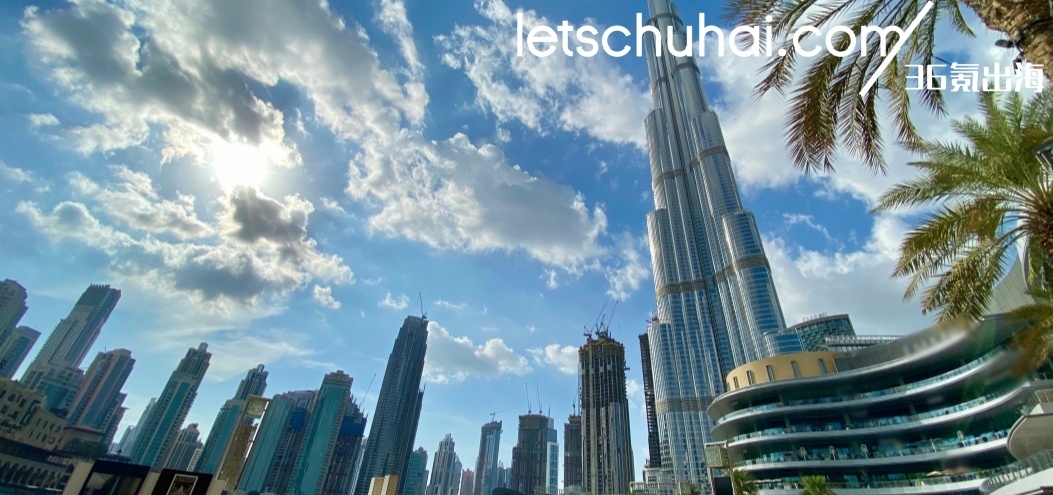
36氪出海·中东|迪拜不可错过的绿色商业机会
3 6 Ke· 2025-05-13 09:56
Core Viewpoint - The UAE has launched ambitious plans, including the "2030 Green Agenda," aimed at driving economic growth while contributing to global sustainable development [3][4]. Group 1: Sustainable Development Initiatives - The "2030 Green Agenda" is central to the UAE's long-term strategy, focusing on transforming sustainable practices into economic foundations [4]. - Dubai has been recognized as the "cleanest city in the world" for five consecutive years in the Global Power City Index [4]. - The UAE ranks highly in five environmental performance indicators in the 2024 Environmental Performance Index [4]. Group 2: Business Opportunities in Sustainability - There is a growing consumer awareness regarding environmental responsibility, creating a golden opportunity for green entrepreneurs [5]. - The demand for sustainable products and services is on the rise, making Dubai an ideal starting point for green businesses [5]. Group 3: Promising Green Business Sectors - Sustainable fashion is a burgeoning market, with opportunities in designing and producing clothing from organic materials [6]. - There is an increasing demand for sustainability consulting services as more companies aim to adopt eco-friendly practices [7]. - The market for reusable products is expanding, addressing the significant issue of plastic waste [8]. - The ecological tourism market is projected to grow from $248 billion in 2024 to $945 billion by 2034, indicating a strong interest in sustainable travel [9]. - There is a rising need for biodegradable packaging solutions as businesses strive for sustainability [11]. - The demand for eco-friendly toys made from sustainable materials is increasing among environmentally conscious parents [12]. - The market for green workshops and courses is expanding, providing education on sustainable living practices [13]. Group 4: Starting a Green Business in Dubai - Establishing an eco-friendly business in Dubai is facilitated by the IFZA free zone, which offers industry insights and resources [14]. - The registration process is straightforward, with low costs and no requirement for a physical office [15].