精油喷雾

Search documents
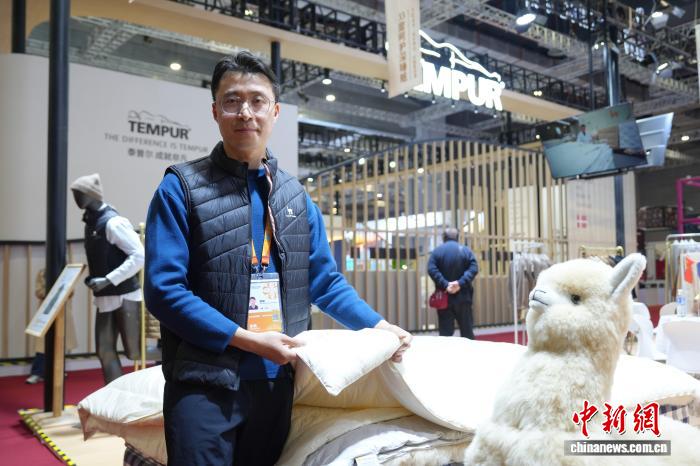
“洋土特产”抢滩进博会,越来越有“中国味”
Zhong Guo Xin Wen Wang· 2025-11-05 05:19
Group 1: New Zealand Alpaca Products - The company has participated in the China International Import Expo (CIIE) for six consecutive years, achieving an average annual sales growth of over 100% for its alpaca products exported to China [1] - The exhibition space has expanded from 9 square meters to 120 square meters, indicating significant growth alongside the CIIE [1] - Currently, sales in the Chinese market account for over 60% of the company's global sales, making it a crucial market for the New Zealand alpaca fiber industry [3] Group 2: Australian Essential Oils and Fragrance Products - The company has developed essential oil and fragrance products tailored to the preferences of Chinese consumers, focusing on stress relief and sleep assistance [3] - The design of the new spray products aligns better with the habits of Chinese consumers, moving away from traditional application methods [3] Group 3: Colombian Chocolate Products - The Colombian brand has introduced chocolate products that combine chocolate with dried fruits, catering to the preferences of Chinese consumers who enjoy exploring new flavors [5] - The company aims to develop more health-oriented products suitable for the Chinese market, reflecting the local consumers' emphasis on health [5]

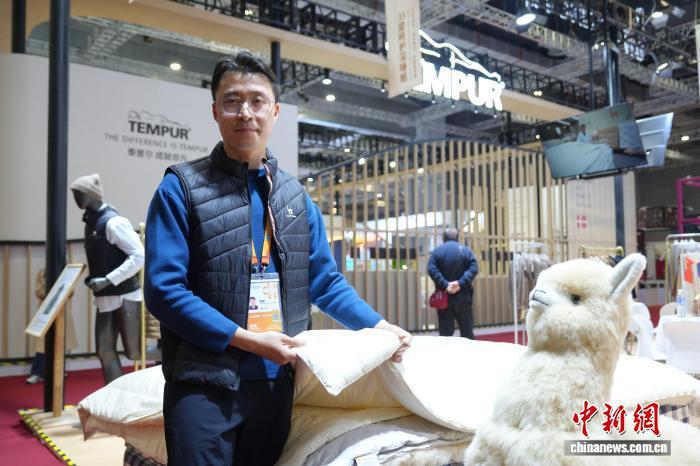
(第八届进博会)“洋土特产”抢滩进博会 越来越有“中国味”
Zhong Guo Xin Wen Wang· 2025-11-05 04:34
Group 1: Market Trends and Growth - The New Zealand alpaca fiber industry has seen an average annual sales growth of over 100% in China over the past six years, with the company's exhibition space expanding from 9 square meters to 120 square meters at the China International Import Expo (CIIE) [1] - The Chinese market now accounts for over 60% of the company's global sales, indicating its significance as a key market for New Zealand alpaca products [2] Group 2: Product Adaptation and Consumer Preferences - Companies are increasingly adapting their products to meet the preferences of Chinese consumers, such as developing lighter and more breathable alpaca blankets [2] - The introduction of essential oil sprays, designed to cater to the lifestyle habits of young Chinese consumers, reflects a shift towards products that emphasize natural and healthy attributes [2] - Colombian chocolate brands are also tailoring their offerings to the Chinese market by incorporating local flavors, such as dried fruits, into their chocolate products, which aligns with the health-conscious trends among Chinese consumers [4]
椿山闭店,中低端香水的出路在哪
Bei Jing Shang Bao· 2025-04-16 13:26
Core Viewpoint - The closure of the domestic perfume brand Chunshan reflects the challenges faced by mid-to-low-end perfume brands in a market increasingly dominated by high-end players [1][6][11] Group 1: Market Dynamics - The perfume and fragrance sector is a growth area for many beauty brands, including major players like L'Oréal and Estée Lauder, who are actively expanding in this space [1][8] - Despite the overall growth in the perfume market, mid-to-low-end brands are experiencing frequent closures due to their short establishment periods and insufficient funding [1][6] - The Chinese perfume market is projected to grow at a compound annual growth rate (CAGR) of 14.73% from 2018 to 2025, significantly outpacing the global growth rate of 3.01% [8] Group 2: Brand Challenges - Chunshan announced its closure due to strategic adjustments, highlighting the difficulties faced by mid-to-low-end brands in transitioning limited funds into effective user experiences [1][4] - Other brands like Xizilinglong and Plus Rabbit have also ceased operations, indicating a trend among mid-to-low-end brands struggling to survive in a competitive market [6][7] - The need for brand and cultural development in the perfume industry is emphasized, as these elements are crucial for consumer recognition and long-term success [9][10] Group 3: Strategic Recommendations - Experts suggest that mid-to-low-end perfume brands should focus less on online traffic marketing and more on niche market user scenarios to convert limited marketing investments into enhanced user experiences [11]