
糕饼

Search documents
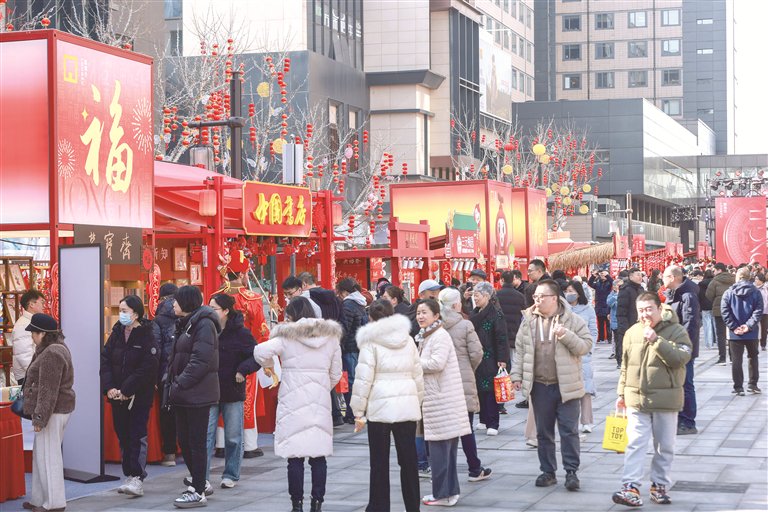
深度关注丨激活年味经济新动能
Zhong Yang Ji Wei Guo Jia Jian Wei Wang Zhan· 2026-02-14 01:08
Core Viewpoint - The article highlights the vibrant growth of the "New Year goods economy" in China, showcasing how traditional customs and modern consumer trends are merging to create a dynamic market environment during the Spring Festival season [3][15]. Group 1: Consumer Trends - The demand for New Year goods is evolving, with consumers increasingly favoring products that emphasize quality, local characteristics, and health attributes [3][4]. - There is a shift from merely purchasing goods to seeking immersive experiences and cultural engagement during the shopping process [4][5]. - Convenience is becoming a priority, with consumers preferring one-stop shopping experiences that simplify the purchasing process [3][4]. Group 2: Market Dynamics - The New Year goods market is characterized by a blend of traditional and innovative products, with local specialties gaining popularity among consumers [5][6]. - The integration of online and offline sales channels is enhancing market reach, with live streaming and interactive experiences driving consumer engagement [8][9]. - Local governments and businesses are collaborating to ensure a stable supply and vibrant market atmosphere, including measures like extended store hours and promotional activities [6][10]. Group 3: Economic Impact - The New Year goods economy is seen as a crucial driver for domestic consumption, contributing significantly to economic growth and stability [10][15]. - The article notes that by 2025, domestic demand is expected to account for over 67% of China's economic growth, with consumption alone contributing 52% [10]. - The expansion of the New Year goods concept reflects broader trends in consumer behavior, moving from basic needs to a focus on quality and emotional value [15][16]. Group 4: Policy and Regulation - Local authorities are implementing measures to ensure fair distribution of temporary market stalls, enhancing transparency and market vitality [12][13]. - The issuance of consumer vouchers and promotional activities is being closely monitored to ensure fairness and effectiveness in stimulating spending [14][15]. - Regulatory bodies are actively involved in overseeing food safety and pricing practices during the festive season to protect consumer interests [11][16].

宝岛中秋说团圆
Xin Hua Wang· 2025-10-09 06:18
Group 1 - The Mid-Autumn Festival is a significant traditional holiday in Taiwan, second only to the Spring Festival, characterized by family gatherings, barbecues, and mooncake consumption [1][2] - The festival includes unique customs such as moon viewing, eating mooncakes, barbecuing, and peeling pomelos, with the latter symbolizing blessings and protection from the moon [1][2] - The popularity of barbecuing during the festival in Taiwan can be traced back to a successful advertisement in the 1980s, which popularized the practice across the island [1] Group 2 - Local food artisans play a crucial role in preserving and innovating traditional festival foods, with family-run businesses like Er He Zhen Bakery exemplifying this dedication [2] - The transformation of professions, such as engineers becoming food artisans, highlights the passion for maintaining traditional flavors while appealing to younger consumers [2] - Taiwanese folk customs have evolved from their origins in mainland China, developing unique local characteristics that reflect both historical and cultural significance [2] Group 3 - The celebration of traditional festivals in Taiwan reflects a deep appreciation for Chinese historical culture, with events like the Confucius birthday commemorations and the Dragon Boat Festival being widely observed [3] - Despite travel restrictions, over 1.5 million Taiwanese visited mainland China in the first half of the year, indicating a strong desire to connect with cultural heritage [3] - The National Palace Museum in Taipei is hosting special exhibitions to celebrate its 100th anniversary, showcasing significant cultural artifacts that resonate with the public [3][4] Group 4 - Cultural enthusiasts in Taiwan express a strong connection to traditional literature and poetry, emphasizing the enduring desire for family reunions and shared experiences across the Taiwan Strait [5]