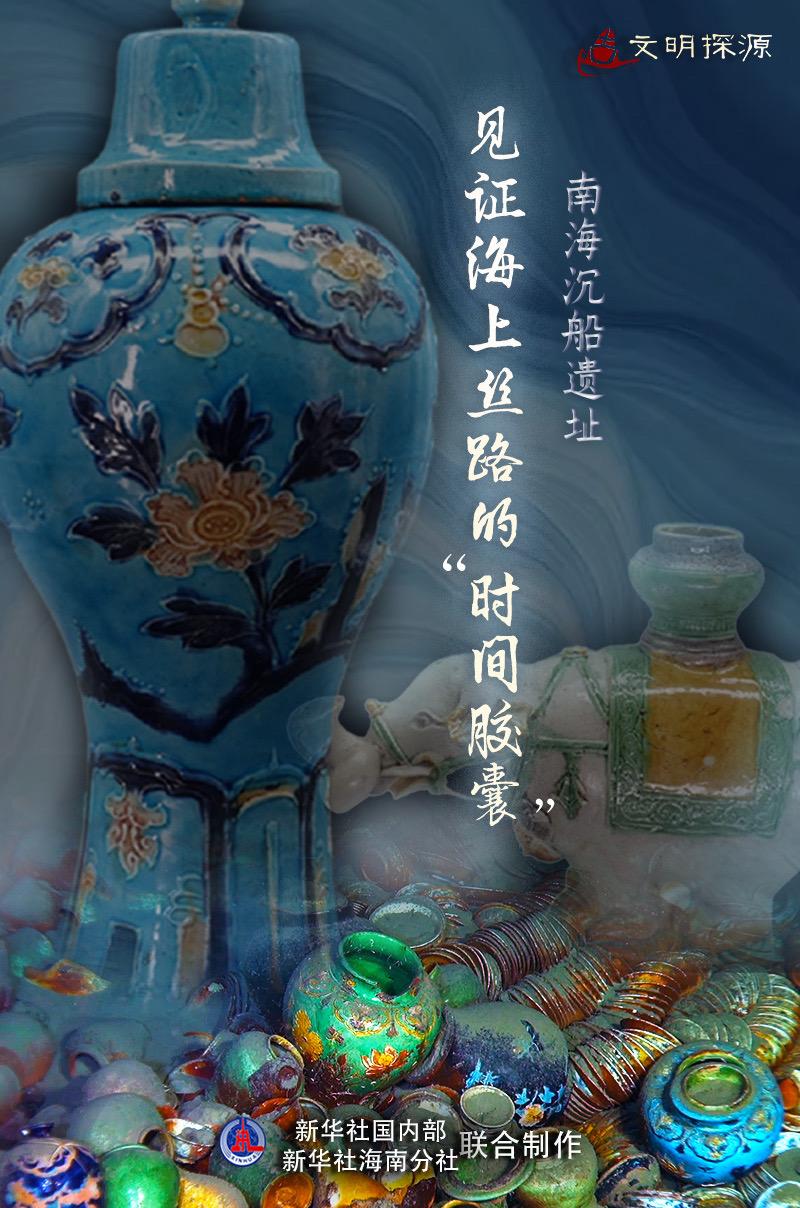
素三彩象形执壶

Search documents
北京大运河博物馆金牌讲解员:希望观众都能满载而归
Xin Lang Cai Jing· 2026-02-22 06:37
Core Viewpoint - The article highlights the "Going to Sea" exhibition at the Beijing Grand Canal Museum, focusing on deep-sea archaeological discoveries related to the Maritime Silk Road, particularly the Ming Dynasty treasure ships and their porcelain cargo [1][3]. Group 1: Exhibition Overview - The exhibition features artifacts from the South China Sea, including two shipwrecks discovered between Hainan Island and the Xisha Islands, with one ship carrying porcelain intended for overseas trade [3][5]. - The exhibition aims to connect visitors with the historical significance of porcelain as a cultural symbol of China and its role in maritime trade [3][5]. Group 2: Artifacts and Cultural Significance - Notable artifacts include a large porcelain jar adorned with gold and intricate designs, symbolizing wealth and good fortune, showcasing the craftsmanship of the era [5][7]. - The exhibition also features a blue-and-white plate depicting a dragon and a pair of colorful elephant-shaped vessels, representing the fusion of Chinese aesthetics and foreign cultural elements [7][9]. Group 3: Educational Approach - The exhibition is led by a knowledgeable guide who engages visitors with interactive storytelling, enhancing their understanding of the artifacts and their historical context [5][9]. - The guide emphasizes the importance of cultural exchange between China and Europe through the history of export porcelain, particularly during the Ming and Qing dynasties [9].

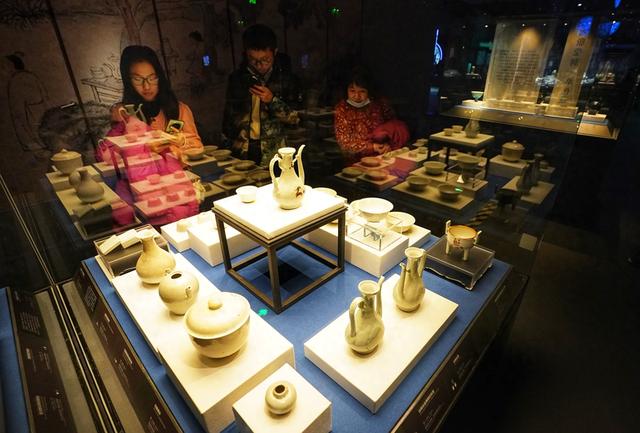
377组件文物!两艘海下1500米明代沉船“驶”进“运河之舟”
Yang Shi Xin Wen· 2025-12-17 19:42
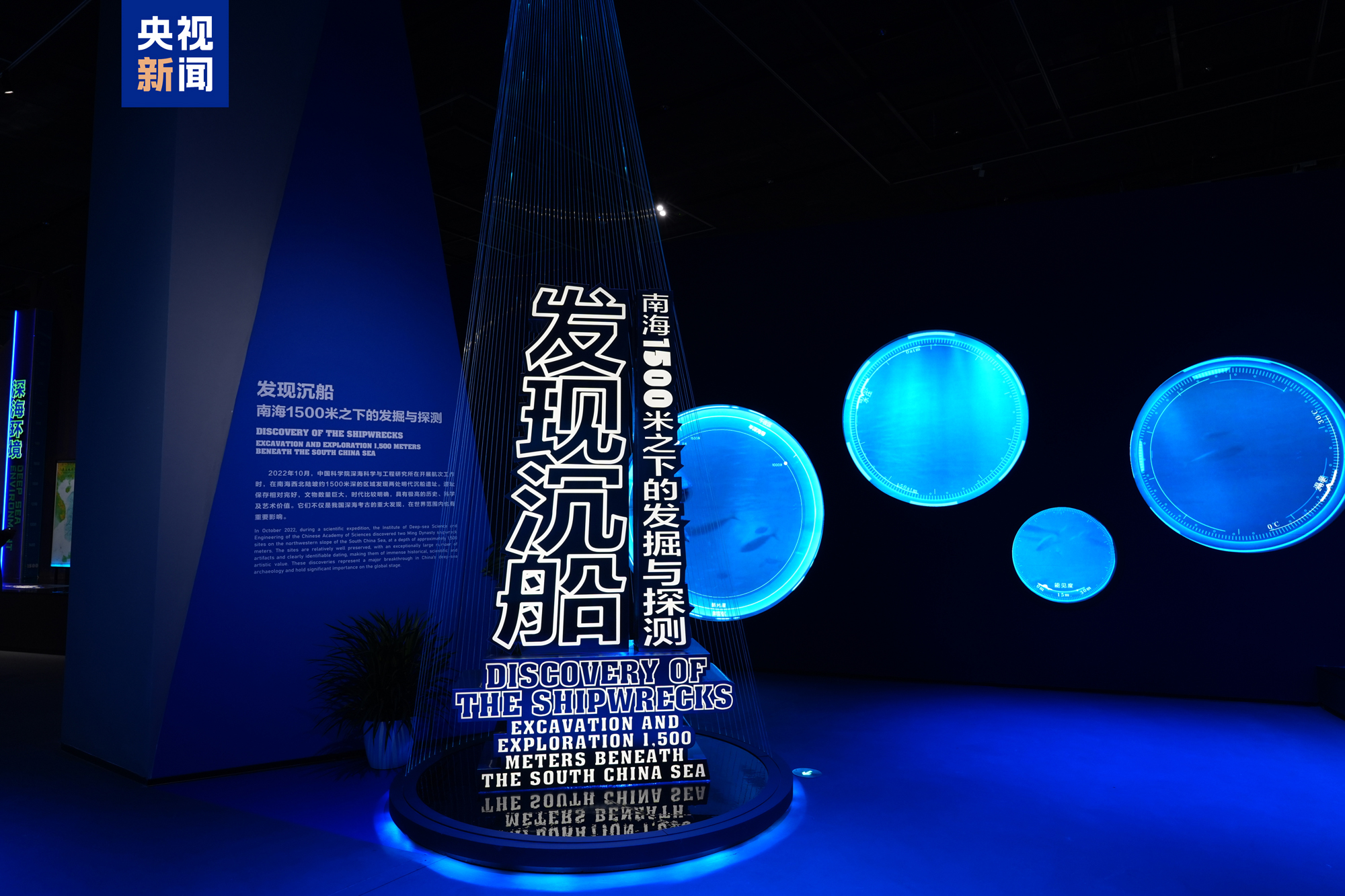
Core Viewpoint - The exhibition "Sailing Towards the Sea - Special Exhibition of Deep-sea Archaeology in the Northwest Slope of the South China Sea" showcases a significant collection of Ming Dynasty artifacts, highlighting the prosperous maritime trade during that period and marking a milestone in China's deep-sea archaeology [1][5]. Group 1: Exhibition Overview - The exhibition features 377 artifacts, including blue and white porcelain, enamelware, and colorful ceramics from the Ming Dynasty, which are well-preserved and hold high historical, scientific, and artistic value [1]. - Artifacts are sourced from two Ming Dynasty shipwrecks discovered in October 2022, located at a depth of approximately 1500 meters in the South China Sea, between Hainan Island and the Xisha Islands [5]. - The shipwrecks represent the first simultaneous discovery of ancient Chinese outbound and return maritime trade vessels, illustrating the two-way exchange of the Maritime Silk Road [5]. Group 2: Thematic Focus - The exhibition aims to present two main themes: the exchange and mutual learning along the Maritime Silk Road during the Ming Dynasty, particularly the production and export of porcelain, and the advancements in China's deep-sea archaeology [6]. - It utilizes artifacts, underwater imagery, and archaeological narratives to engage visitors and highlight the significance of deep-sea archaeology in promoting cultural exchange and understanding [6]. Group 3: Exhibition Structure - The exhibition is structured around three content sections: discovering the shipwrecks, exploring the shipwrecks, and uncovering the shipwrecks, showcasing the latest archaeological findings and integrating innovative display technologies for an immersive experience [6]. - The exhibition will run until March 15, 2026, allowing ample time for public engagement with these historical discoveries [22].
新时代中国调研行之文化中华·文明探源|南海沉船遗址:见证海上丝路的“时间胶囊”
Xin Hua She· 2025-05-30 08:38
Core Insights - The article highlights the significant advancements in underwater archaeology in China, particularly focusing on the discoveries of ancient shipwrecks in the South China Sea, which provide valuable insights into maritime trade and cultural exchanges along the Maritime Silk Road [2][5][12]. Group 1: Historical Context - The establishment of the underwater archaeology research office in 1987 marked the beginning of China's underwater archaeology history [5]. - The discovery of the Huaguang Reef No. 1 shipwreck in 1996 revealed nearly 10,000 artifacts, showcasing the prosperity of maritime trade during the Southern Song Dynasty [5]. - Subsequent investigations of other shipwrecks have further clarified the historical outline of the ancient Maritime Silk Road [5][15]. Group 2: Technological Advancements - The transition from shallow to deep-sea archaeology has been facilitated by advancements in deep-sea equipment and marine exploration technology [5][12]. - The establishment of the "Deep Sea Archaeology Joint Laboratory" in Sanya in January 2018 signaled a new era for underwater archaeology in China [5]. Group 3: Recent Discoveries - In 2022, two ancient shipwrecks were discovered at a depth of approximately 1,500 meters in the South China Sea, marking the first discovery of Ming Dynasty shipwrecks at such depths [8][10]. - The core area of the No. 1 shipwreck is approximately 37 meters long and 11 meters wide, containing over 100,000 artifacts, while the No. 2 shipwreck is about 21 meters long and 8 meters wide, containing a significant amount of foreign wood [10][15]. Group 4: Cultural Significance - The artifacts retrieved from the shipwrecks, including various types of ceramics, illustrate the high level of ceramic manufacturing and maritime trade during the Ming Dynasty [15]. - The findings from the shipwrecks fill historical gaps regarding the return routes of maritime trade, providing compelling evidence of the two-way flow of goods along the Maritime Silk Road [15][17]. Group 5: Future Prospects - Ongoing archaeological investigations are expected to continue for years, with hopes of further uncovering the mysteries of the shipwrecks and enhancing public understanding of the ancient Maritime Silk Road [17].