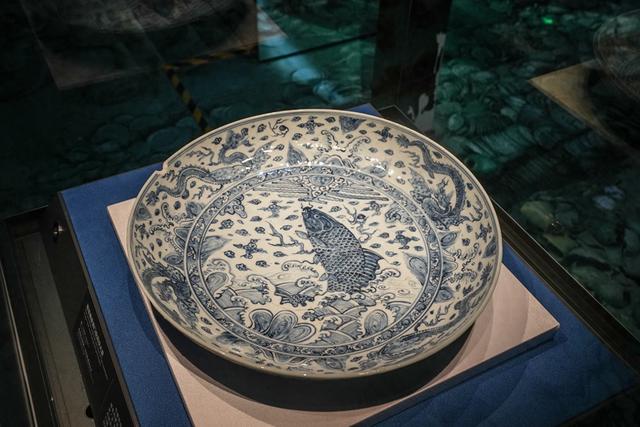
青花鱼跃龙门应龙纹大盘

Search documents
北京大运河博物馆金牌讲解员刘萍:“超时”守候让更多人爱上博物馆
Xin Lang Cai Jing· 2026-02-23 22:47
Core Viewpoint - The exhibition "Sailing Towards the Sea" at the Beijing Grand Canal Museum showcases the deep-sea archaeological discoveries related to the Maritime Silk Road, highlighting the cultural significance of porcelain as a representation of Chinese heritage [1][2] Group 1: Exhibition Highlights - The exhibition features artifacts from two shipwrecks discovered in the South China Sea, with one ship carrying porcelain intended for export [1] - A notable artifact is a large porcelain jar adorned with intricate designs, symbolizing wealth and happiness, which reflects the artistic craftsmanship of the Ming Dynasty [1] - The exhibition also includes a display of blue and white porcelain plates, illustrating the cultural exchange between China and Europe during the Ming and Qing Dynasties [1] Group 2: Educational Efforts - The lead guide, Liu Ping, has extensively prepared for the exhibition by consulting with curators and experts, condensing vast amounts of information into engaging narratives for visitors [2] - Liu Ping emphasizes the importance of interactive storytelling, posing questions to the audience to enhance their understanding and appreciation of the artifacts [2] - The guide's dedication to providing an enriching experience has contributed to increased visitor engagement and interest in the museum [2]
北京大运河博物馆金牌讲解员:希望观众都能满载而归
Xin Lang Cai Jing· 2026-02-22 06:37
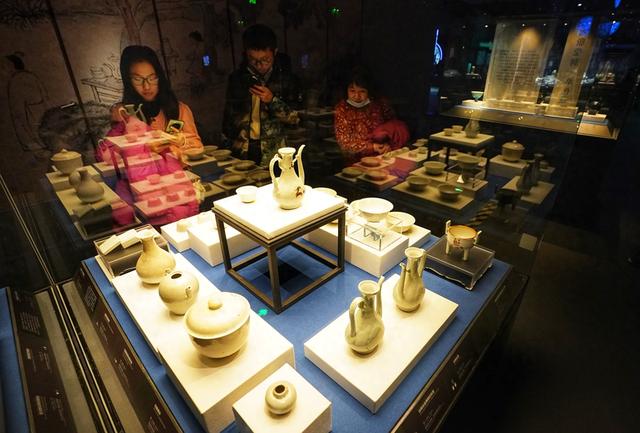
Core Viewpoint - The article highlights the "Going to Sea" exhibition at the Beijing Grand Canal Museum, focusing on deep-sea archaeological discoveries related to the Maritime Silk Road, particularly the Ming Dynasty treasure ships and their porcelain cargo [1][3]. Group 1: Exhibition Overview - The exhibition features artifacts from the South China Sea, including two shipwrecks discovered between Hainan Island and the Xisha Islands, with one ship carrying porcelain intended for overseas trade [3][5]. - The exhibition aims to connect visitors with the historical significance of porcelain as a cultural symbol of China and its role in maritime trade [3][5]. Group 2: Artifacts and Cultural Significance - Notable artifacts include a large porcelain jar adorned with gold and intricate designs, symbolizing wealth and good fortune, showcasing the craftsmanship of the era [5][7]. - The exhibition also features a blue-and-white plate depicting a dragon and a pair of colorful elephant-shaped vessels, representing the fusion of Chinese aesthetics and foreign cultural elements [7][9]. Group 3: Educational Approach - The exhibition is led by a knowledgeable guide who engages visitors with interactive storytelling, enhancing their understanding of the artifacts and their historical context [5][9]. - The guide emphasizes the importance of cultural exchange between China and Europe through the history of export porcelain, particularly during the Ming and Qing dynasties [9].

文化中国行丨我国沉船考古首次发现珐华器 生动见证古代“定制外销”
Yang Shi Xin Wen Ke Hu Duan· 2026-02-08 12:54
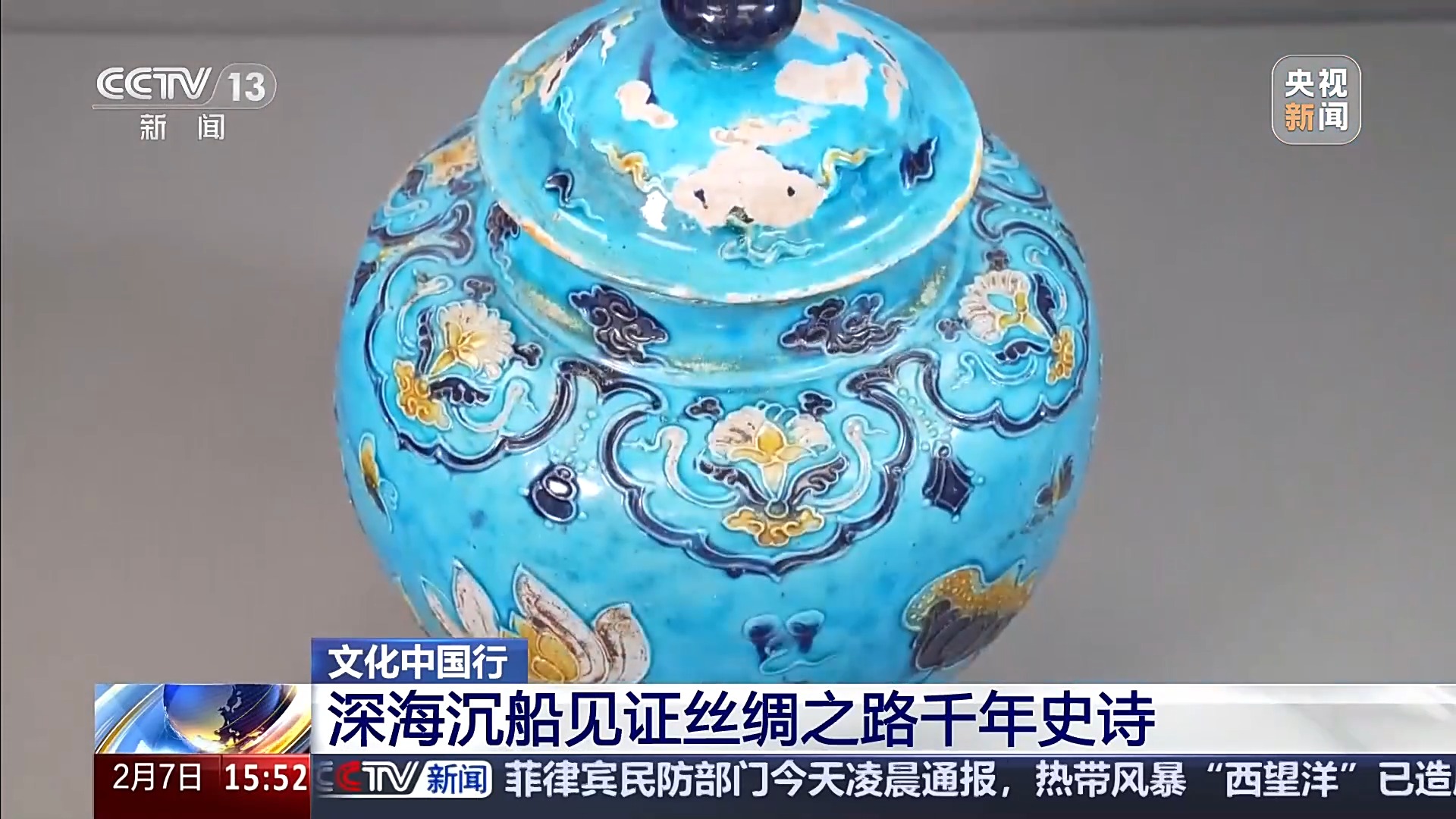
Core Viewpoint - The exhibition "Sailing Towards the Sea" at the Beijing Grand Canal Museum showcases artifacts from the Ming Dynasty, highlighting the cultural and commercial exchanges along the Maritime Silk Road, particularly through the discovery of two ancient shipwrecks in the South China Sea [1][8]. Group 1: Artifacts and Their Significance - The majority of the exhibits are ceramics, primarily featuring blue and white porcelain, Famille Rose, and monochrome glazes, with the Famille Rose being a first-time discovery in underwater archaeology in China [3][4]. - A notable artifact is a large Famille Rose jar from the Ming Zhengde period, which serves as a testament to ancient "customized exports" and showcases exquisite craftsmanship [3][4]. - The blue and white plate with auspicious dragon motifs exemplifies cultural symbolism and serves as an excellent medium for cultural export [6]. Group 2: Historical Context and Trade Insights - The two shipwrecks, Northwest Slope No. 1 and No. 2, represent the first simultaneous discovery of ancient Chinese outbound and inbound trade vessels, illustrating the bidirectional nature of maritime trade [8]. - The location of the shipwrecks is identified as a crucial route for ancient maritime trade in China, emphasizing the historical importance of these trade networks [10]. - The artifacts recovered from the deep sea not only reflect the Ming Dynasty's porcelain craftsmanship and overseas trade but also signify China's advanced capabilities in deep-sea archaeology [12].
探展日志|“大吉大利”的鱼盘
Xin Lang Cai Jing· 2025-12-31 00:21
Group 1 - The exhibition titled "Towards the Sea - Special Exhibition of Deep-sea Archaeology in the Northwest Slope of the South China Sea" will run until March 15, 2026 [1] - The exhibition is located at the Beijing Grand Canal Museum (East Hall of the Capital Museum), specifically in Exhibition Halls 1 and 2 [1] - Admission to the exhibition is free [1] Group 2 - The featured item includes a large plate with a design of a blue-and-white fish leaping over a dragon gate, showcasing vivid and layered decorative patterns [3] - The inner belly of the plate is adorned with a pterosaur pattern, while the fish and pterosaur are decorated with auspicious clouds, "ren" characters, and wave patterns [4] - The overall layout of the decorative elements is full and fluid, separated naturally by wave patterns [5] Group 3 - The plate features a dynamic depiction of a winged "Yinglong," which is rare among contemporary official kiln wares in China [6] - This plate is a typical example of export porcelain from the Ming Dynasty [6] - The plate has a diameter of 50 centimeters [7]
揭秘“深海考古” 展示“丝路盛景”
Xin Lang Cai Jing· 2025-12-22 16:17
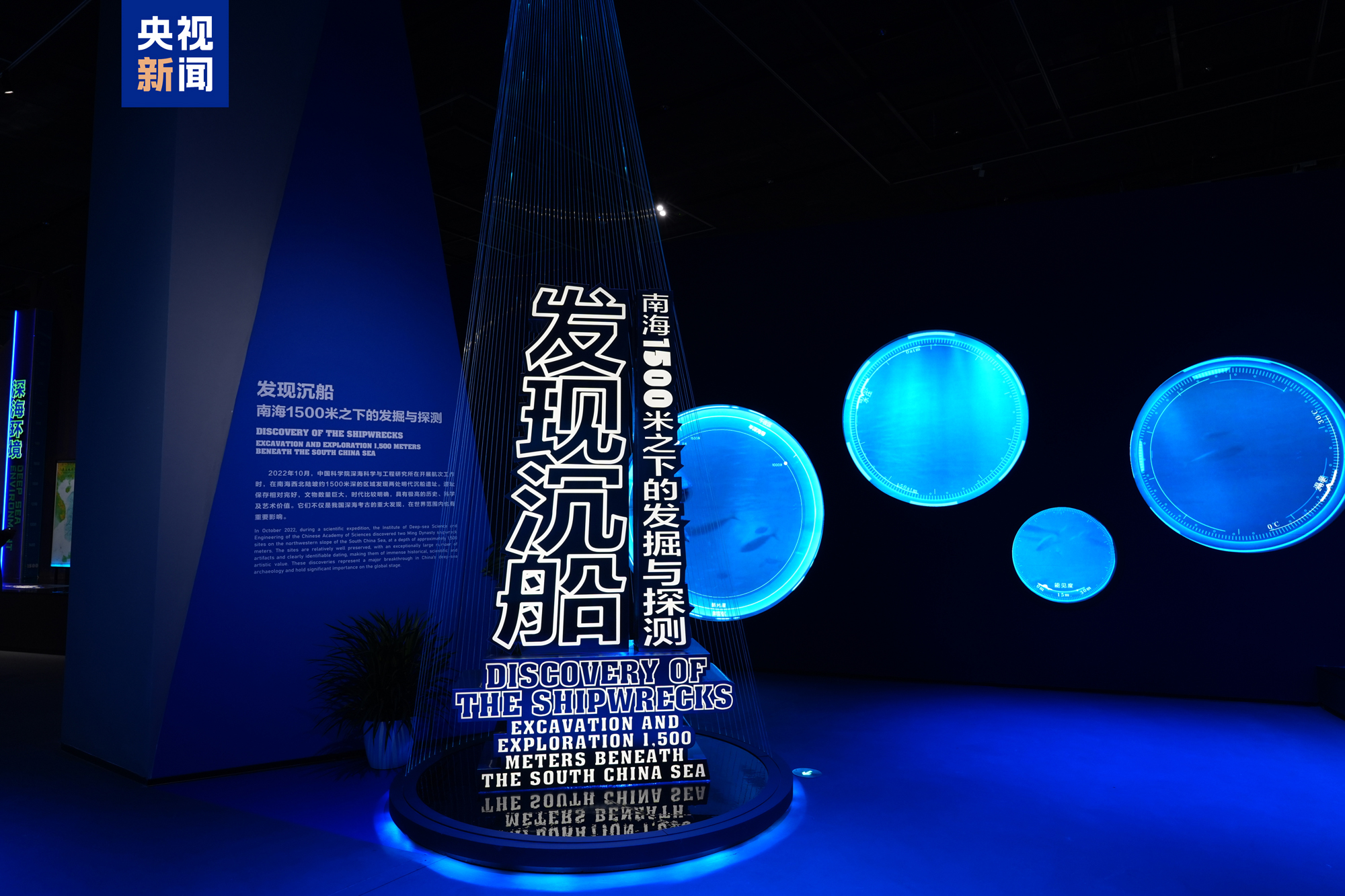
Core Viewpoint - The exhibition "Towards the Sea - Special Exhibition on Deep Sea Archaeology in the Northwest Slope of the South China Sea" showcases artifacts from two ancient shipwrecks, highlighting the prosperity of the Maritime Silk Road during the Ming Dynasty and the integration of deep-sea technology with archaeological work [4][5]. Group 1 - The exhibition features artifacts from the two shipwrecks discovered in October 2022, located between Hainan Island and the Xisha Islands, dating back to the Ming Dynasty [4]. - Artifacts on display include exquisite items such as blue-and-white porcelain and gold-inlaid pottery, which have captivated visitors [4]. - The exhibition is structured into three sections: "Discovering the Shipwreck," "Entering the Shipwreck," and "Unveiling the Shipwreck," providing an immersive experience of deep-sea archaeology [4]. Group 2 - A technology zone is included in the exhibition, showcasing models of deep-sea submersibles and lighting equipment, as well as demonstrating conservation processes for artifacts [5]. - The exhibition indirectly presents various deep-sea archaeological technologies, illustrating the successful integration of deep-sea science and archaeology [5]. - The exhibition is open to the public for free and will run until March 15, 2026 [5].
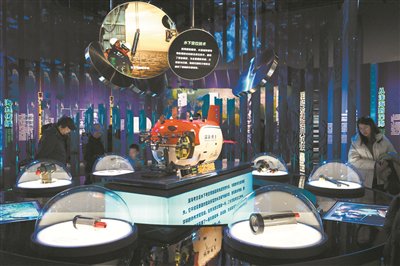
377组件文物!两艘海下1500米明代沉船“驶”进“运河之舟”
Yang Shi Xin Wen· 2025-12-17 19:42
Core Viewpoint - The exhibition "Sailing Towards the Sea - Special Exhibition of Deep-sea Archaeology in the Northwest Slope of the South China Sea" showcases a significant collection of Ming Dynasty artifacts, highlighting the prosperous maritime trade during that period and marking a milestone in China's deep-sea archaeology [1][5]. Group 1: Exhibition Overview - The exhibition features 377 artifacts, including blue and white porcelain, enamelware, and colorful ceramics from the Ming Dynasty, which are well-preserved and hold high historical, scientific, and artistic value [1]. - Artifacts are sourced from two Ming Dynasty shipwrecks discovered in October 2022, located at a depth of approximately 1500 meters in the South China Sea, between Hainan Island and the Xisha Islands [5]. - The shipwrecks represent the first simultaneous discovery of ancient Chinese outbound and return maritime trade vessels, illustrating the two-way exchange of the Maritime Silk Road [5]. Group 2: Thematic Focus - The exhibition aims to present two main themes: the exchange and mutual learning along the Maritime Silk Road during the Ming Dynasty, particularly the production and export of porcelain, and the advancements in China's deep-sea archaeology [6]. - It utilizes artifacts, underwater imagery, and archaeological narratives to engage visitors and highlight the significance of deep-sea archaeology in promoting cultural exchange and understanding [6]. Group 3: Exhibition Structure - The exhibition is structured around three content sections: discovering the shipwrecks, exploring the shipwrecks, and uncovering the shipwrecks, showcasing the latest archaeological findings and integrating innovative display technologies for an immersive experience [6]. - The exhibition will run until March 15, 2026, allowing ample time for public engagement with these historical discoveries [22].