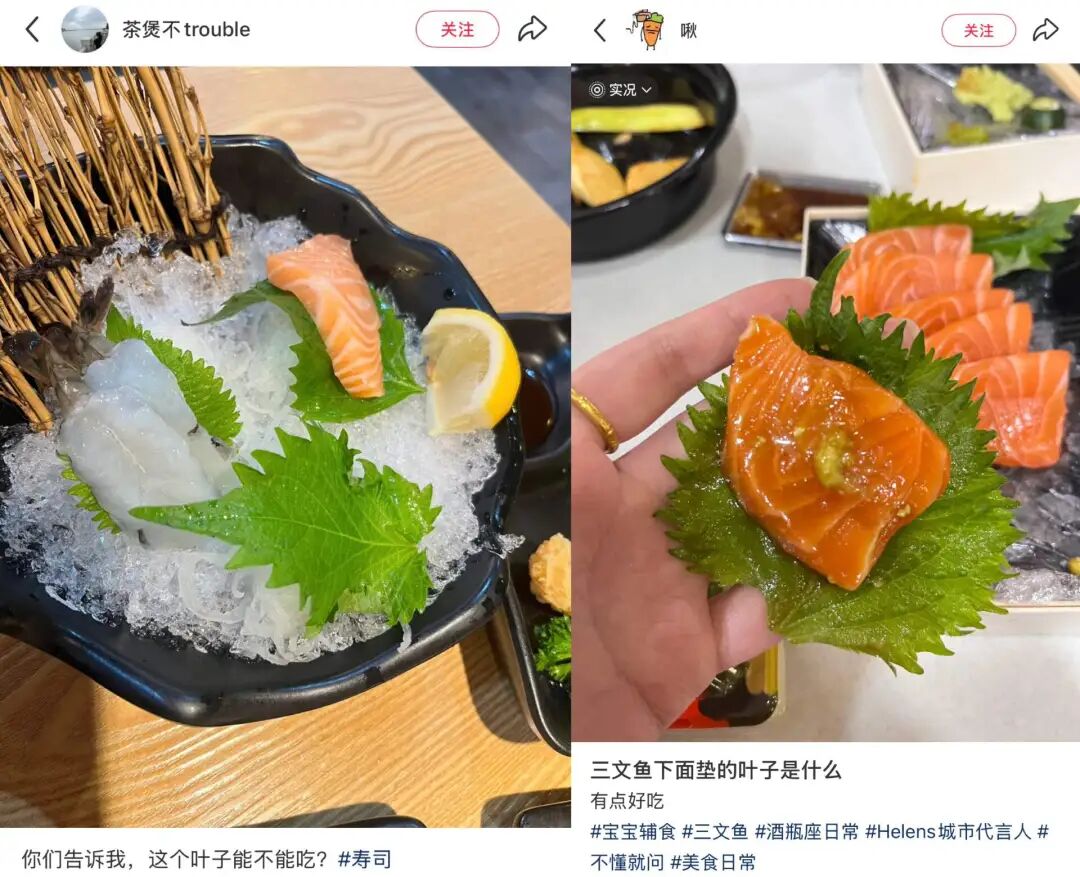
紫苏叶

Search documents
寿司郎盘子里为什么总有一片叶子?
3 6 Ke· 2026-01-07 13:00
Core Viewpoint - The green leaf commonly found under sushi and sashimi dishes in Japanese restaurants is identified as perilla leaf, which enhances the visual appeal and flavor of the dishes while also serving to neutralize fishy odors [16][30]. Group 1: Identification and Usage of Perilla Leaf - The green leaf, often seen in various sushi dishes, is confirmed to be perilla leaf, which is a member of the mint family and is used widely in Japanese cuisine [16][20]. - Perilla leaf is utilized not only as a decorative element but also as a flavor enhancer, particularly in dishes featuring raw seafood, where it helps to mitigate the fishy taste [27][30]. - High-end Japanese restaurants and sushi chains like Sushi Lang and Bin Sushi frequently incorporate perilla leaf in their presentations, indicating its popularity and standardization in the industry [3][11][9]. Group 2: Nutritional and Culinary Benefits - Perilla leaf is rich in flavor compounds and nutrients, including dietary fiber, potassium, calcium, and vitamins C and K, making it a healthy addition to meals [31]. - The unique aroma of perilla leaf, attributed to its various flavor compounds, enhances the overall taste experience of both sushi and grilled meat dishes, providing a refreshing contrast [27][30]. - Historical references indicate that perilla has been used in culinary practices for centuries, showcasing its long-standing significance in Asian cuisine [31].

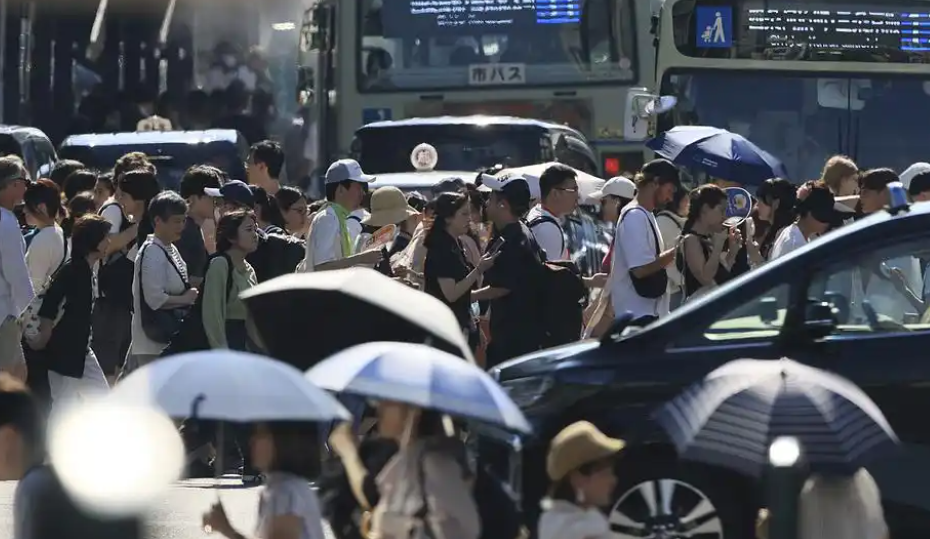
冰美式变温水!日韩“史上最热”夏季,韩国央行预警热浪推高CPI
Di Yi Cai Jing· 2025-09-04 05:08
Core Insights - Extreme weather has emerged as a significant uncertainty impacting the South Korean economy, with warnings from the Bank of Korea regarding its potential effects [1][5] - Both Japan and South Korea experienced record-high summer temperatures, with Japan's average temperature from June to August rising by 2.36 degrees Celsius compared to historical averages, marking the hottest summer on record [1][3] - The ongoing heatwave is expected to persist, with forecasts indicating continued high temperatures in both countries into September [1][3] Weather Impact - Japan's average temperature for June to August reached a record high, with Tokyo experiencing over 23 days of temperatures exceeding 35 degrees Celsius [3] - South Korea issued heatwave warnings in 182 out of 183 regions, with significant drought conditions reported in Gangwon Province, leading to severe water shortages [4] Economic Consequences - The extreme heat has adversely affected agricultural sectors in both countries, particularly rice production in Japan, where prices have surged by 90.7% year-on-year [6] - The Bank of Korea's report highlighted that climate disasters are pushing up prices and weakening growth potential, with estimates indicating a 0.3 percentage point increase in the Consumer Price Index (CPI) for the third quarter due to recent extreme weather [6]