
细胞配方库

Search documents
科学家构建“细胞配方库”,有助推动下一代免疫疗法开发
Huan Qiu Wang Zi Xun· 2026-01-16 01:21
Core Insights - A research team from Lund University in Sweden has developed a "cell recipe library" that significantly advances the field of immune cell reprogramming, enabling large-scale screening of the "recipes" needed to convert ordinary cells into specific immune cells, which could lead to new therapies for cancer and autoimmune diseases [2][3] Group 1: Technology Development - The team has created a technology platform that allows for the rapid testing of thousands of factor combinations to identify those that can drive the transformation of cells into target immune cell types [2] - Over four years, the team constructed a core toolbox containing more than 400 immune-related reprogramming factors, each tagged with a unique DNA barcode [2] Group 2: Application and Future Goals - The platform has already identified six different reprogramming schemes for various immune cells, including natural killer cells, which are crucial in anti-cancer immunity [3] - The future goal is to establish reprogramming schemes for all immune cell types, thereby accelerating the development of new therapies [3] Group 3: Implications for Treatment - This new technology overcomes the inefficiencies of previous methods that relied on trial and error, potentially expanding the treatment options available for patients, especially those for whom existing therapies are ineffective [4] - If the immune cell "recipe library" can be further expanded, it may demonstrate broader therapeutic potential beyond cancer, providing hope for a larger patient population [4]

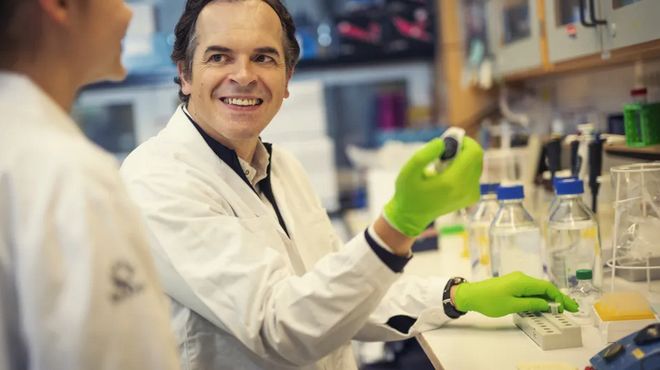
科学家构建“细胞配方库”
Jin Rong Jie· 2026-01-15 23:28
Core Insights - A research team from Lund University in Sweden has made significant advancements in the field of immune cell reprogramming by developing a "cell formula library" [1] - They created a technology platform capable of large-scale screening to identify the "formulas" needed to convert ordinary cells into specific immune cells, which will drive the development of next-generation immunotherapies [1] - This breakthrough offers new approaches for treating various diseases, including cancer and autoimmune disorders [1]