细胞重编程

Search documents
诺奖得主山中伸弥回顾并展望iPSC研究二十年:从发现到多样化应用
生物世界· 2026-03-24 08:18
Core Insights - The article discusses the evolution and significance of induced pluripotent stem cells (iPSCs) over the past two decades, highlighting their transformative impact on stem cell biology and regenerative medicine [2][3][5]. Group 1: Historical Context and Key Discoveries - The discovery of iPSCs by Shinya Yamanaka and Kazutoshi Takahashi in 2006, which demonstrated that four factors (Oct3/4, Sox2, c-Myc, and Klf4) could induce pluripotency in mouse fibroblasts, marked a pivotal moment in stem cell research [2][5]. - The transition from embryonic stem cell research to iPSC technology occurred rapidly, with successful generation of iPSCs from human cells within a year of the initial discovery [12]. - The understanding of reprogramming mechanisms has evolved, revealing that both elite and random models contribute to the efficiency of iPSC generation [14][15]. Group 2: Mechanisms of Reprogramming - Reprogramming involves a complex interplay of transcriptional reorganization, epigenetic remodeling, metabolic reconfiguration, and cellular structural changes [18][19]. - Initial changes post-OSKM induction include the loss of somatic cell identity and the onset of a mesenchymal-to-epithelial transition (MET), which is crucial for achieving pluripotency [18]. - The activation of core pluripotency factors like Nanog, Oct4, Sox2, and Esrrb stabilizes the pluripotent state, marking a critical point in the reprogramming process [19]. Group 3: Medical Applications and Challenges - iPSCs hold immense potential in regenerative medicine, but early concerns regarding safety, reproducibility, and genomic integrity posed significant challenges [23][24]. - The development of non-integrating systems for iPSC generation has mitigated risks associated with genomic integration, enhancing quality control and scalability [23]. - Advances in differentiation protocols have improved the generation of mature cell types from iPSCs, enabling their use in various therapeutic applications [24][27]. Group 4: Clinical Trials and Future Directions - Early clinical trials using iPSC-derived cells have shown promise in treating conditions like age-related macular degeneration and Parkinson's disease, demonstrating safety and feasibility [27][28]. - The establishment of human leukocyte antigen-matched iPSC banks opens avenues for scalable allogeneic therapies, addressing the challenges of autologous treatments [28]. - Ethical considerations surrounding iPSC technology, including consent and privacy issues, are increasingly important as the field advances [29]. Group 5: Broader Implications and Future Prospects - iPSCs are not only pivotal in regenerative medicine but also play a significant role in disease modeling and drug discovery, allowing for the study of diseases previously inaccessible due to the difficulty of obtaining human tissues [30][31]. - The integration of iPSCs with CRISPR technology has revolutionized causal inference in disease mechanisms, enabling precise identification of genetic contributions to various conditions [32]. - The future of iPSC research is poised for transformative developments through the integration of artificial intelligence and synthetic biology, potentially reshaping our understanding of cell identity and fate [40][41].


科学家构建“细胞配方库”,有助推动下一代免疫疗法开发
Huan Qiu Wang Zi Xun· 2026-01-16 01:21
Core Insights - A research team from Lund University in Sweden has developed a "cell recipe library" that significantly advances the field of immune cell reprogramming, enabling large-scale screening of the "recipes" needed to convert ordinary cells into specific immune cells, which could lead to new therapies for cancer and autoimmune diseases [2][3] Group 1: Technology Development - The team has created a technology platform that allows for the rapid testing of thousands of factor combinations to identify those that can drive the transformation of cells into target immune cell types [2] - Over four years, the team constructed a core toolbox containing more than 400 immune-related reprogramming factors, each tagged with a unique DNA barcode [2] Group 2: Application and Future Goals - The platform has already identified six different reprogramming schemes for various immune cells, including natural killer cells, which are crucial in anti-cancer immunity [3] - The future goal is to establish reprogramming schemes for all immune cell types, thereby accelerating the development of new therapies [3] Group 3: Implications for Treatment - This new technology overcomes the inefficiencies of previous methods that relied on trial and error, potentially expanding the treatment options available for patients, especially those for whom existing therapies are ineffective [4] - If the immune cell "recipe library" can be further expanded, it may demonstrate broader therapeutic potential beyond cancer, providing hope for a larger patient population [4]
84.9亿美元资本锚定长寿科技!赛立复力活元让高效抗衰触手可及
Zhong Guo Shi Pin Wang· 2025-10-27 07:53
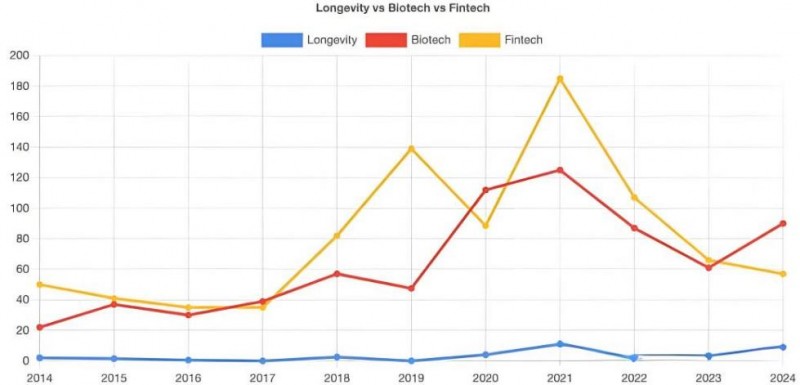
Core Insights - The longevity sector is becoming increasingly attractive to global capital, with funding reaching $8.49 billion in the past year, doubling from the previous year [1] - Investors are shifting focus from unrealistic "immortality myths" to projects that can deliver clinical results within 12 to 24 months [1][5] Investment Trends - The 2024 Longevity Investment Report indicates a significant increase in funding for longevity-related projects, reflecting a more rational investment approach [1][5] - Notable investments include Altos Labs focusing on "cellular reprogramming" and Sam Altman investing in Retro Biosciences for "autophagy reboot" drugs [3][5] Scientific Insights - Aging is increasingly viewed as an intervenable process rather than an uncontrollable phenomenon, with NAD+ levels and oxidative stress identified as key factors [5][7] - Research highlights that NAD+ is crucial for energy metabolism and cellular repair, with levels declining significantly after the age of 30 [5][7] Product Development - CELFULL has developed a stable form of NADH, which can directly enhance NAD+ levels and combat oxidative stress, overcoming previous challenges in stability and absorption [10][12] - CELFULL NADH is reported to be four times more effective than traditional NMN supplements, providing a practical solution for aging intervention [12][13] Market Position - CELFULL NADH has gained significant market traction, with over 100,000 users reporting noticeable benefits, and it has maintained the top sales position in its category for over five years [16] - The product aims to make anti-aging solutions accessible to a broader audience, moving beyond high-cost research projects to practical applications for everyday consumers [18]
研判2025!中国细胞重编程行业产业链、市场规模及重点企业分析:中国细胞重编程行业快速发展,技术创新推动全球进步[图]
Chan Ye Xin Xi Wang· 2025-10-14 00:51
Core Insights - The Chinese cell reprogramming industry is rapidly developing and is becoming a significant force in the global cell reprogramming field, with a projected market size of approximately 857 million yuan in 2024, representing a year-on-year growth of 37.78% [1][7] - A breakthrough by Deng Hongkui's team in 2025 will reduce the time required to induce somatic cells into pluripotent stem cells from 30 days to 10 days, while increasing the induction efficiency by 20 times, enhancing the efficiency, quality, and cost-effectiveness of cell preparation for clinical applications [1][7] Industry Overview - Cell reprogramming involves altering gene expression patterns without changing the genetic sequence through epigenetic modifications, transcription factor regulation, or chemical interventions, allowing cells to revert to a pluripotent state [2] - The industry has evolved through three main stages: exploration, breakthrough, and transformation, starting from the 1950s with nuclear transfer research and leading to significant advancements in the 21st century, including the discovery of the OSKM factors and the development of chemical reprogramming techniques [3] Market Size - The Chinese cell reprogramming market is expected to reach approximately 857 million yuan in 2024, with a growth rate of 37.78% compared to the previous year [7][8] Key Companies - Notable companies in the industry include Zhongyuan Xiehe (600645), Nanhua Biological (000504), and Heyuan Biotechnology (688238), among others, which are actively involved in the development and application of cell reprogramming technologies [2][8] Industry Development Trends 1. **Technological Breakthroughs and Clinical Applications**: The rapid chemical reprogramming system developed by Deng Hongkui's team is expected to significantly enhance the development of clinical-grade products such as pancreatic and cardiac cells [10] 2. **Policy Framework and Regulation**: The establishment of a comprehensive policy framework by the national government aims to standardize research and clinical practices, with pilot policies in regions like Hainan and Shenzhen facilitating advanced cell therapy technologies [11][12] 3. **Industry Chain Integration and International Cooperation**: The industry is witnessing increased collaboration across the supply chain, with domestic companies enhancing the localization of key technologies and international partnerships fostering product development and technological exchange [13]

破译生命密码、挑战衰老极限……AI如何重塑未来人类健康
Ke Ji Ri Bao· 2025-09-18 00:00
Core Insights - The article discusses the transformative role of artificial intelligence (AI) in understanding and manipulating biological processes, particularly in the context of human health and disease management [2][4][6]. Group 1: AI in Biological Research - AI is redefining biology by interpreting protein sequences as a language, enabling the identification of patterns within amino acid chains [2]. - Companies like Dyno are utilizing AI to design viral capsids for safer and more efficient gene therapies, potentially leading to personalized treatments for rare diseases [2]. - Wake Bio is developing technology for whole-body cryopreservation using machine learning to create cryoprotectants that maintain cell integrity during freezing and thawing [3]. Group 2: Accelerating Scientific Discovery - The organization "Future House" aims to accelerate scientific research through AI agents that can autonomously analyze biological data, generate hypotheses, and validate them through digital experiments [4][5]. - Their AI models can significantly reduce the time and cost associated with scientific research, exemplified by the identification of a new candidate drug for age-related macular degeneration [4]. Group 3: Aging and Health - Retro Bio is focused on using AI to understand the aging process, particularly how proteins function and interact, which is crucial for addressing age-related diseases [6]. - The collaboration with OpenAI has led to advancements in cellular reprogramming techniques, potentially allowing for biological rejuvenation and the reversal of aging effects [6]. Group 4: Challenges and Future Outlook - The integration of AI in medicine raises concerns about the "black box" nature of AI decision-making, which can create unease among stakeholders [6]. - As AI continues to permeate the medical field, it is expected to become an essential tool for extending life and improving health outcomes, shifting perceptions from skepticism to acceptance [6].
新加坡国立大学李荣辉课题组招聘公告
生物世界· 2025-07-02 08:03
Core Viewpoint - The article announces the recruitment of postdoctoral researchers and PhD students by Dr. Ronghui Li's research group at the National University of Singapore, focusing on somatic reprogramming and stem cell development for drug screening and regenerative medicine [2][4]. Group 1: Research Focus - The main research directions include the simulation of organoid or embryonic development using stem cells to produce functional tissues or cells [3] - Editing and precise regulation of multicellular organoid or embryonic systems [3] - Cell reprogramming to restore and enhance engineered cell functions for improved therapeutic applications [3] Group 2: Recruitment Details - The group is open to recruiting postdoctoral researchers, PhD students, and outstanding undergraduate or intern candidates, including those funded by CSC [4] - Interested candidates are encouraged to send their resumes to the provided email address, with specific subject line instructions [4] - The article also mentions the establishment of professional communication groups to facilitate research dissemination and collaboration [7]