
绊脚石

Search documents
方寸“绊脚石”,铺就反思路(环球走笔)
Ren Min Ri Bao· 2026-02-12 23:45
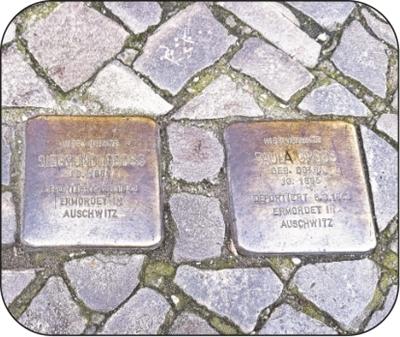
Core Idea - The article discusses the "Stolpersteine" (stumbling stones) project initiated by German artist Gunter Demnig, which serves as a decentralized memorial for Holocaust victims, emphasizing personal stories and historical memory [2][3]. Group 1: Project Overview - The "Stolpersteine" are brass stones embedded in sidewalks, inscribed with the names, birth and death years, and places of persecution of Holocaust victims, reminding passersby of the lives lost during the Nazi regime [2]. - Since the first stone was laid in Cologne in the 1990s, the project has expanded to over 100,000 stones across 31 European countries and more than 1,800 cities, making it the largest decentralized memorial in the world [2]. Group 2: Historical Context and Reflection - The project adopts a micro perspective, focusing on individual victims rather than abstract casualty figures, making the history of the Holocaust more tangible and relatable [3]. - Germany has engaged in a long process of historical reflection and responsibility since World War II, with public apologies, legal prohibitions against Nazi symbols, and educational reforms aimed at fostering critical reflection on history [4]. Group 3: Ongoing Efforts and Significance - Gunter Demnig, born in 1947, represents a generation that actively takes on historical responsibility, continuing to promote the "Stolpersteine" project as a means of engaging with the past [4]. - The ongoing interaction with this heavy history is seen as a task for future generations, highlighting the importance of continuous reflection and vigilance against the resurgence of militarism and nationalist ideologies [4].

柏林的记忆与纽伦堡审判
Ren Min Ri Bao Hai Wai Ban· 2025-12-17 02:10
Core Viewpoint - The article commemorates the 80th anniversary of the victory in the World Anti-Fascist War, highlighting various memorials and reflections on the atrocities committed during this period [1]. Group 1: Memorials and Historical Reflection - The "Memorial to the Murdered Jews of Europe" in Berlin consists of 2,711 concrete slabs and covers an area of 19,000 square meters, serving as a silent tribute to the victims of Nazi persecution [2]. - The "Stumbling Stones" project, initiated by artist Gunter Demnig, involves placing brass plaques with the names and life dates of Nazi victims at their last freely chosen residences, with over 116,000 stones installed across 31 European countries [3]. Group 2: Historical Events and Their Impact - The Wannsee Conference, held on January 20, 1942, was a pivotal meeting where Nazi officials planned the systematic extermination of Jews, and the site is now a memorial and museum that opened in 1992 [4]. - The Nuremberg Trials, which began on November 20, 1945, marked the first time major war criminals were held accountable for their actions, resulting in the execution of 12 individuals and significant legal precedents for international law [5][6].