反思历史

Search documents
柏林的记忆与纽伦堡审判
Ren Min Ri Bao Hai Wai Ban· 2025-12-17 02:10
Core Viewpoint - The article commemorates the 80th anniversary of the victory in the World Anti-Fascist War, highlighting various memorials and reflections on the atrocities committed during this period [1]. Group 1: Memorials and Historical Reflection - The "Memorial to the Murdered Jews of Europe" in Berlin consists of 2,711 concrete slabs and covers an area of 19,000 square meters, serving as a silent tribute to the victims of Nazi persecution [2]. - The "Stumbling Stones" project, initiated by artist Gunter Demnig, involves placing brass plaques with the names and life dates of Nazi victims at their last freely chosen residences, with over 116,000 stones installed across 31 European countries [3]. Group 2: Historical Events and Their Impact - The Wannsee Conference, held on January 20, 1942, was a pivotal meeting where Nazi officials planned the systematic extermination of Jews, and the site is now a memorial and museum that opened in 1992 [4]. - The Nuremberg Trials, which began on November 20, 1945, marked the first time major war criminals were held accountable for their actions, resulting in the execution of 12 individuals and significant legal precedents for international law [5][6].
“对历史的深刻反思是发展进步的重要灯塔”(第一现场)
Ren Min Ri Bao· 2025-08-25 22:27
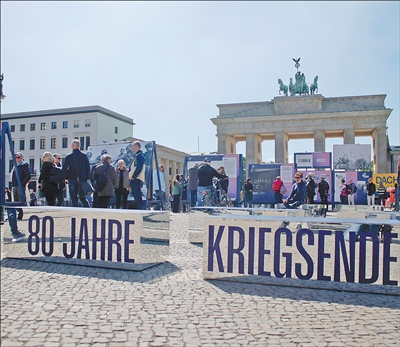
Core Viewpoint - The 80th anniversary of the victory in the World Anti-Fascist War is marked by various commemorative and cultural activities across Germany, emphasizing the importance of remembering history to prevent its repetition [1][3][4]. Group 1: Commemorative Activities - Numerous events, including exhibitions and concerts, are held to honor the memory of the war and promote peace, with a focus on educating younger generations about historical responsibilities [1][3][6]. - A special outdoor exhibition titled "Finally Peace" showcases images related to the Nazi surrender, highlighting the historical moments of the Allied liberation of Europe [2][3]. - The Nuremberg Trials Memorial is seeing increased visitor engagement, with both tourists and students attending to learn about the historical significance of the trials against Nazi war criminals [4][5]. Group 2: Historical Reflection and Education - The Nuremberg Trials are recognized as the first instance in history where war criminals were held accountable under international law, sending a clear message about the consequences of crimes against humanity [4][5]. - The "White Rose Movement," a student-led resistance group during the Nazi regime, is commemorated through exhibitions and performances, emphasizing the courage and responsibility of those who opposed tyranny [6][7]. - Educational initiatives are being implemented to ensure that the lessons of history are passed on to future generations, with a focus on combating ignorance and promoting justice [7].