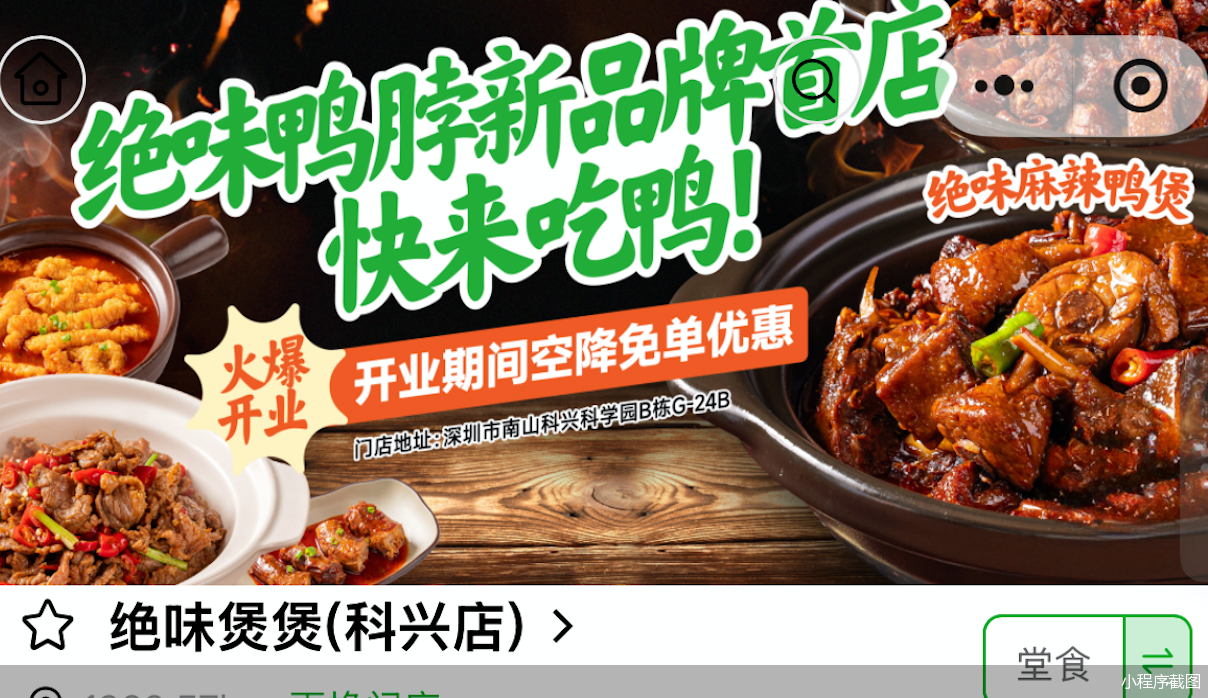
绝味麻辣鸭煲

Search documents
绝味开餐厅
Bei Jing Shang Bao· 2025-11-25 16:40
Core Viewpoint - Juewei Foods is actively expanding its business model by launching new restaurant concepts to alleviate performance pressure, as evidenced by a significant decline in revenue and net profit in the third quarter [1][4][5]. Business Expansion - Juewei Foods has opened a new restaurant brand called "Juewei Baobao" in Shenzhen, which focuses on "fast food + snacks" and aims to diversify beyond its traditional duck neck offerings [2][4]. - The new restaurant features a different branding style, with a green theme, and offers a variety of dishes including "Juewei Spicy Duck Pot" and other local specialties [2][4]. - The average spending per customer at the new location is reported to be 26 yuan, with the signature dish priced at 29.9 yuan [2]. Financial Performance - In the third quarter, Juewei Foods reported a revenue of 1.441 billion yuan, a year-on-year decline of 13.98%, and a net profit of 105 million yuan, down 26.46% [4][5]. - For the first three quarters, the total revenue was 4.26 billion yuan, a decrease of 15.04%, and net profit was 280 million yuan, down 36.07% [4][5]. Market Challenges - The restaurant industry is highly competitive, particularly in the fast food and snack segments, which are crowded with numerous brands [1][4]. - Juewei Foods faces regulatory scrutiny, having received a warning and a fine of 4 million yuan from the China Securities Regulatory Commission for information disclosure violations, leading to its designation as "ST Juewei" [5]. Strategic Recommendations - Experts suggest that Juewei Foods should focus on consolidating its core business in the marinated food sector while cautiously exploring new ventures to avoid conflicts with existing operations [1][8]. - Emphasis on product innovation, quality control, and operational efficiency is crucial for the company to enhance its competitiveness and ensure the success of new business models [8].
炸货之后进军砂锅菜 业绩双降的绝味能否撬开新可能
Bei Jing Shang Bao· 2025-11-25 13:37
Core Viewpoint - Juewei Foods is actively expanding its business model by launching new restaurant concepts to alleviate performance pressure, as evidenced by a significant decline in revenue and net profit in the third quarter [1][5][7]. Group 1: Business Expansion - Juewei Foods has opened a new restaurant brand called "Juewei Bao Bao" in Shenzhen, which focuses on a fast-food and snack model, moving beyond its traditional "duck neck" offerings [3][5]. - The new restaurant features a different branding style, with a green theme and a menu that includes various dishes such as "Juewei Spicy Duck Pot" and other snacks, aiming to attract a broader customer base [3][5]. - The average spending per customer at the new restaurant is reported to be 26 yuan, with the signature dish priced at 29.9 yuan [3]. Group 2: Financial Performance - In the third quarter, Juewei Foods reported a revenue of 1.441 billion yuan, a year-on-year decline of 13.98%, and a net profit of 105 million yuan, down 26.46% [5][7]. - For the first three quarters of the year, the total revenue was 4.260 billion yuan, reflecting a 15.04% decrease, while net profit fell by 36.07% to 280 million yuan [5][7]. Group 3: Market Challenges - The restaurant industry is highly competitive, particularly in the fast-food and snack segments, which are crowded with numerous brands [1][8]. - Juewei Foods faces additional pressure from regulatory bodies, having received warnings and penalties for information disclosure violations, which has led to its designation as "ST Juewei" [7][8]. - Experts suggest that while Juewei Foods has brand recognition and supply chain advantages, it still needs to build operational expertise in the restaurant sector to succeed [8][9]. Group 4: Strategic Recommendations - It is recommended that Juewei Foods focus on precise market positioning to avoid conflicts with existing business lines and to enhance product development and quality control [9]. - The company should prioritize consolidating its core marinated food business while cautiously exploring new ventures through small-scale pilot projects to validate business models before expansion [9].