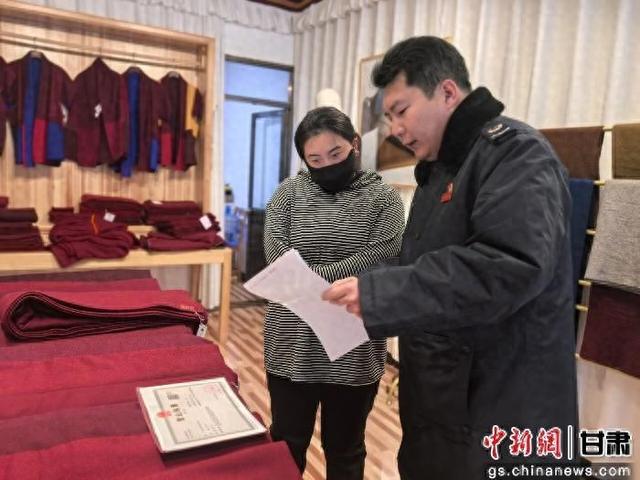
羊毛毡绣

Search documents
甘南:税护非遗“大发展”织就振兴“新图景”
Xin Lang Cai Jing· 2025-12-24 06:29
Core Viewpoint - The Gannan Tibetan Autonomous Prefecture is leveraging its rich cultural heritage, including intangible cultural heritage skills like wool felt embroidery and Tangka painting, as a key driver for rural revitalization through targeted tax policies and supportive services [1][9]. Group 1: Tax Policy Support - The Gannan Taxation Bureau is implementing precise tax policies to support the development of intangible cultural heritage industries, enabling traditional skills to thrive and contribute to both cultural preservation and economic growth [1][9]. - The Summer County Taxation Bureau has effectively applied tax incentives, allowing traditional crafts to transition into modern business models, exemplified by the establishment of a cultural industry company that employs local women and disabled individuals [1][3]. Group 2: Employment and Economic Impact - The introduction of tailored tax benefits has significantly reduced operational costs for companies, allowing them to invest more in equipment and product development, thereby enhancing their competitiveness [3][5]. - The establishment of a complete production chain from research and development to sales has been facilitated by tax support, leading to increased employment opportunities for local residents [3][5]. Group 3: Challenges and Solutions - The Tangka and other local handicraft industries face challenges such as low awareness of tax policies and operational difficulties, which hinder their growth [4][8]. - The Maqu County Taxation Bureau has addressed these issues by providing targeted training and support, optimizing the invoicing process, and ensuring timely approval for tax-related requests during peak business seasons [8][9]. Group 4: Community Engagement - The "Non-material Cultural Heritage Tax Assistance Team" has been established to provide specialized services, including training for small businesses and individual artisans, to improve their understanding of tax regulations and enhance compliance [5][8]. - Bilingual support initiatives have been implemented to assist Tibetan taxpayers in navigating tax processes, ensuring that language barriers do not impede their ability to benefit from tax policies [8][9].

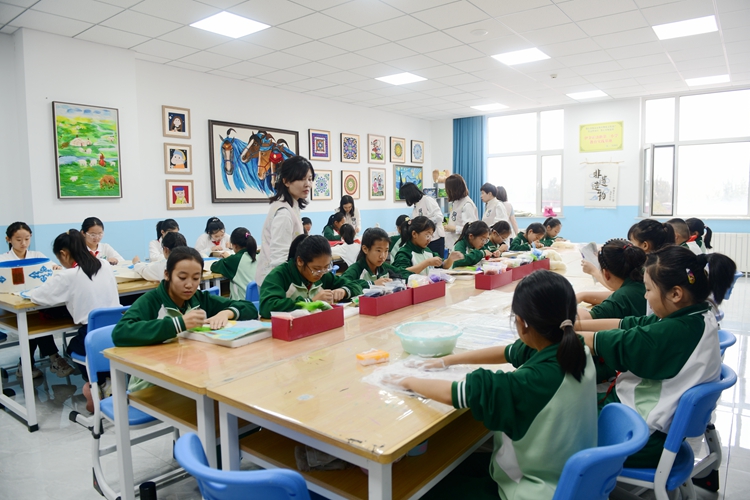
“非遗”为教育添“幸福” 暖城以传承筑同心
Yang Shi Wang· 2025-10-13 07:06
Core Viewpoint - The article emphasizes the importance of protecting, inheriting, utilizing, and developing China's rich intangible cultural heritage, which plays a significant role in continuing the Chinese cultural lineage and strengthening cultural confidence [1] Group 1: Education and Cultural Heritage Integration - Ordos City in Inner Mongolia prioritizes education, focusing on high-quality education and deepening educational reforms while promoting the awareness of the Chinese national community [1][6] - The "Non-Heritage into Campus" initiative allows students to engage with traditional culture through diverse practical courses, such as wool felt embroidery, enhancing their creativity and aesthetic appreciation [2][4][6] - The introduction of unique courses, like felt embroidery, has been in place since 2019, involving local artisans and intangible cultural heritage inheritors to teach students hands-on skills and cultural history [6][11] Group 2: Educational Philosophy and Curriculum Development - The concept of "Happy Education" is defined as making school enjoyable for children, where non-heritage skills serve as a cultural immersion experience [8] - Schools in Ordos have developed a dual-track participation system, offering 37 unique courses aimed at fostering students' interest in art and culture, contributing to their overall development [11][12] - The integration of labor education and aesthetic education within the curriculum promotes students' practical skills and artistic literacy, aligning with the educational philosophy of nurturing students through green and beautiful experiences [12] Group 3: Cultural and Historical Education - The Ordos Museum, housing significant artifacts like the Eagle-Top Gold Crown, serves as a practical educational base for instilling a sense of national community awareness among students [18][20] - Educational activities at the museum combine cultural exploration with ideological education, helping students understand their cultural roots and fostering confidence in facing the future [20][21] - The museum's exhibits illustrate the fusion of grassland and Central Plains cultures, enriching students' understanding of historical and cultural development [18][21]