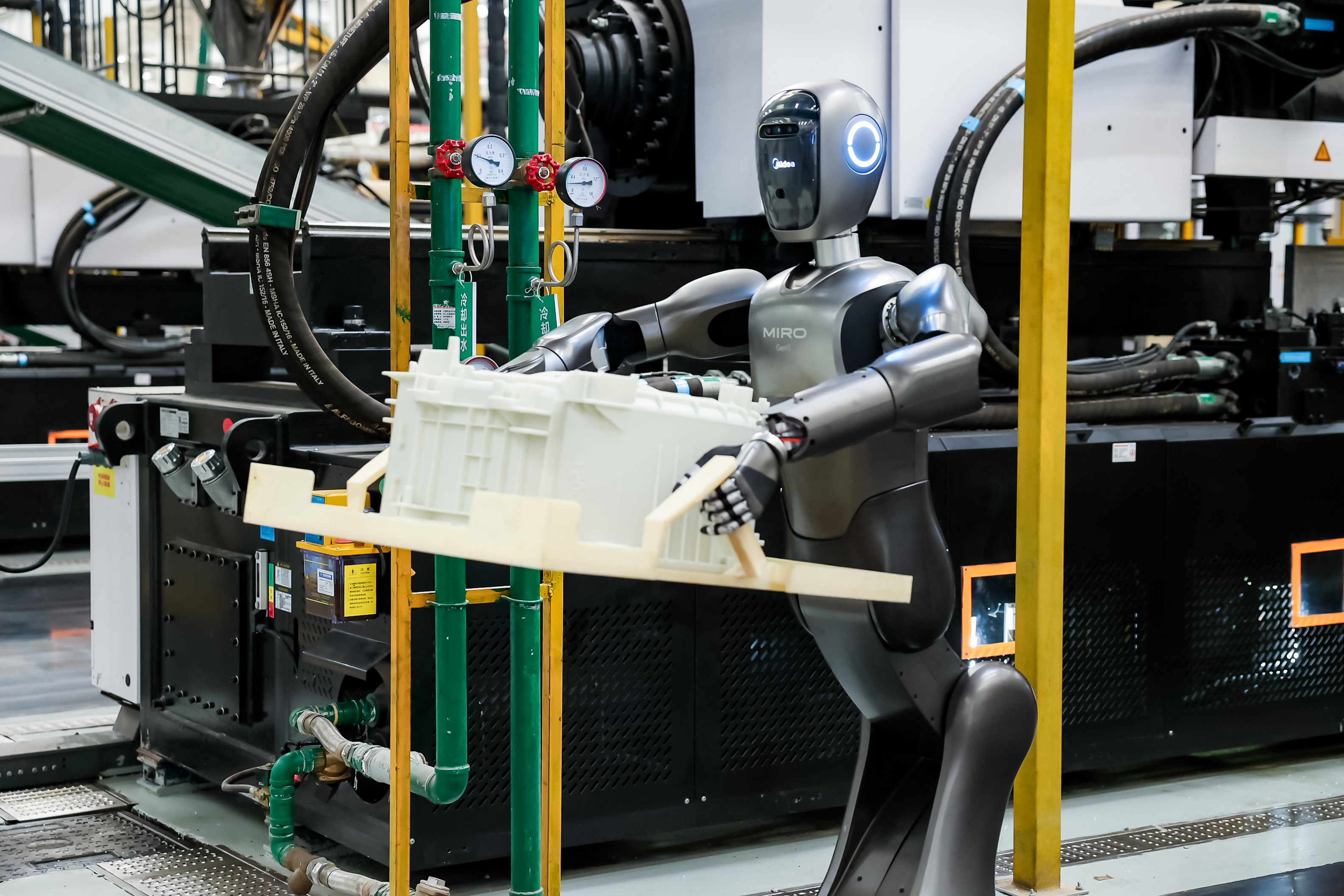
美擎AIGC 3.1平台

Search documents
美云智数研发中心总经理兼CTO宋云报: 打造“统一底座”推动AI在制造业规模化应用
Zheng Quan Ri Bao· 2026-02-01 22:44
Core Viewpoint - The manufacturing industry is at a critical juncture of transitioning from "digitalization" to "intelligentization," facing challenges in AI application due to issues like usability, interpretability, and IT governance [1] Group 1: AI Platform Development - Midea Group's subsidiary, Meiyun Zhishu, launched the Meiqing AIGC 3.1 platform aimed at addressing the difficulties in AI implementation within manufacturing [1] - The success of AI applications depends on establishing a platform that supports the long-term operation of intelligent agents, rather than relying on specific models or applications [2] - The Meiqing AIGC platform is designed as a unified base that connects existing enterprise systems (ERP, PLM, MES) and provides external computational power and algorithm support [2] Group 2: Standardization and Scalability - The platform aims to transform intelligent agents from custom developments into replicable assets through standardized construction, evaluation, and operation [3] - It includes over 50 intelligent agent templates and 500 enterprise connectors, significantly lowering development barriers with no-code or low-code technologies [3] - A standardized evaluation system with over 20 metrics is established to quantify the performance of intelligent agents before deployment [3] Group 3: Knowledge Management and Decision-Making - The integration of intelligent agents into key business processes is hindered by the "hallucination" effect, which is linked to the governance of knowledge [4] - The Meiqing AIGC platform treats knowledge as an engineering capability, emphasizing the entire process from collection to governance to ensure trust in the outputs [4] - The platform boasts a semantic retrieval accuracy rate that exceeds mainstream open-source solutions by over 20% [4] Group 4: Focus on Manufacturing Scenarios - Meiyun Zhishu is committed to focusing on industrial scenarios rather than participating in generic model development, leveraging Midea Group's extensive manufacturing experience [6] - By 2025, Midea Group anticipates achieving over 600 million yuan in efficiency gains through AI applications, with cost reductions in certain scenarios reaching up to 90% [6] - The company has developed over 13,000 intelligent agents internally, identifying high-value scenarios for commercialization [6]

工业智能体“进车间”:中国制造业把AI用在“刀刃”上
第一财经· 2026-01-15 12:41
Core Viewpoint - The article discusses the shift in China's manufacturing industry towards the application of artificial intelligence (AI) in production processes, moving from general office scenarios to frontline applications, with a focus on cost savings and efficiency improvements [3][4]. Group 1: AI Implementation in Manufacturing - Midea Group's digital subsidiary, Meiyun Zhishu, launched an industrial intelligence matrix and the Meiqing AIGC 3.1 platform, aiming to achieve approximately 900 million yuan in cost savings through AI applications by 2026 [3][8]. - Midea has implemented over 40 industrial intelligent agents across 158 core business scenarios, covering areas such as R&D, manufacturing, supply chain, quality, logistics, finance, human resources, and overseas services [3][7]. - The focus has shifted from the quantity of intelligent agents to the effectiveness of specific scenarios that can genuinely improve efficiency and reduce costs [5]. Group 2: Cost Savings and Efficiency Gains - In manufacturing, Midea has utilized intelligent agents for production management, such as loss analysis, which allows for quick identification of issues and targeted improvement suggestions [7]. - In human resources and legal fields, AI applications can reduce costs by up to 90% in certain areas, with projected savings of 40 million yuan in 2023, 180 million yuan in 2024, 600 million yuan in 2025, and reaching 900 million yuan in 2026 [8]. Group 3: Broader Industry Trends - Other manufacturing companies, such as Haier and Skyworth, are also advancing similar AI applications, with Haier's platform reporting a 10% reduction in labor and energy costs in specific scenarios [9]. - The Chinese government is promoting AI in manufacturing, aiming to implement 3-5 general large models in the industry by 2027 and cultivate 1,000 high-level industrial intelligent agents [9]. Group 4: Challenges in AI Adoption - The promotion of industrial intelligent agents faces challenges, particularly in small and medium-sized enterprises, due to reliance on business participation and data quality [10]. - High costs and recruitment difficulties for AI talent are significant barriers, with a suggested approach of transitioning existing digital teams towards AI [10][12]. - The future direction is expected to integrate intelligent agents into traditional industrial software rather than existing as standalone tools, enhancing decision-making processes [12].

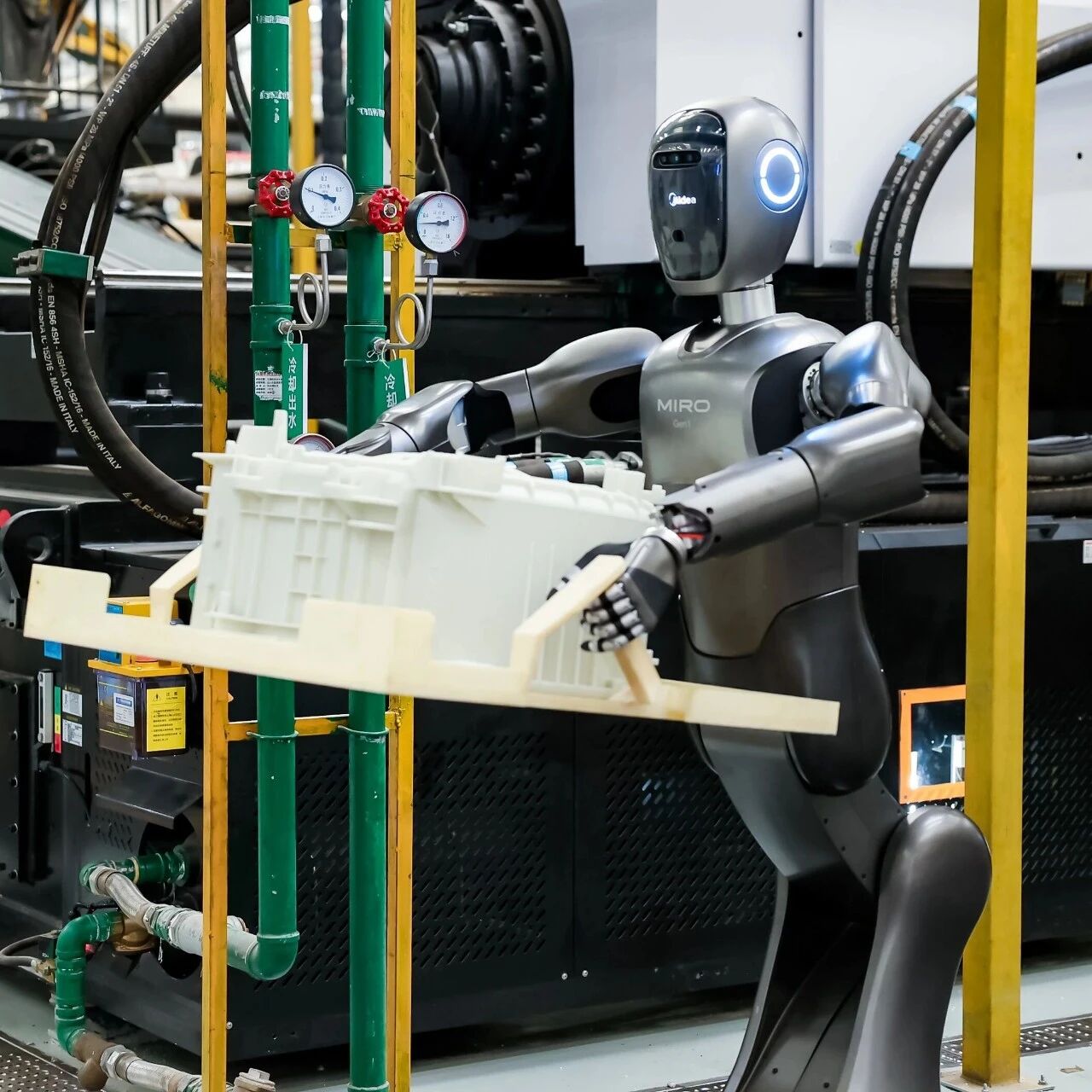
工业智能体“进车间”:中国制造业把AI用在“刀刃”上
Di Yi Cai Jing· 2026-01-15 11:06
Core Viewpoint - The Chinese manufacturing industry is shifting its focus on artificial intelligence (AI) applications from general office scenarios to frontline production after two years of experimental deployment. Midea Group's digital subsidiary, Meiyun Zhishu, has launched an industrial intelligence matrix and the Meiqing AIGC 3.1 platform, aiming to achieve approximately 900 million yuan in cost savings through AI applications by 2026 [1][2][8]. Group 1: AI Implementation in Manufacturing - Midea has deployed over 40 industrial intelligent agents selected from thousands within the company, achieving large-scale applications in 158 core business scenarios, covering R&D, manufacturing, supply chain, quality, logistics, finance, human resources, and overseas services [1][6]. - In production management, Midea utilizes intelligent agents for loss analysis, enabling quick identification of issues causing production losses, which previously required manual checks every few hours [6]. - In the supply chain, intelligent agents can quickly assess the impact of disruptions, such as typhoons, and provide alternative supply solutions [7]. Group 2: Cost Savings and Efficiency - Midea's AI applications are projected to save approximately 40 million yuan in 2023, 180 million yuan in 2024, 600 million yuan in 2025, and reach 900 million yuan in 2026 [8]. - In human resources and legal fields, AI applications can reduce costs by up to 90% in processes like resume screening and contract review [8]. Group 3: Industry Trends and Policy Support - Other manufacturing companies, such as Haier and Skyworth, are also advancing similar AI applications, with Haier's industrial model already implemented in over 40 scenarios across various sectors, achieving a 10% reduction in labor and energy costs in some processes [9]. - The Chinese government is promoting AI in manufacturing through initiatives aimed at deepening the application of 3-5 general models in the industry by 2027 and cultivating 1,000 high-level industrial intelligent agents [9]. Group 4: Challenges in AI Adoption - The promotion of industrial intelligent agents faces challenges, particularly in small and medium-sized enterprises, due to reliance on business participation and data quality, high costs and recruitment difficulties for AI talent, and unclear application scenarios [10][11]. - Companies are advised to first address their digitalization shortcomings before scaling AI applications [11]. Group 5: Future Directions - The future direction for AI in manufacturing is the integration of intelligent agents into traditional industrial software rather than existing as standalone tools, with AI providing decision support in areas like sales forecasting and production planning [12].