
老爷车

Search documents
助力汽车消费改革落地,进博会首设“国际汽车文化展示区”
Zhong Guo Jing Ji Wang· 2025-11-06 02:03
中国经济网上海11月6日讯(记者郭涛)昨日,为期6天的第八届中国国际进口博览会(简称:进博会)正式 拉开帷幕。其中,位于2.1馆的汽车及智慧出行展区以"出行,无限可能(Mobility∞)"(注:∞即Infinity)为 主题,首次构建"三位一体"的汽车产业生态全景,系统整合汽车工业、汽车文化及汽车未来三大维度, 为观众、投资者及行业同仁提供贯穿汽车产业过去、现在与未来的沉浸式体验。 值得注意的是,为积极响应商务部等8部门关于开展汽车流通消费改革试点工作的政策,本届进博会首 次设立"国际汽车文化展示区",集中展示10台兼具高价值及历史意义的老爷车,涵盖红旗、劳斯莱斯、 捷豹、法拉利等多个品牌,助力汽车消费改革落地。 ...


踏上卓越之旅
Bei Jing Wan Bao· 2025-08-19 07:48
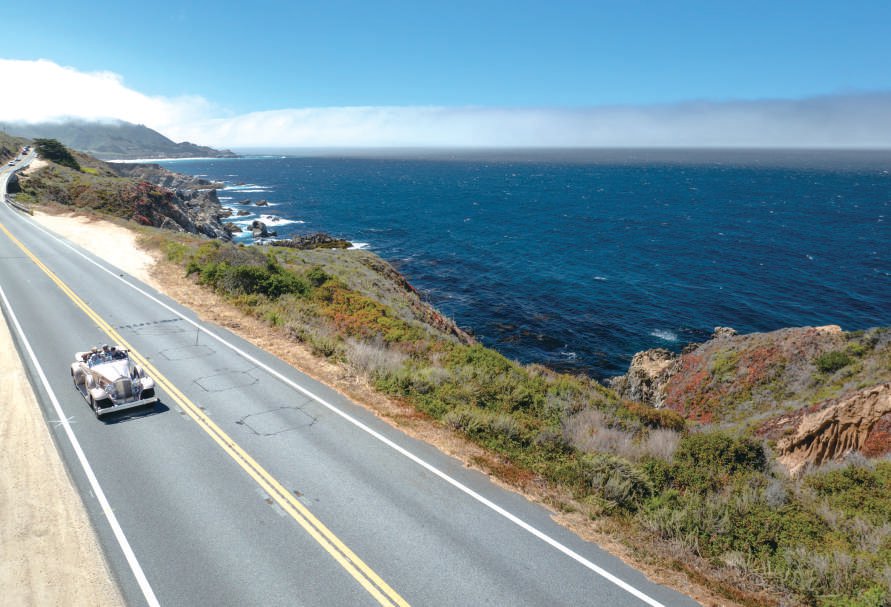
Core Insights - The Monterey Car Week, a week-long celebration of automotive culture, concluded on August 17, featuring historical cars, auctions, and social gatherings, attracting enthusiasts from around the world [1][3][11] - Rolex has been a supporter of this event for nearly 30 years, marking the 20th anniversary of its role as the official timekeeper for the Pebble Beach Concours d'Elegance [1][3][11] Group 1: Event Highlights - The event included the Rolex Monterey Motorsports Reunion, which took place from August 13 to 16, showcasing 400 classic cars spanning 120 years at the WeatherTech Raceway Laguna Seca [4][5] - The Pebble Beach Tour d'Elegance featured over 150 classic cars on a scenic route, testing their performance and functionality [8][9] - The Quail, A Motorsports Gathering, held on August 15, served as a platform for manufacturers to unveil new models, with over 20 new vehicles showcased this year [9][10] Group 2: Rolex's Involvement - Rolex's partnership with the Monterey Car Week emphasizes its commitment to automotive excellence and tradition, having supported various classic car events globally [11][12] - The "Best of Show" award at the Pebble Beach Concours d'Elegance is accompanied by a specially engraved Rolex watch, recognizing the dedication to automotive heritage [10][12] - Rolex's history with motorsport dates back to the 1930s, and it has been involved in numerous prestigious racing events, reinforcing its brand association with speed and precision [12]
调研150个家办后发现:大家热衷于地产投资,尤其是豪宅
Hu Xiu· 2025-05-12 05:39
Group 1 - The core viewpoint of the report is that family offices are increasingly favoring real estate investments due to its growth potential and wealth preservation capabilities [1][2] - Real estate constitutes a significant portion of family office investment portfolios, ranking just behind stocks and cash, with office buildings (20%), luxury residences (17%), industrial properties (14%), and hotels (12%) being the most allocated sectors [2][3] - Approximately 70% of real estate investments are domestic, with New Zealand (93%), Australia (90%), and the United States (86%) showing the highest domestic investment focus [2] Group 2 - Family offices view real estate as part of a broader investment strategy, balancing it with listed stocks, venture capital, or other private investments, and some see it as a strategic asset for core business operations [3] - Two-thirds of family offices manage private residential properties, primarily for family use and inheritance (44%), capital preservation (29%), and diversification (20%), with rental income being a lesser priority [5] - The most sought-after real estate sectors by family offices include living spaces (14%), industrial/logistics (13%), and luxury residences (12%) [7] Group 3 - Family offices express interest in expanding their real estate investments, particularly in living spaces, logistics, luxury residences, and hotels, but face challenges such as finding reliable partners (23%), tax regulations (20%), and asset competition (19%) [8] - In commercial real estate, opportunities are identified in gateway city office buildings, which are seen as volatility hedges, especially in light of increasing geopolitical risks [10][11] - Investors are also focusing on sectors with structural tailwinds, such as logistics and living spaces, while retail real estate in developed markets remains a point of interest [12][13] Group 4 - The report highlights a growing interest in ESG assets, with 90% of institutional investors setting social goals, and 73% focusing on workplace well-being [14][16] - The wine industry presents investment opportunities, particularly in vineyards, with prices in certain regions expected to decline significantly, while others remain stable [17][18] - The luxury goods market is experiencing mixed performance, with some sectors showing growth while others, like art and wine, are facing declines [22][24] Group 5 - The issue of inheritance is pressing, with 58% of family offices indicating that the next generation is involved in investment decisions, leading to changes in investment strategies [27][28] - Cultural and moral differences between generations affect investment strategies, with a notable shift towards sustainable investments among millennials compared to baby boomers [29]