
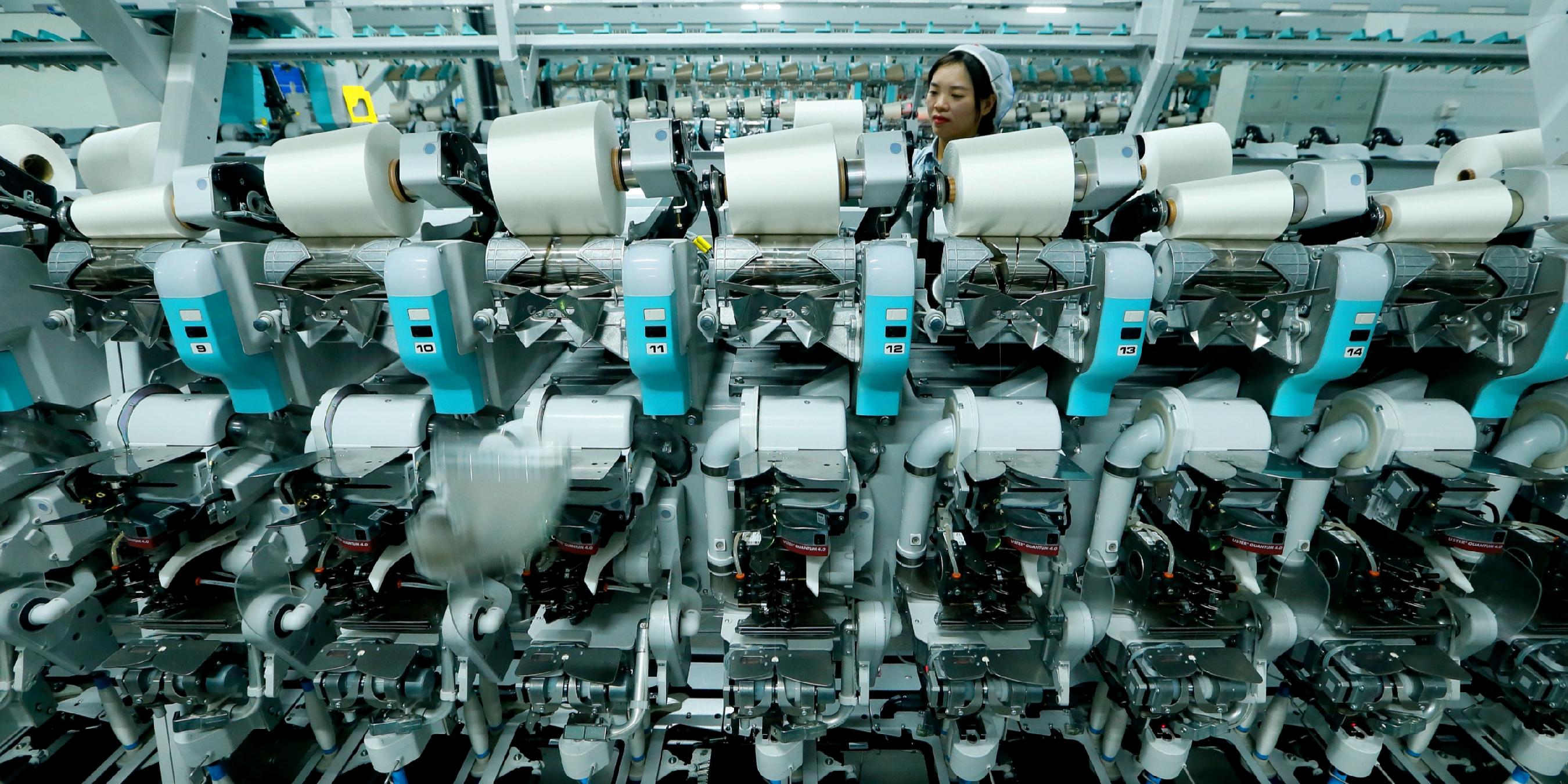
聚酯纤维筒子纱

Search documents
高质量发展的生态底色更加鲜明
Jing Ji Ri Bao· 2026-02-24 22:08
Group 1: Green Transformation and Achievements - By 2025, China aims to complete land greening tasks covering 12.7 million hectares, including afforestation of 5.345 million hectares and restoration of 7.39 million hectares of degraded grasslands, with a current forest coverage rate of 25.09% and a forest stock volume of 20.988 billion cubic meters [2][3] - China has become the fastest-growing country in terms of greening, supported by planning, technology, engineering, and social participation, as highlighted by the National Forestry and Grassland Administration [2][3] - The ecological benefits are increasingly translating into economic and social benefits, with the forestry industry expected to generate nearly 11 trillion yuan in total output value by 2025, and direct employment for over 60 million people [3] Group 2: Clean Energy Development - By the end of 2025, the world's first commercial supercritical carbon dioxide power generation unit will be operational in Guizhou, achieving over 85% efficiency improvement compared to existing technologies [4] - China has established the world's largest clean power supply system, with renewable energy generation capacity exceeding 600 million kilowatts, accounting for over 60% of total power generation [4][5] - Energy investments are projected to exceed 3.5 trillion yuan in 2025, with a year-on-year growth of nearly 11%, driven by green transition investments and private sector participation [5] Group 3: Traditional Industry Transformation - The textile industry has made significant strides in green transformation, with companies like Shandong Jifa Group achieving waterless dyeing processes that reduce carbon emissions by approximately 50% [5] - Major energy-consuming industries, including construction materials and steel, have seen a notable decrease in energy consumption per unit of added value compared to 2024 [5][6] - The manufacturing sector is experiencing a surge in demand for energy-efficient and environmentally friendly equipment, driven by policy support and market needs [6] Group 4: Circular Economy and Resource Recovery - The circular economy is being promoted as a key strategy for reducing emissions, with projects like the electronic waste recycling facility in Guangdong processing approximately 39 tons of e-waste in 2025 [6] - The focus on transforming waste into valuable resources is a significant aspect of China's industrial system's shift towards sustainability [6]
山东省人大代表杨为东:加大政策扶持力度 实现纺织服装业全面绿色转型|聚焦2026山东两会
Jing Ji Guan Cha Wang· 2026-01-29 07:59
no 19 ul (201 the call of the states te 15 -31 Real The No 40 11 al and 112 ALT A (si t a the ne all re - 14 2 FESS 2017-201 77 5 Kim K er chark, ri t and the load C 100 - 30 r 201 a and 1 Berty Carl 0 the first L th the 113 K - 3 1 2 012004 and 2026年1月27日至31日,山东省第十四届人民代表大会第四次会议在济南召开。在这次会议上,山东省人大代表、即发集团董事长杨为东提出建议,加大政 策扶持力度,实现纺织服装产业全面绿色转型。 即发集团始建于1955年,从一个发制品小作坊发展到年销售收入过百亿元的中国针织行业领军企业和山东、青岛纺织服装行业链主企业。 作为传统产业,纺织服装产业一度被打上技术含量低的标签。但杨为东却对经济观察报记者说,高新技术不应特指某些产业,通过持续科技创新和跨界融 合,在传统纺织服装行业中同样可以培育成长出高新技术企业、国家绿色工厂。 杨为东所 ...

山东省人大代表杨为东:加大政策扶持力度 实现纺织服装业全面绿色转型
Jing Ji Guan Cha Wang· 2026-01-29 07:25
即发集团突破了聚酯纤维筒子纱超临界二氧化碳无水染色关键技术,实现了整个染色过程完全不用水、 不用化学助剂、无污水排放,碳排放减少50%左右。 杨为东所在纺织服装产业是山东典型的传统优势产业。目前,山东全省已形成从纤维原料、纺织织造、 染整加工到服装成衣、品牌运营的完整产业链条,拥有生产企业5万余家、国家集群22个。"十四五"期 间,规上企业营收年均增长6.1%,高于全国同行业4个百分点,纱、布产量居全国第1、2位,6家企业 进入中国棉纺织行业百强前10,4家企业入选中国印染30强前10,均居全国首位。 但在日常的企业管理和行业走访调研中,杨为东发现,虽然纺织服装产业在开发与应用绿色先进技术工 艺、推动绿色发展方面取得了一些成效,但要实现纺织服装产业全面绿色转型仍然面临困难和挑战。比 如,政策协同不足、融资相对困难、发展存在瓶颈等。特别是从绿色技术转化应用的角度来看,在很多 新兴绿色技术领域,由于发展时间较短,尚未形成统一完善的行业标准,延缓了绿色技术的推广和普 及。 为在"十五五"时期推动山东省纺织服装行业绿色低碳高质量发展,加快向"创新驱动的科技产业、文化 引领的时尚产业、责任导向的绿色产业、以人为本的健康 ...
